Japan Dismantles the Sky Limit for Commercial Drones
Lifting flock ceilings shifts low-altitude airspace management to automated fleets, testing whether central aviation reform can service isolated settlements without burdening local infrastructure.
SINGAPORE
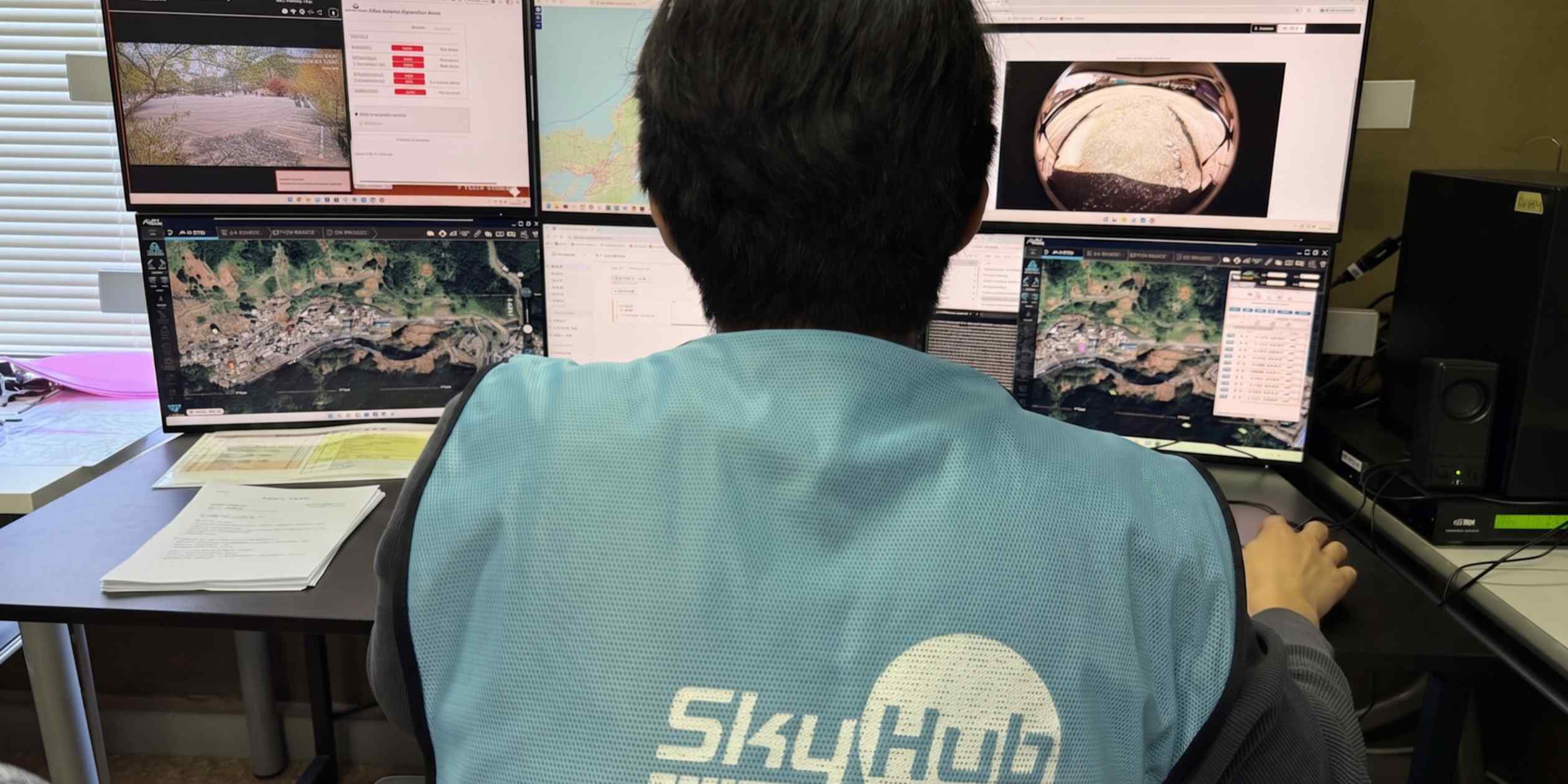
Aviation policy in East Asia has long operated on an austere principle of separation: preserve public safety by keeping uncrewed machines sparse, isolated, and strictly partitioned from shared transit corridors. Japan has disrupted that regulatory orthodoxy. Following the lifting of an operating limit, the country is preparing for commercial drone flocks, according to reporting by Nikkei Asia. The shift ends the convention of treating commercial drones as solitary craft piloted within restrictive sightlines. Instead, ministry guidelines clear the way for coordinated swarms navigating low-altitude corridors simultaneously. The regulatory intent is unmistakable, but an immediate question surfaces for regional planners: which coastline ultimately absorbs the strain of a logistics model written inland?
Demographic shrinkage and acute transport shortages across peripheral prefectures explain why Tokyo moved. Mountain hamlets and depopulated coastal settlements face contracting distribution lines as conventional road freight recedes. Central ministries infer that automated multi-craft networks can serve as synthetic municipal circulation, delivering medicine and basic supplies where commercial drivers no longer venture. For transport operators, the unit economics of dispatching one licensed technician per vehicle never made commercial sense. Removing the ceiling on simultaneous operations changes that calculation. Multiple drones flying under unified digital oversight convert low-altitude sky into a high-density utility.
Ground Friction Beneath Autonomous Flight
Yet regulatory permission does not construct physical infrastructure. Dispatching coordinated fleets requires uninterrupted communications telemetry, localized spectrum clearance, and dedicated ground interchanges capable of managing simultaneous turnarounds. Inland testing facilities seldom reflect the environmental friction of maritime coastlines, where salt air accelerates mechanical degradation and erratic thermal gusts challenge autonomous flight algorithms. A decree issued in the capital changes airspace classification overnight. It does not provide the concrete landing pads, grid connections, or fail-safe descent zones demanded by high-volume flight paths.
The resulting fiscal and legal exposure falls directly onto local authorities. If communication fails or battery reserves collapse over a residential district, emergency response and public liability land on town halls, not the civil aviation bureau. Peripheral municipalities are expected to monitor low-altitude flight paths without receiving matching administrative resources. That imbalance exposes the persistent gap between central deregulatory design and local operational capacity.
Regional Precedents in East Asian Skies
Beyond domestic logistics, the precedent matters across the wider Asia-Pacific. Dense metropolises and archipelagic states face identical transport stresses, watching how Japanese aviation authorities balance collision avoidance, data sovereignty, and payload limits. If Tokyo demonstrates that coordinated fleets can operate without unacceptable mishap rates, neighbouring regulators will face intense commercial pressure to open their own skies to autonomous fleets.
Central deregulatory mandates invariably depend on the unheralded physical tolerance of peripheral communities.
Commercial freight advocates argue that automated logistics will revitalize isolated outposts by eliminating road haulage costs. That position underestimates physical geography. Software commands can coordinate trajectories, but they cannot eliminate coastal gales, signal degradation along mountain ridgelines, or the maintenance costs of peripheral ground depots. Japan has lifted the ceiling on flock operations, yet the tension between central logistics policy and peripheral community endurance remains unresolved.
Sources
Newsletter
Pacific Daily
A curated briefing from Thailand, Asia-Pacific and the world.