Thai cannabis policy faces scrutiny after Hong Kong seizure
A record bust in Hong Kong challenges the narrative of controlled domestic supply.
HONG KONG
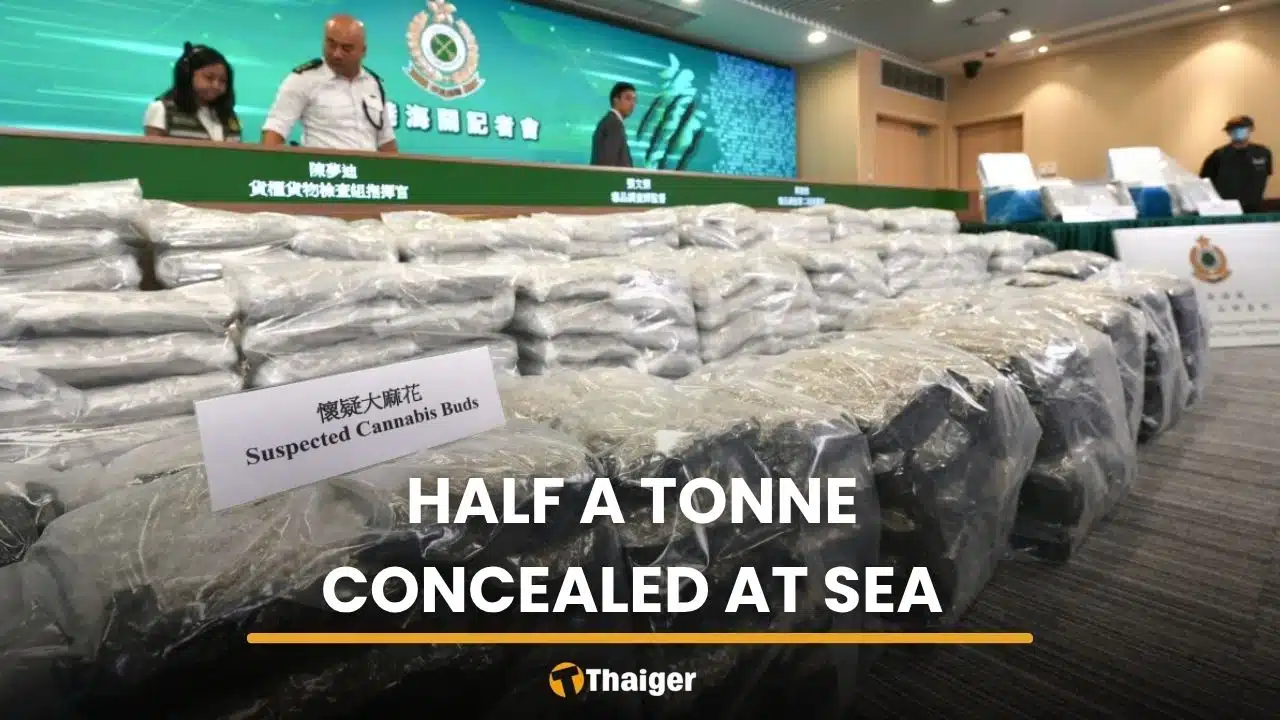
The seizure of 535 kilograms of suspected cannabis buds in Hong Kong, valued at HK$125 million, highlights a tension in Thailand's approach to cannabis. Hong Kong Customs stated the September 2 operation was the city’s largest-ever seaborne cannabis trafficking case. The shipping container originated from Thailand, declared as insulated boxes. This incident, while a singular event, prompts a re-evaluation of the consequences beyond Thailand’s borders.
Thailand’s decriminalization of cannabis was framed domestically around medical and economic benefits. The intent, as articulated by proponents, was to regulate and control its supply within the country for specific purposes. However, the Hong Kong seizure demonstrates that the material itself is crossing international boundaries in significant quantities. The scale of this particular shipment – a record for Hong Kong – suggests an organized operation, rather than incidental smuggling. Three men were arrested in connection with the controlled delivery operation, which followed a risk assessment and intelligence analysis by Customs officers in Kwai Chung Customhouse Cargo Examination Compound.
The cost of such cross-border trafficking falls on various actors. For Hong Kong, it represents a continued challenge in border security and law enforcement, diverting resources to combat illicit trade. For Thailand, it presents a potential diplomatic liability. Other nations in the region maintain stringent drug laws, and a perception that Thailand is a source point for large-scale trafficking could strain international relations. The financial burden of managing increased surveillance or interdiction efforts at origin or transit points often falls on the respective governments and, by extension, their taxpayers.
While the focus in Thailand has often been on domestic cultivation and consumption, particularly through licensed outlets, the international movement of cannabis reflects a different dynamic. The stated aim of decriminalization was not to facilitate international trafficking. The method of concealment – declared as insulated boxes – suggests an attempt to bypass standard checks, indicating an awareness of the illegality of the shipment at its destination.
A counterargument might suggest that this is an isolated incident, not indicative of a systemic failure in Thailand's cannabis regulation. The sheer volume, however, challenges this view. A shipment of 535 kilograms implies a network capable of acquiring, consolidating, and exporting a substantial quantity. This scale of operation is not easily dismissed as an anomaly. It raises questions about the efficacy of existing export controls or the identification of illicit pathways for goods declared to be from Thailand.
The broader implication for the Asia-Pacific region is a potential increase in scrutiny on shipments originating from Thailand. Nations with strict prohibitions on cannabis will likely enhance their monitoring, leading to more frequent inspections and potentially impacting legitimate trade flows. The incident also risks reinforcing existing international skepticism about the control mechanisms surrounding cannabis in Thailand, potentially undermining the country's efforts to establish a regulated domestic industry. This particular event suggests that the practicalities of managing cannabis supply extend beyond domestic policy, impacting international perceptions and enforcement efforts across the region.
Ultimately, the Hong Kong seizure underlines a significant, if unintended, consequence of Thailand’s cannabis policy. The day-to-day cost of this decision is carried by the customs officers interdicting such shipments, the law enforcement agencies investigating the networks, and potentially by the diplomatic offices managing the international fallout. This single event, regardless of its statistical frequency, illustrates the practical difficulties inherent in controlling a substance that is legal in one jurisdiction and strictly prohibited in another, especially when trade routes are established and demand exists.
Sources
Newsletter
Pacific Daily
A curated briefing from Thailand, Asia-Pacific and the world.