Taiwan's 2026 Campaigns Signal Shifting Electoral Priorities
Early motorcades and calls for debate coordination suggest candidates are navigating a new political landscape, moving beyond established party lines to engage voters directly and shape public discourse ahead of the 2026 elections.
SINGAPORE
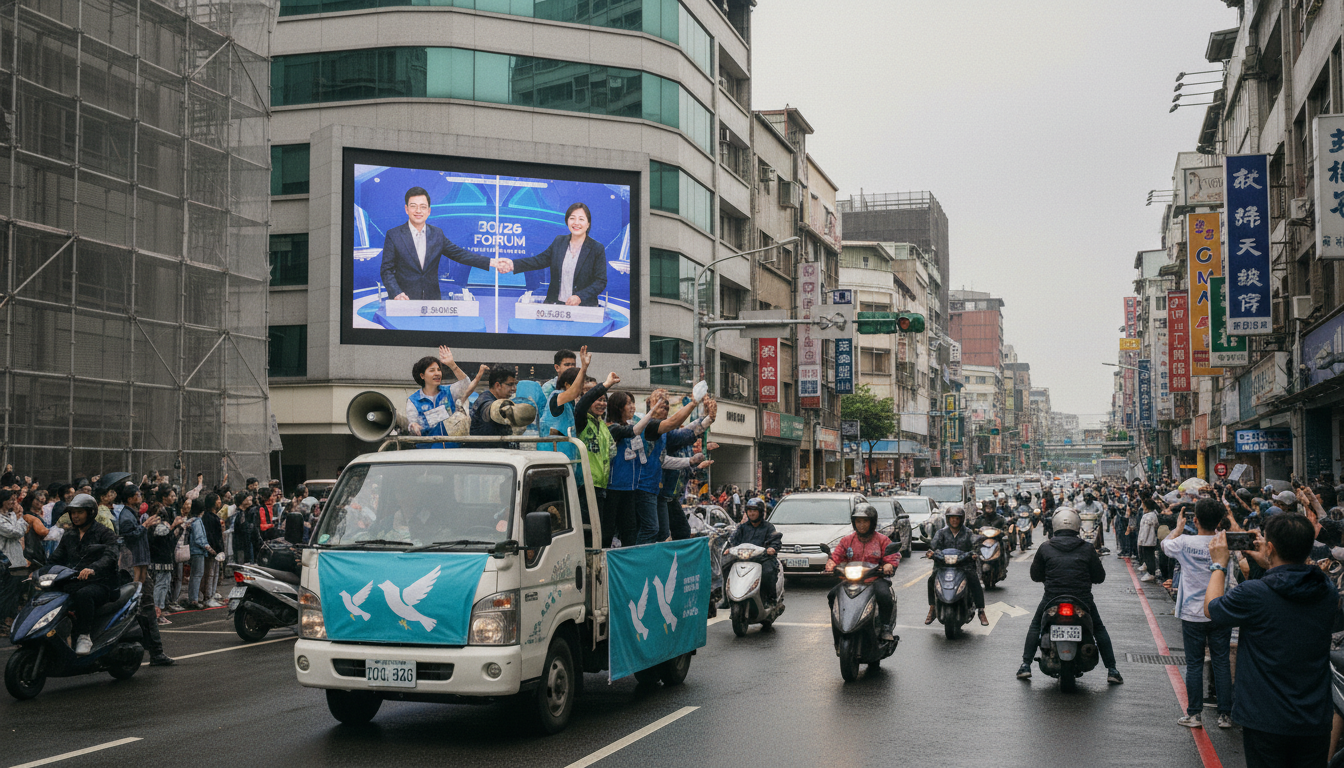
The initial moves by candidates for Taiwan's 2026 elections, including ELECTIONS Shen's first campaign motorcade and Chiang's call for debate coordination, point to a political environment in flux. These actions, occurring well in advance of the election year, indicate a strategic reorientation in how political figures engage with the electorate and position themselves within a competitive field. The emphasis on direct public outreach through events like motorcades, alongside calls for structured debate, signals a move towards defining platforms and engaging in public discourse earlier than in past cycles.
Historically, political campaigns in the Asia-Pacific region have often relied on established party structures or broad national narratives. Current actions in Taiwan, however, indicate a more granular approach. Shen's motorcade is a tactic aimed at visibility and direct connection with constituents, allowing for immediate public presence. Chiang's urging of debate coordination, while seemingly a procedural matter, reflects an effort to control the narrative and define the terms of public discussion, potentially seeking to elevate specific policy areas or highlight contrasts between candidates. Both strategies suggest an acknowledgment of a need to differentiate candidates beyond party affiliation, focusing instead on individual appeal and policy positions.
This early campaigning contrasts with more traditional, shorter election cycles seen in some regional democracies. It points to a heightened competitive pressure that demands sustained engagement rather than concentrated bursts of activity. The regional context, particularly with ongoing discussions around Taiwan's status, adds a layer of complexity. While not explicitly mentioned in the recent reports, the backdrop of external pressures influences domestic political discourse. China sanctioned Taiwan businessman Robert Tsao and a lawmaker in 2024 for 'separatist' acts. In 2023, Taiwan issued a civil defence handbook that included tips on identifying Chinese soldiers. These events underscore the persistent geopolitical considerations that often frame Taiwan's internal politics.
Moreover, the emphasis on debate coordination suggests a strategic awareness of how information is consumed and disseminated. In a political landscape increasingly shaped by diverse media channels, formal debates offer a controlled environment for candidates to present their cases and challenge opponents. This contrasts with the less structured dissemination of political messages that might occur through other campaign activities. Such coordination could also reflect an attempt to standardize candidate interactions across a complex media environment, ensuring that core messages reach a broad audience without excessive fragmentation or misinterpretation.
The early activity, however, also presents challenges. Sustaining campaign momentum and public interest over an extended period can prove difficult, risking voter fatigue or a dilution of core messages. The initial motorcade, while generating immediate attention, must translate into sustained support. Similarly, calls for debate coordination, if not met with genuine engagement from all parties, may appear as a tactical maneuver rather than a sincere effort to improve political discourse. The true test for these early strategies will be their ability to resonate with a diverse electorate as the 2026 elections draw closer, navigating both local concerns and broader regional dynamics.
Sources
Newsletter
Pacific Daily
A curated briefing from Thailand, Asia-Pacific and the world.