Fiji's HIV Emergency Challenges Economic Priorities and Regional Stability
The declaration of a national HIV emergency in Fiji necessitates a re-evaluation of public health capacity and its intersection with economic strategy, particularly as major powers vie for influence in the Pacific.
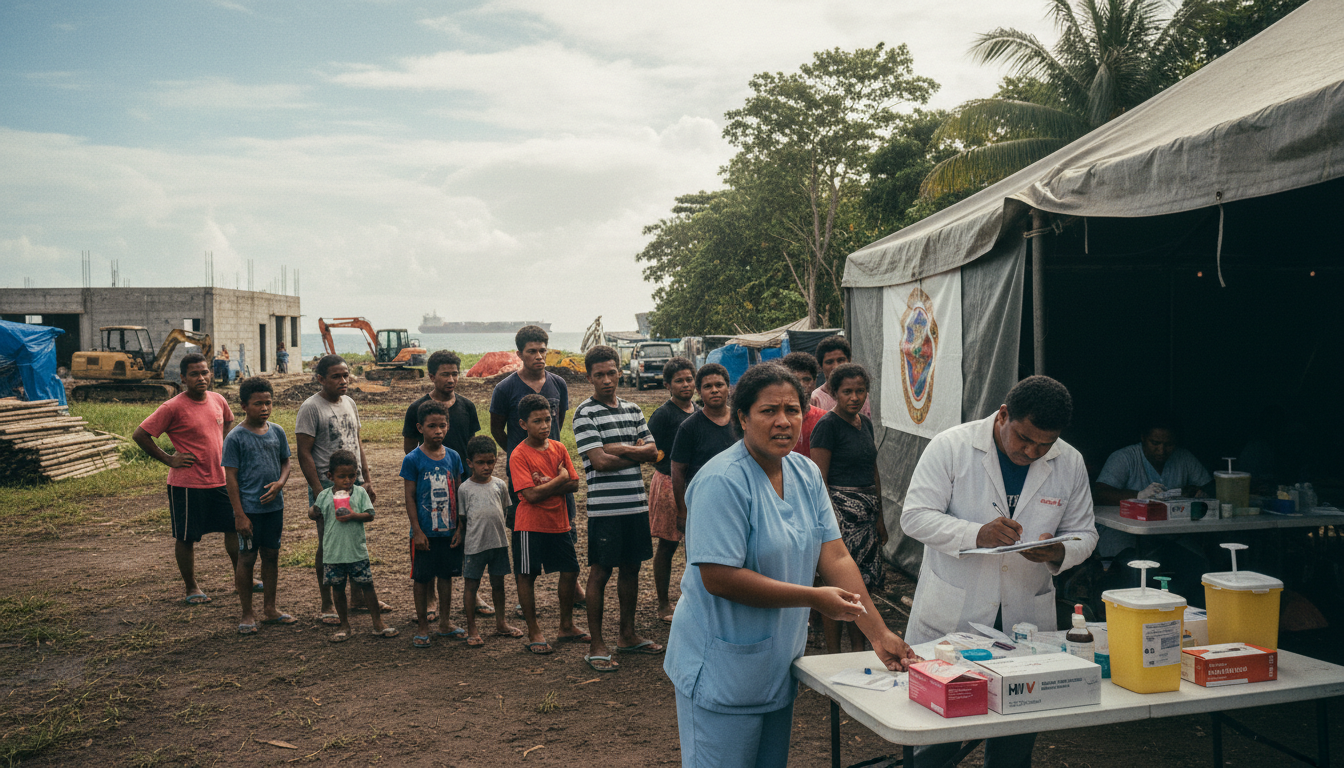
Fiji’s declaration of a national HIV emergency on 2026-09-17, citing a surge in cases, presents a critical test for the nation's governance and its regional standing. While the Tourism Minister, Viliame Gavoka, stated that the emergency should not deter visitors from countries such as Australia and New Zealand, framing HIV as a “global phenomenon” that travelers understand, this perspective does not alter the underlying public health crisis. Gavoka, who is also a deputy prime minister, made these remarks in response to local reporters’ questions regarding tourist concerns about travel plans to Fiji.
Tourism serves as Fiji's primary economic driver, contributing approximately 40 percent of its gross domestic product. The sector directly and indirectly supports over 150,000 jobs, with nearly one in every three Fijians dependent on tourism for their livelihoods. This economic reliance establishes a direct link between public health perceptions and national prosperity. The minister's comments prioritize the maintenance of this economic stability, even as health researchers and community groups advocate for a more robust response to the emergency.
The timing of this health crisis coincides with increased strategic competition in the Pacific. Australia, for instance, signed a major defense alliance with Fiji on 2026-07-05, explicitly seeking to counter China's growing influence. Such alliances underscore Fiji's geopolitical significance. A health crisis of this magnitude has the potential to divert resources and attention from these broader strategic alignments, introducing a new variable into regional stability considerations.
Fiji’s capacity to manage a national health emergency while upholding its economic interests and navigating complex geopolitical dynamics will define its immediate future. The declaration itself, rather than a minister’s reassurance, marks a significant shift. It compels an assessment of Fiji’s public health infrastructure and its resilience against both internal pressures and external strategic objectives. The unresolved tension lies in how effectively Fiji can address a critical domestic health challenge without undermining the economic sector it relies upon, or its position in a strategically contested region.
Sources
Newsletter
Pacific Daily
A curated briefing from Thailand, Asia-Pacific and the world.