Sidelined Watchdogs Signal Systemic Budget Opacity
The exclusion of civil society from the Philippines' 2027 budget process highlights a regional pattern of legislative consolidation, with consequences for fiscal transparency across the Asia-Pacific.
SINGAPORE
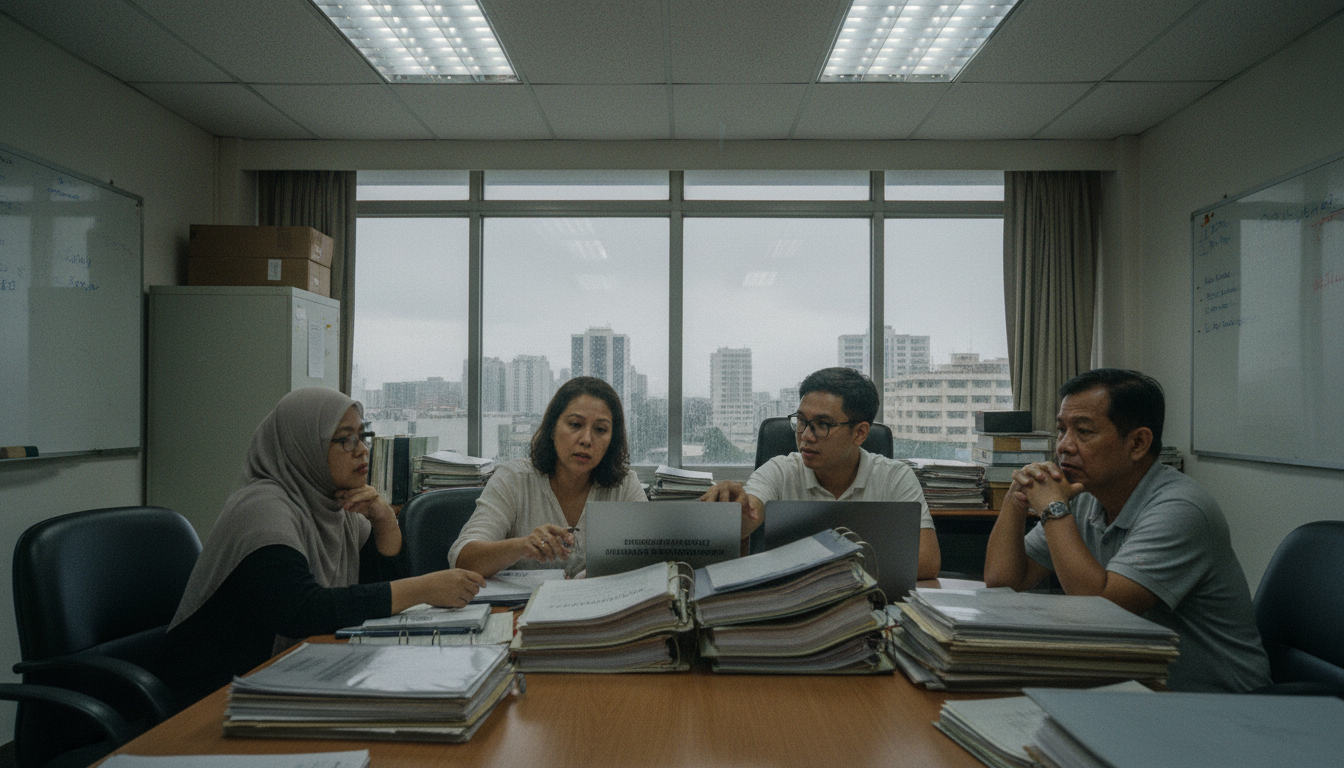
The reported sidelining of civil society organizations (CSOs) during the Philippines' 2027 House budget talks, detailed by Rappler on September 18, 2026, represents a clear indicator of fiscal governance dynamics. The People's Budget Coalition appealed for "meaningful" rather than "tokenistic" CSO participation, characterizing the current engagement. This instance, where a legislative body proceeds with national spending decisions without robust external oversight, illustrates an incentive structure that prioritizes internal control over broad public accountability.
The incentive for limiting external scrutiny is straightforward: it enables less contested allocation decisions and can preserve existing power arrangements. The Philippine House panel's finding, reported by Reuters, that a bid to impeach President Marcos lacked substance, occurred in 2026. While not directly related to the budget process, it suggests a broader institutional capacity to manage challenges to authority.
The immediate beneficiary is the Philippine House of Representatives, which gains operational flexibility in budget formulation. The public and the CSOs, whose declared role as watchdogs is undermined, bear the cost. This trend is not isolated to the Philippines; it reflects similar pressures across the Asia-Pacific, where governance standards vary. Thailand, for example, navigates comparable challenges in balancing development objectives with transparent fiscal administration. This regional pattern suggests that when external checks on legislative power diminish, the centralization of financial authority can increase, potentially re-directing resources from general public goods towards specific agendas.
However, attributing complete discretion to the legislature in these processes overlooks the inherent limitations of internal review mechanisms. While House committees are designed to examine budget proposals, their effectiveness is often constrained by political frameworks. The fundamental question concerns the independence and empowerment of these internal checks to challenge decisions originating from the same political establishment. This is not always assured, especially when dominant political factions control the legislative agenda. Consequently, the efficacy of internal processes as genuine safeguards against fiscal mismanagement or opaque decision-making remains subject to external validation.
This domestic dynamic contrasts with international agreements, such as the India-Japan pacts on AI, metals, and energy in July 2026, reported by Reuters. These pacts represent visible and formalized commitments between states. Budget processes, despite their domestic nature, similarly determine national priorities and resource distribution, yet can be insulated from comparable public visibility. The challenge of achieving detailed public comprehension is exacerbated by the sheer scale of national budgets, even with nominal transparency.
The broader implications for regional economic stability are significant. Jurisdictions with opaque budget processes may face difficulties in attracting foreign direct investment that prioritizes strong governance and predictability. Furthermore, a lack of transparency risks intensifying social inequalities, especially as Asia confronts issues like escalating housing pressure, documented in Mumbai by The Japan Times and across the continent by the Lowy Institute in 2026. Without robust, independent oversight, the long-term integrity of fiscal policy across the Asia-Pacific remains constrained. The outcome now depends on whether CSOs can effectively re-assert their role, or if legislative bodies will continue to dictate the terms of public engagement.
Sources
Newsletter
Pacific Daily
A curated briefing from Thailand, Asia-Pacific and the world.