Bullying Index and Geopolitical Echoes in the Philippines
The consistent high rates of student bullying, revealed by PISA 2025, alongside escalating maritime disputes, suggest a complex interplay between internal societal dynamics and external regional pressures.
SINGAPORE
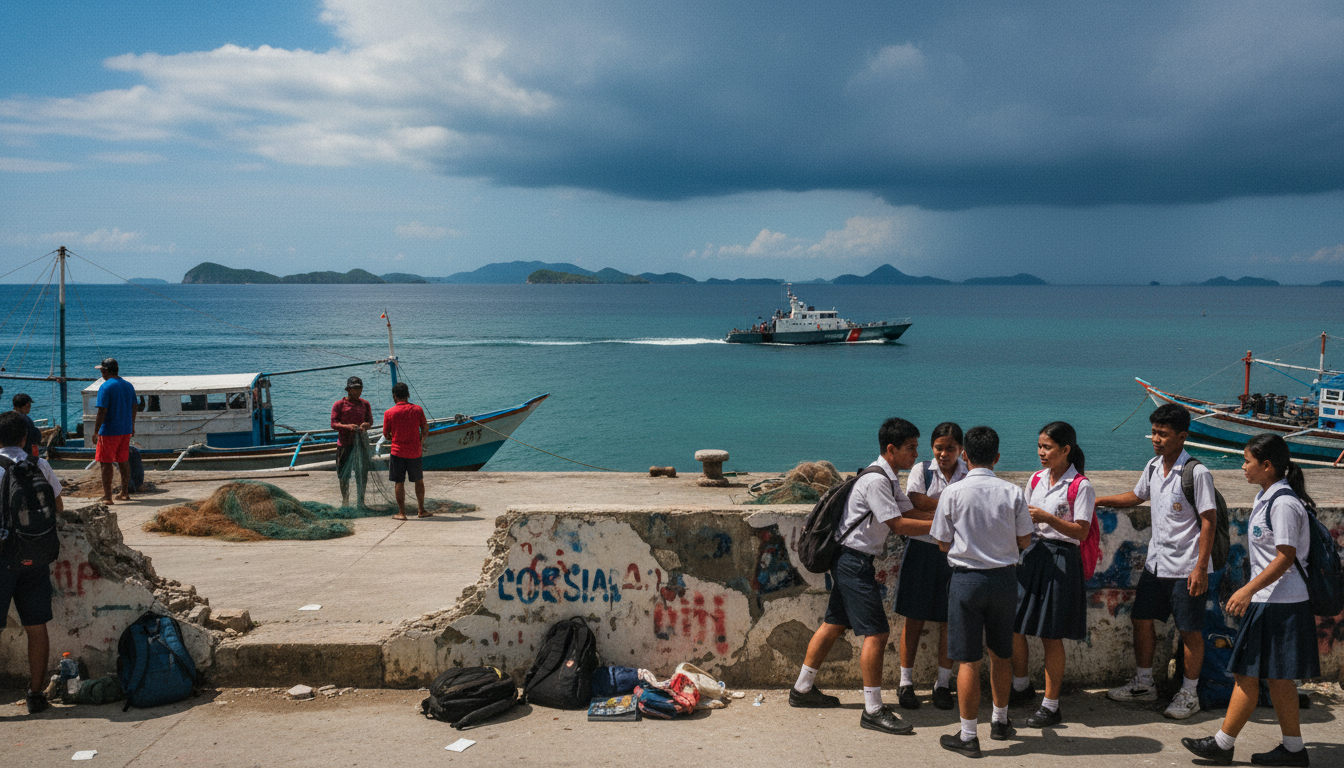
The PISA 2025 results, which indicate the Philippines remains among the top countries in bullying, present a pattern extending beyond school environments. Rappler reported on 2026-09-18 that the Philippines' bullying index is "still higher than average." This sustained high ranking in student aggression metrics points to an underlying societal tension that warrants examination within the context of broader national conduct.
Historically, the Philippines has navigated complex internal and external challenges. The persistence of high bullying rates, as identified by PISA, reflects dynamics within its youth population. The UNESCO Global Education Monitoring Report, published on 2026-03-19, notes the spread of phone bans in schools worldwide, indicating a global debate on digital influence. While this report does not specifically connect phone use to bullying rates in the Philippines, its timing prior to the PISA results indicates a wider concern for student welfare and behavior in educational settings globally, which may be relevant to the Philippines' domestic context.
Regionally, this internal measure of aggression and dominance is paralleled in the country's external relations, particularly in the South China Sea. On 2023-11-16, The Guardian reported the Philippines military accusing China of bullying and vowing to continue missions. ABC News, on 2026-09-09, reported a "war of words" between China and the Philippines over claims in these waters. South China Morning Post, on 2025-10-12, detailed a spike in tensions and collisions between Chinese and Philippine ships. In these instances, the Philippines is characterized as experiencing external bullying, presenting a striking parallel to the internal PISA findings.
What does this mean differently for markets like Thailand and the broader Asia-Pacific? Thailand, while not a direct claimant in the South China Sea, operates within a regional environment where such acts of perceived dominance, whether national or interpersonal, resonate. The PISA data offers a quantitative insight into a societal characteristic that could influence a nation's response to external pressures or its internal stability. The relationship observed is not necessarily causal, but it is indicative. A nation exhibiting internal patterns of aggression, as measured among its student population, might experience or display similar dynamics on a geopolitical stage.
The strongest counterargument to this interpretation is that student bullying, a deeply social and psychological phenomenon, is distinct from state-level foreign policy or military posturing. The PISA results measure interactions among individuals within an educational system, whereas maritime disputes involve sovereign actors, economic interests, and historical claims. While both involve power imbalances and assertions of dominance, the mechanisms and motivations differ significantly. However, the consistent framing of the Philippines as encountering "bullying," both internally among its youth and externally from other states, suggests a recurring theme in its experience of power dynamics.
Another perspective emerges from the Reuters report on 2026-09-15, detailing former Philippines leader Duterte's appearance before ICC judges. This event underscores domestic accountability and the rule of law, critical factors influencing a nation's international standing and internal stability. The interplay between societal behavior, geopolitical friction, and domestic governance constraints presents an unresolved tension for the Philippines and, by extension, the Asia-Pacific region. The high PISA bullying index is not merely a social statistic; it is a data point within a larger, intricate regional narrative.
Sources
Newsletter
Pacific Daily
A curated briefing from Thailand, Asia-Pacific and the world.