Taipei Police Raid Tests Taiwan’s Liberal Image
An operation by Taipei's Wanhua Precinct against Commander D, amidst allegations of excessive force, challenges perceptions of LGBTQ+ rights implementation in a region with diverse legal landscapes.
TAIPEI
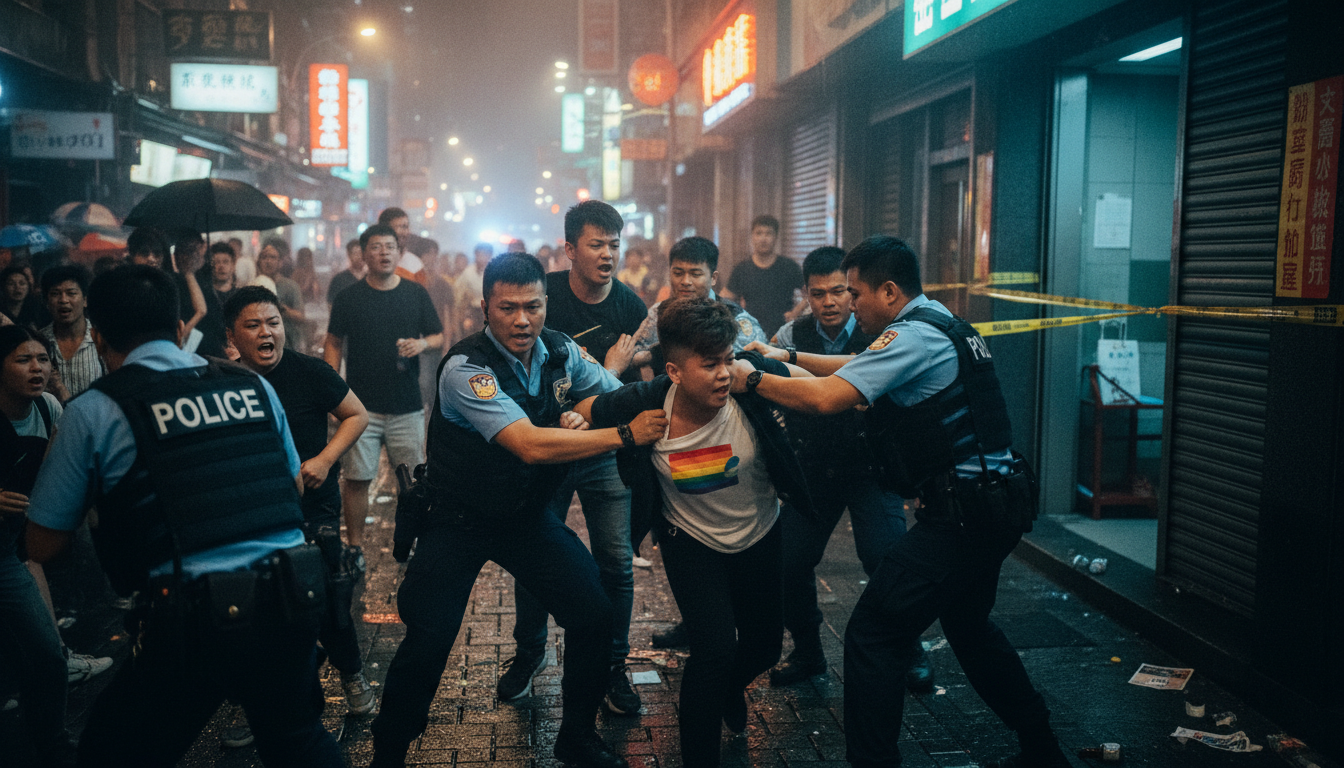
Taipei police operations, particularly the recent raid on the gay bar Commander D, reveal a tension within Taiwan’s established international image. Civic groups protested the Saturday raid, citing what they describe as excessive force and demanding an apology from authorities.
Witnesses reported that officers refused to display a warrant, ordered people not to talk or use their phones, and insulted LGBTQ+ individuals during the operation. Dozens were detained following alleged reports of nudity and indecent behavior, according to the Wanhua Precinct. This incident, while local in its immediate scope, touches upon broader dynamics concerning social freedoms and state authority.
Taiwan has distinguished itself through legal advancements for LGBTQ+ rights, including the legalization of same-sex marriage. This legislative progress has cultivated an international perception of a society moving towards greater inclusion. However, the actions of the Taipei police, as described by civic groups, present a counter-narrative, suggesting that legal frameworks do not always translate into consistent enforcement or societal acceptance on the ground.
The swift and forceful nature of the raid, as protested by civic groups near Ximending’s Red House, contrasts with stated commitments to protecting marginalized communities. This disjunction between policy and practice creates uncertainty about the lived experience of LGBTQ+ individuals in Taiwan, particularly when confronting law enforcement. The incident forces a re-evaluation of whether institutional practices have evolved in step with legislative changes.
The regional context underscores the significance of this event. Across Asia, LGBTQ+ communities face varying degrees of discrimination and legal challenges. Taiwan’s progress has offered a notable example of legal reform, creating a reference point in the region. Any perceived inconsistency in the application of protection, therefore, carries weight beyond its immediate locale, potentially influencing broader perceptions of human rights in the Asia-Pacific.
The underlying constraint that remains unresolved is the gap between legal recognition of rights and their consistent, dignified application by state institutions. The Taipei police raid on Commander D, as civic groups protest, suggests that while the capability to legislate for rights exists, the institutional culture required to implement them without prejudice may still be undergoing transformation.
Sources
Newsletter
Pacific Daily
A curated briefing from Thailand, Asia-Pacific and the world.