When Air Quality Halts the Field, Outdoor Event Economics Face Their Structural Ceiling
The postponement of the Singapore FA Cup final exposes how rigid environmental thresholds disrupt recreational revenue and shift commercial risk onto operators
SINGAPORE
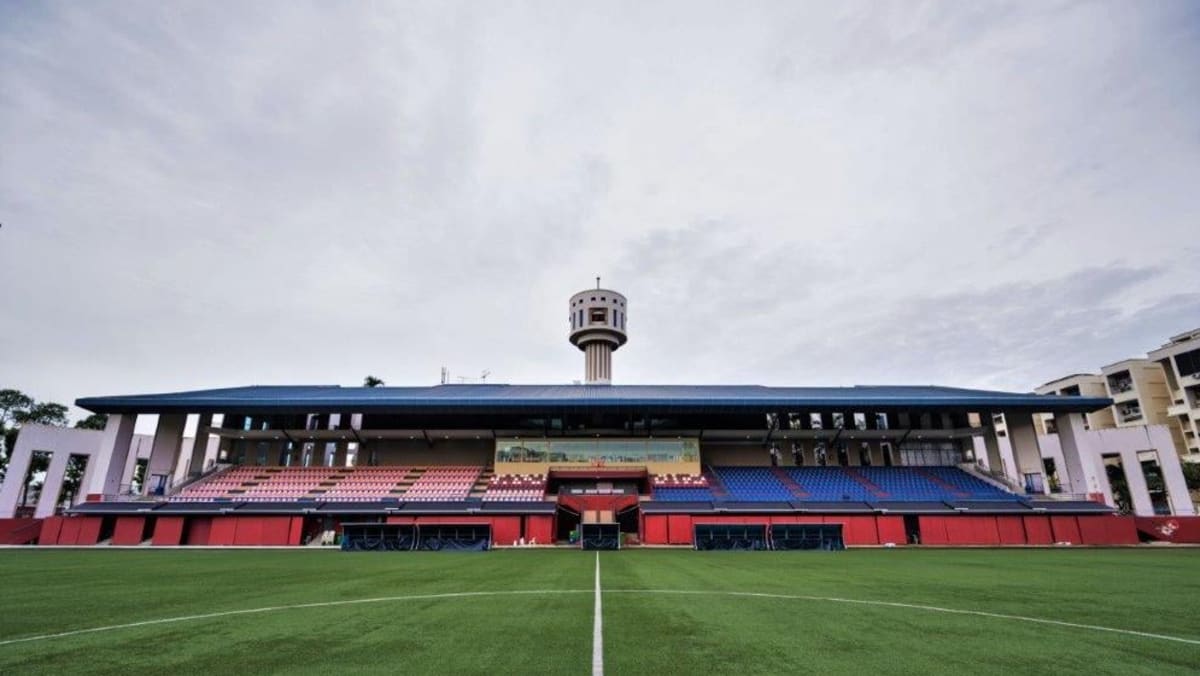
When the Pollutant Standards Index breached the 200 threshold in western Singapore, administrative protocols performed exactly as drafted. The Football Association of Singapore confirmed on Friday that Saturday fixtures at Jurong East Stadium, covering both the Singapore FA Cup final and the third-place play-off, could not proceed. That decision executed the operational framework defined under the FAS-Singapore Premier League Haze Management Protocol.
Halting competition protected athlete health, yet the immediate cancellation rippled well beyond a single football pitch. The decision coincided with widespread disruption across the urban sporting calendar in October 2026. Organisers also called off or rescheduled major mass-participation gatherings, notably the Great Eastern Women's Run and the Purple Parade. In aggregate, the abrupt shutdown of public grounds and recreational spaces demonstrates how transboundary pollution acts as an unpredictable supply shock to the leisure economy.
The Cost of Rigid Thresholds
Event staging relies on non-recoverable operational commitments. Pitch allocations, logistical staffing, emergency medical services, and broadcast preparations must be commissioned days in advance. Under the established FAS-Singapore Premier League protocol, amateur fixtures halt once the Pollutant Standards Index climbs above 200. This numerical trigger removes ambiguity for match commissioners and team staff, eliminating hazardous exposure during acute pollution spikes.
Yet binary cut-offs create an asymmetric financial burden for event organisers and freelance operators. While commercial entities must guarantee participant safety, fixed expenditures cannot be recouped when smoke drifts across national borders. In community athletics, coaching sessions face automatic suspension, cutting off daily wages for independent trainers. When amateur finals and mass-participation running races are deferred, secondary vendors absorb the loss of perishable inventory, staging hire, and matchday commerce.
Binary health cut-offs remove administrative ambiguity during acute pollution spikes, but they create an asymmetric financial burden for outdoor operators.
Institutional federations can absorb delayed match schedules by compressing remaining cup fixtures into later calendar slots. For corporate-sponsored events like the Great Eastern Women's Run or civic initiatives such as the Purple Parade, rescheduling requires negotiating new venue permits and crowd control measures in an already congested urban calendar. Public safety protocols mandate cessation, but urban planning frameworks offer no operational compensation mechanism to buffer the underlying service providers against transboundary air pollution.
Unbuffered Environmental Exposure
Some analysts may argue that event planners should simply factor climate variability and seasonal haze into their baseline operating models through insurance contracts and flexible scheduling. Contingency reserves, according to this view, represent a standard cost of doing business in equatorial Southeast Asia. Planning around predictable seasonal windows ought to mitigate disruptions to domestic sports administration.
That argument underestimates the limits of commercial risk transfer for community-scale recreation. Standard underwriting rarely covers atmospheric disruptions that fall below declared natural disasters, leaving mid-tier sports leagues and non-profit organisations entirely exposed. Furthermore, domestic event calendars cannot simply retreat indoors, given the physical footprint required for mass marathons and stadium football. As environmental monitoring tightens compliance across metropolitan centres, the gap between strict public health mandates and commercial risk protection will only widen.
The real vulnerability exposed at Jurong East Stadium is institutional rather than meteorological. Regulatory compliance functions with mathematical precision once air indices cross designated safety levels, but the regional leisure sector remains fundamentally unprotected against external environmental externalities. Until contractual agreements incorporate explicit revenue-sharing buffers for environmental suspensions, outdoor operators will continue to bear the full cost of an atmosphere they cannot control.
Sources
Newsletter
Pacific Daily
A curated briefing from Thailand, Asia-Pacific and the world.