Elder Abuse Reports Reveal Unseen Vulnerabilities in Asia-Pacific
A rise in reported cases suggests growing societal pressures rather than an isolated issue, with demographic shifts and economic factors likely playing a role.
SINGAPORE
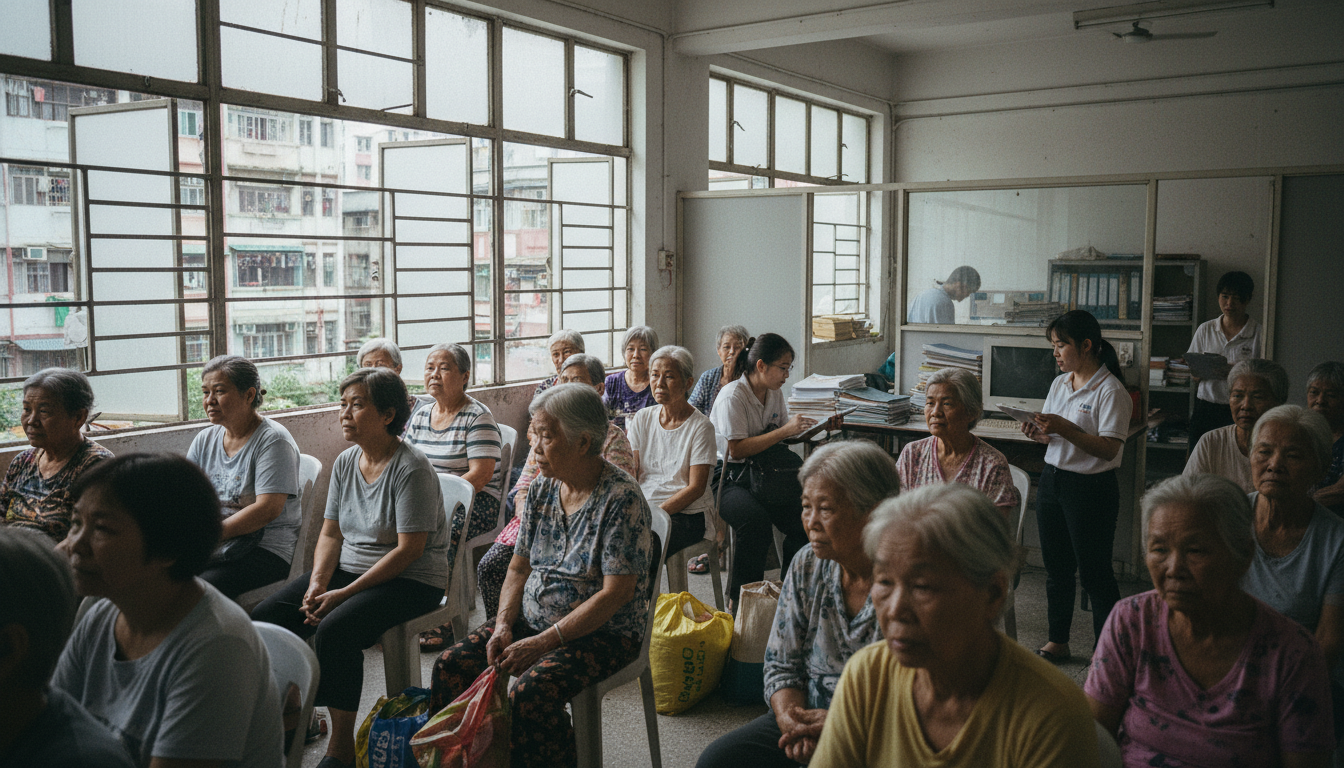
Reports of elder abuse exceeding 26,000 cases highlight a significant, yet often under-examined, societal challenge across the Asia-Pacific region. While the Taipei Times notes this figure, the number itself requires context. These are reported cases, which implies a potential for many more incidents that remain unacknowledged or unaddressed. The statistic functions as an indicator of increasing pressure points within an aging demographic.
Demographic trends across the region suggest that populations are maturing, placing new demands on support systems and intergenerational relationships. As these shifts occur, the incidence of reported abuse, even if partially due to increased awareness or better reporting mechanisms, points to underlying structural weaknesses. The focus of family offices in the Asia-Pacific on artificial intelligence investments, as reported by The Business Times on 2026-09-22, underscores a broader economic narrative focused on technological advancement and wealth generation. However, this economic lens often overlooks the social safety nets required for vulnerable groups, including the elderly.
The specific mechanisms contributing to elder abuse are varied, but economic strain, caregiver burnout, and inadequate legal or social protections frequently emerge as factors. The financial pressures on younger generations, often tasked with supporting both their children and their aging parents, can create environments where abuse, whether financial, physical, or psychological, becomes more prevalent. Santander's overhaul of its Asia-Pacific business, reported by Reuters on 2026-07-08, and SoftBank's pursuit of up to $100 billion from Gulf investors for AI, also reported by Reuters on 2026-10-09, illustrate a regional economy undergoing significant transformation. This transformation, while promising growth, may not equally benefit all segments of society, leaving some, like the elderly, more exposed.
Some might argue that higher reported figures simply reflect improved public awareness campaigns or more accessible reporting channels. While this could account for a portion of the increase, it does not fully explain the scale of reports exceeding 26,000. It is more likely that a combination of factors, including both better reporting and an actual rise in incidents due to evolving social and economic conditions, is at play. The Pew Research Center's 2026-07-15 report on China's image in the Asia-Pacific region highlights the complex social dynamics at work regionally; an understanding of these dynamics is crucial for addressing issues like elder abuse comprehensively.
Focusing on reported cases alone, without delving into the root causes, risks providing an incomplete picture. The economic and social strains that can lead to elder abuse are often intertwined with rapid urbanization, migration patterns, and the weakening of traditional family support structures. For instance, if families are geographically dispersed for economic opportunities, the burden of care for elderly relatives may fall disproportionately on fewer individuals, or professional care options may be unavailable or unaffordable.
Addressing the issue requires more than just acknowledging the reported numbers. It necessitates a deeper examination of the economic conditions that contribute to such vulnerabilities, the effectiveness of existing social support systems, and the legal frameworks designed to protect the elderly. Without these broader policy considerations, the figure of over 26,000 reported cases will likely continue to represent only the visible portion of a much larger, unresolved societal challenge.
Sources
Newsletter
Pacific Daily
A curated briefing from Thailand, Asia-Pacific and the world.