State Spectacle and Structural Strain in Lahore
A narrow sporting triumph against England masks deepening governance pressures across Pakistan's domestic perimeter.
SINGAPORE
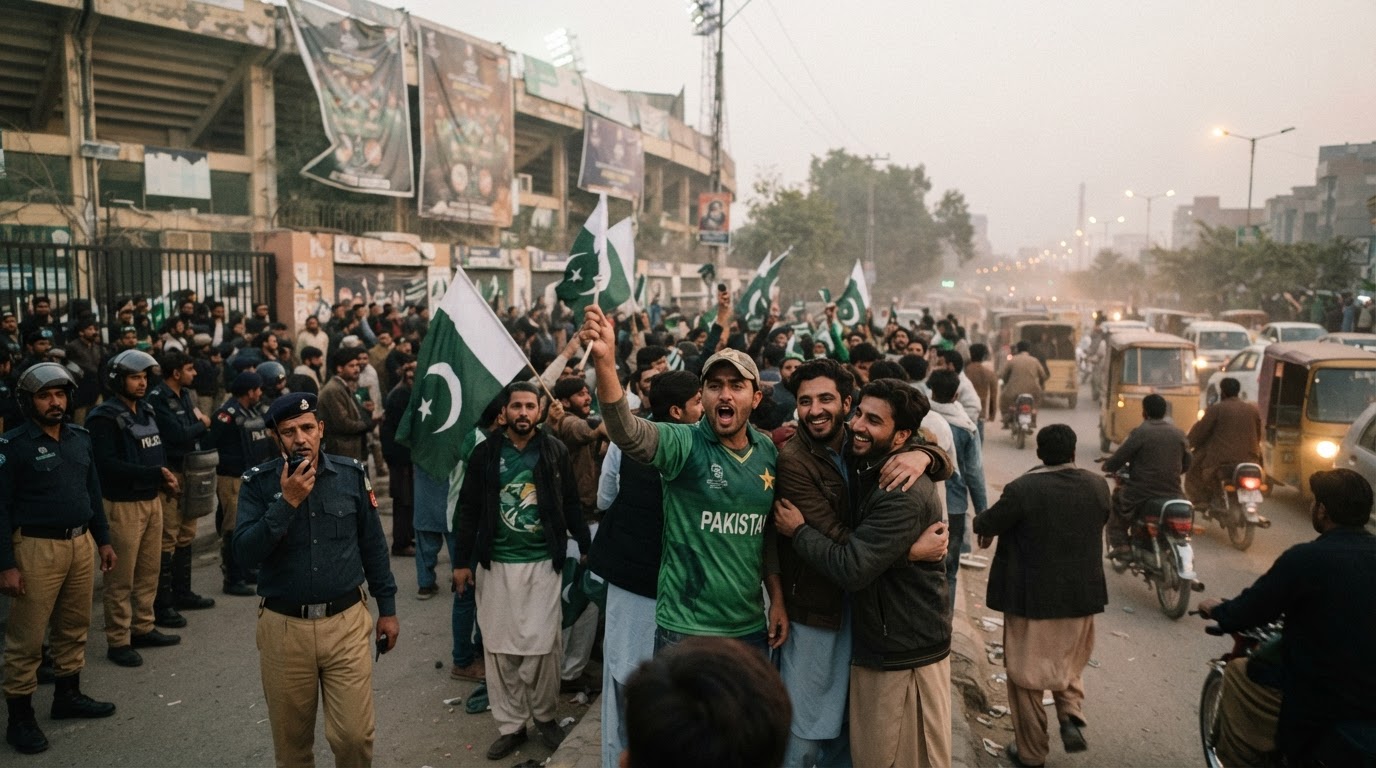
International athletic fixtures staged at Gaddafi Stadium in Lahore have long functioned as an instrument of sovereign reassurance. On October 25, 2026, Pakistan secured a one-wicket victory over England in the Fourth One Day International, an outcome anchored by late-order contributions from Shadab Khan alongside Haris Rauf. Athletic tension culminated in an intense sporting celebration for the home crowd as the narrowest possible margin separated the competing sides. Elite sporting encounters across South Asia frequently serve as high-visibility displays of administrative normality, projecting organizational competence to international partners and domestic spectators alike. The capability to host foreign teams without operational disruption provides the host state with a coveted veneer of predictability.
Such episodic rallies offer valuable civic distraction, yet they arrive during an acute convergence of governance and economic pressures across the republic. The contest demonstrated tactical resilience on a cricket pitch, but the institutional foundation supporting the broader state remains severely strained. Public celebration in Lahore stands in stark contrast to the material deficits confronting communities beyond the stadium perimeter. Symbolic achievements on the field cannot substitute for basic administrative stability or state capacity. When structural distress deepens, the gap between sporting spectacle and everyday reality widens into an undeniable governance contradiction.
Domestic Fragility Behind the Turnstiles
Internal political cohesion broke down severely when federal authorities moved to impose emergency rule over the provincial government allied with Imran Khan. That executive intervention underscored deep polarization that continues to paralyze regional administration and test constitutional structures. Institutional decay became tragically apparent when thirty-four children and a teacher were killed in a catastrophic school roof collapse, exposing chronic deficiencies in civil infrastructure and municipal oversight. Such structural failures reflect decades of deferred public investment and regulatory neglect across essential civic services. The loss of life in a classroom illustrates how administrative neglect directly endangers vulnerable citizens while elite resources concentrate elsewhere.
Compounding these systemic fractures, essential energy supply networks experienced severe disruption immediately preceding the Lahore fixture. Commercial traders reported that liquefied petroleum gas shortages had intensified following sudden border closures, squeezing household budgets and commercial supply chains. These simultaneous crises demonstrate that while elite sporting events proceed under strict logistical security, the routine delivery of public services and municipal safety remains compromised. Operating a pristine turf in Lahore does not resolve the institutional gaps that leave school buildings vulnerable to collapse or border crossings closed to essential fuel transports. The state demonstrates an ability to secure a stadium while struggling to guarantee basic energy flows to its population.
Diplomatic Diversification
Beyond domestic borders, strategic recalculations are quietly reshaping external policy. On October 21, 2026, an accord announced by Ankara established defence cooperation between Turkey, Qatar, Pakistan, and Indonesia. This diplomatic initiative signals an effort by Islamabad to embed itself within alternate multilateral security frameworks, seeking strategic hedging beyond traditional Western conduits. Aligning military ties across multiple sovereign partners reflects a pragmatic search for geopolitical resilience at a moment when internal economic vulnerabilities restrict traditional statecraft. Diversifying security architecture allows Islamabad to maintain international relevance even as domestic fiscal room contracts.
Supporters of high-profile sporting fixtures maintain that successful tours by foreign teams such as England project stability, encourage inbound commercial engagement, and foster social cohesion during periods of civil stress. International cricket matches unquestionably generate foreign visibility and transient morale that few bureaucratic policy statements can replicate. A close sporting victory over a premier adversary provides an immediate psychological boost to a weary public. Global cameras broadcast images of festive stands rather than shuttered fuel depots or contested provincial assemblies.
That argument nevertheless mistakes atmospheric distraction for institutional capability. Individual athletic efforts by players such as Shadab Khan generate temporary pride, but sporting outcomes do not alter underlying governance realities. National resilience is not forged through close finishes in athletic tournaments; it depends on the mundane, durable functions of public administration. The decisive test facing Pakistan is not its capacity to edge past England on home soil, but its ability to stabilize provincial institutions, secure municipal infrastructure, and resolve the economic bottlenecks that continue to weigh on everyday life. Until those foundational administrative mechanisms are restored, sporting triumphs remain brief interludes within an unresolved structural crisis.
Sources
Newsletter
Pacific Daily
A curated briefing from Thailand, Asia-Pacific and the world.