St Regis Langkawi's Agritech Partnership Addresses Operational Stability
The hotel's collaboration with BoomGrow to cultivate produce on-site introduces an operational modification that seeks to mitigate supply chain vulnerabilities in a region where resource access can fluctuate.
SINGAPORE
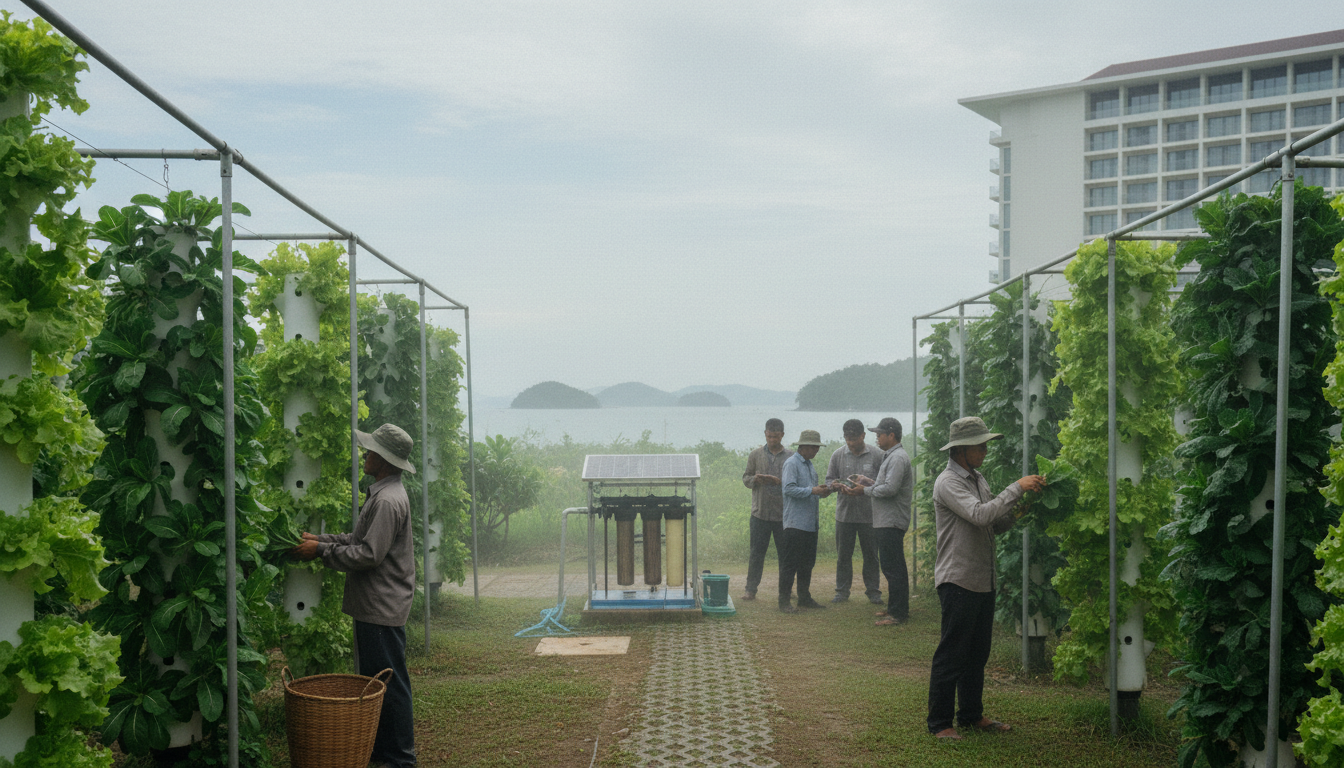
The St Regis Langkawi has initiated a partnership with Malaysian agritech company BoomGrow, introducing ‘The Art of Cultivation’ program. This initiative integrates the growing of produce directly into the resort’s food and beverage operations, allowing guests to observe and participate in the cultivation process. The program outlines stages of cultivation, discusses ingredient provenance and flavour profiles, and demonstrates culinary applications. BoomGrow, a company specializing in technology-based indoor farming systems, provides the cultivation infrastructure.
From an operational standpoint, integrating an on-site agritech solution such as BoomGrow’s system addresses a fundamental vulnerability in hospitality supply chains: reliance on external food sources. The hotel industry, particularly luxury segments that emphasize fresh, high-quality ingredients, typically depends on a complex network of suppliers. These networks are susceptible to disruptions from economic volatility, logistics challenges, and environmental factors. For example, recent reports from Reuters and Nikkei Asia indicate Malaysian regulators are already asking publicly-traded firms to plan for El Niño’s effects, highlighting the pre-existing environmental pressures on agricultural supply in the region. By cultivating produce directly within the resort, the St Regis Langkawi effectively internalizes a portion of its supply, potentially reducing exposure to these external market fluctuations.
This shift moves beyond typical ‘farm-to-table’ marketing narratives to a more structurally integrated approach. While the program is framed as a guest experience, its underlying function is to secure a consistent supply of ingredients and manage quality control directly at the point of consumption. This operational restructuring could offer a buffer against price volatility and availability issues for key fresh produce components. It also reduces transit times and storage requirements, which can degrade product quality and increase waste. The direct cultivation model establishes a more resilient system for a subset of ingredients, an advantage in an operating environment where external dependencies are a constant concern.
However, the scalability and scope of such an in-house farming system require assessment. BoomGrow’s technology-based indoor farming systems suggest a controlled environment with specific output capabilities. The question remains whether the volume and variety of produce generated can meet the broader demands of a luxury resort’s diverse culinary offerings. Furthermore, the operational overhead associated with maintaining an agritech facility, including energy consumption, specialized labor, and technology maintenance, must be factored into the economic equation. While reducing external supply risks, this internalizes a new set of operational complexities and costs. The long-term efficiency and full impact on the hotel’s overall cost structure depend on these elements.
The adoption of integrated agritech by a luxury hotel in Langkawi represents an operational adaptation to regional supply dynamics. It provides a degree of internal control over product availability and quality that traditional procurement methods cannot. The unresolved constraint lies in proving the economic and operational efficiency of this internal system against the scale of demand, a factor that will ultimately determine its long-term viability as a model for other regional operators.
Sources
Newsletter
Pacific Daily
A curated briefing from Thailand, Asia-Pacific and the world.