The 'Premium Experience' Trap
Collinson Group’s investment in Priority Pass focuses on digital and data. This may address passenger volume, but neglects the spatial constraints that define true airport sanctuary.
SINGAPORE
The announcement of Collinson Group’s accelerated 350 million pound financing facility, augmenting an existing 500 million pound, five-year investment program, centers on an expansion of its proprietary lounge network and enhancements to the Priority Pass airport experiences. The stated aim includes developing digital, AI, and data capabilities (TTG Asia, 2026-09-18). This strategy, framed as "accelerating travel innovation," implicitly acknowledges a central tension in the contemporary airport lounge.
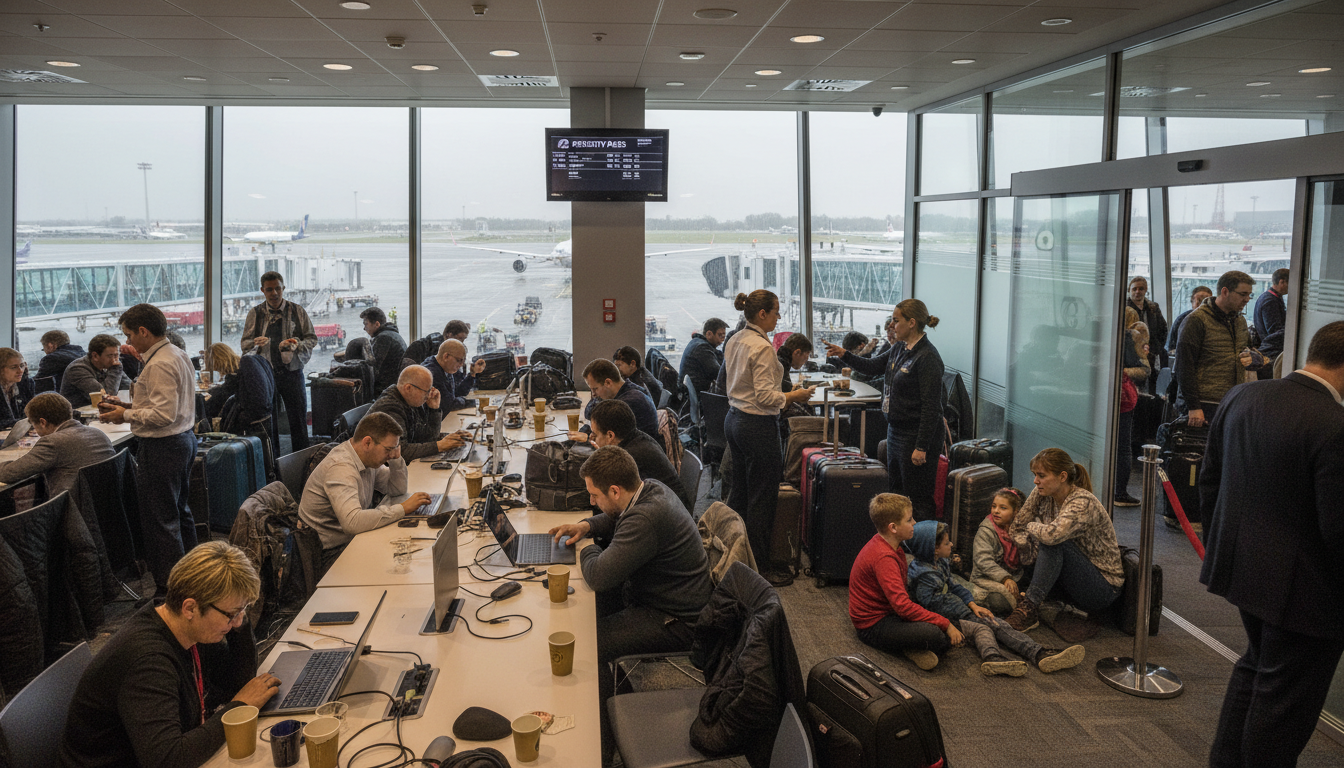
Priority Pass, a service offering access to numerous lounges, operates within a finite physical infrastructure. The reported investment prioritises digital advancements. These capabilities, while promising in streamlining access or personalising offers, do not fundamentally alter the physical experience of a lounge. An increase in members or usage, facilitated by digital efficiency, directly exacerbates the challenge of physical capacity. Airport lounge operators already face the necessity to "refine attractions to curb overcrowding" (The Straits Times, 2025-04-09). The very concept of a premium experience relies on a degree of exclusivity and comfort, which density compromises.
The emphasis on AI and data capabilities suggests an intention to manage demand or optimise existing space. This implies a response to the practicalities of high traffic. However, the architectural and spatial qualities that differentiate a lounge from a general terminal area are not mutable through digital means. The promise of a tranquil environment in a bustling airport depends on a controlled occupancy and a well-designed physical space, not merely efficient digital gateways. The "largest in Asia" claim for a Suvarnabhumi first-class lounge in 2017 (Bangkok Post, 2017-05-04) speaks to a past era of physical expansion, rather than digital optimization.
The investment, while substantial, does not explicitly address the physical limitations of existing airport lounge infrastructure, particularly in high-growth regions like Asia-Pacific. Where Priority Pass aims for "premium lounge services" (Livemint, 2023-04-02), the digital focus risks creating a paradox: easier access and broader availability could dilute the very 'premium' quality it seeks to enhance. The critical question remains what these capabilities refuse to do: expand the physical footprint sufficiently to absorb the increased demand they are designed to facilitate. Without a commensurate physical expansion, the digital 'innovation' may simply translate to more people competing for the same constrained square footage. The unresolved constraint is the inherent tension between widening access and maintaining a perceptibly elevated experience in a physically limited environment.
Sources
Newsletter
Pacific Daily
A curated briefing from Thailand, Asia-Pacific and the world.