Infrastructure for Reflection: Japan’s Pilgrimage Shift
Connecting travelers to ancient routes raises questions about authenticity and local impact.
SINGAPORE
Five major Japanese transport companies — East Japan Railway Company (JR East), Central Japan Railway Company, West Japan Railway Company, Shikoku Railway Company, and Japan Airlines Co. — are collaborating on an initiative announced on 2026-09-18. The stated goal is to enhance accessibility for international travelers to three of Japan's ancient pilgrimage regions. This effort is framed around experiences focused on nature and reflection.
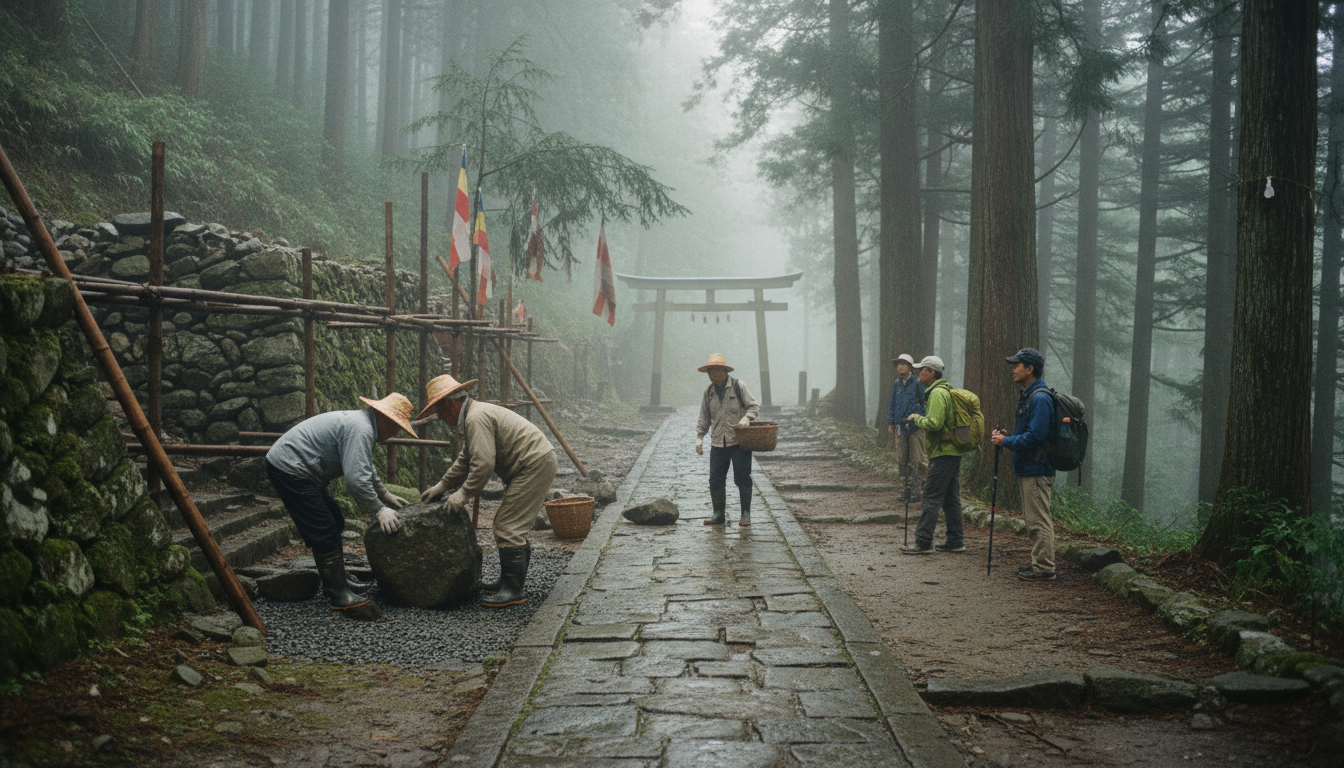
The deployment of significant infrastructure to facilitate access to these routes presents a distinct design challenge. Historically, pilgrimage often involved a degree of difficulty, a journey of physical and spiritual effort. This initiative reconfigures that experience, streamlining it for a wider, international audience. The design choice here is to prioritize ease of entry, potentially at the expense of the rugged, less mediated encounter that characterized these paths for centuries. When accessibility becomes paramount, the specific architectural and environmental nuances that define a pilgrimage route can be altered to accommodate more traffic, more diverse needs, and a different pace.
The implied benefit for Japan is an increase in tourism revenue, positioning these regions as cultural destinations in a competitive global market. For the companies involved, it represents a new commercial opportunity, leveraging existing networks for a distinct tourism product. However, the direct implications for Thailand and other Asia-Pacific nations are less clear. While Japan's yen recently slumped after the Bank of Japan hiked rates, an initiative aimed at international travelers might help to offset some economic pressures. The broader region sees significant movement in tourism, with Asia driving global aquatic production and Korean hospitals dominating specialty rankings, indicating a robust and diverse visitor economy.
Yet, a counterargument must consider the potential for commodification. When ancient, often sacred, pathways are packaged for 'experiences centred on nature, reflection,' the intent shifts from spiritual pursuit to curated leisure. This adaptation could dilute the very essence that makes these sites significant, transforming them from living traditions into museum-like attractions. The physical environment of these routes, from their original path to supporting facilities, will inevitably undergo alterations. The question then becomes whether the new infrastructure respects the existing spatial order or imposes a new one, prioritizing volume over integrity.
Ultimately, the initiative illuminates a tension inherent in heritage tourism. The desire to share cultural treasures with the world clashes with the imperative to preserve their authenticity. The design decisions made in this project will determine whether these pilgrimage routes continue to serve as sites of genuine reflection or become mere backdrops for a commercialized experience. The success of such a venture, particularly concerning its long-term impact, hinges on careful consideration of the physical and spiritual climate of these paths, ensuring they work not just for the visitor, but for the tradition itself.
Sources
Newsletter
Pacific Daily
A curated briefing from Thailand, Asia-Pacific and the world.