Solomon Islands Rescue Highlights Persistent Maritime Dependence
The MV Awka incident, with over 70 people adrift, underscores a fundamental reliance on external assets for critical maritime safety in the Pacific, reflecting broader regional vulnerabilities.
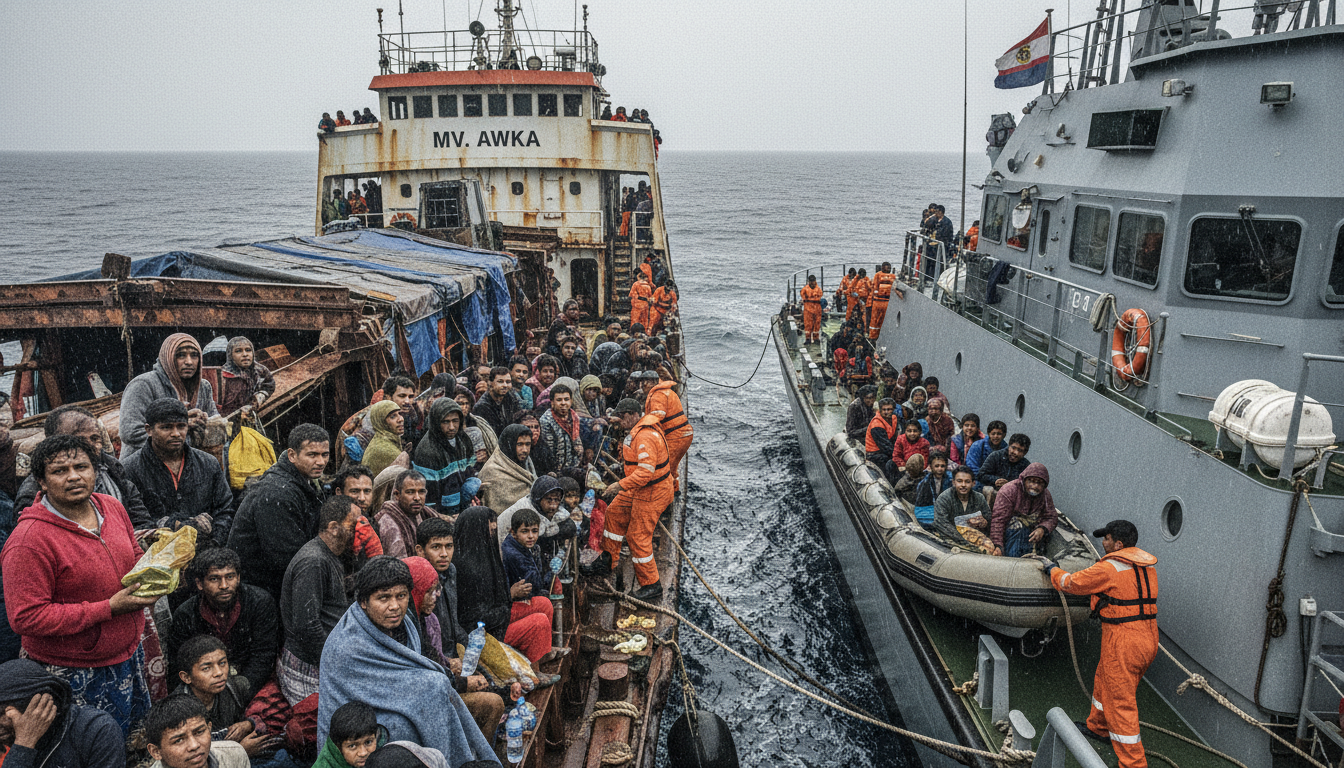
The Solomon Islands’ urgent assessment to rescue more than 70 people from the drifting MV Awka near Temotu Province, after its engine failed while traveling from Anuta to Vanikoro, reveals a complex maritime security landscape. While immediate assistance from a French military aircraft and other countries has been directed to the vessel, this event underscores a persistent challenge for Pacific nations.
Historically, the Solomon Islands, an archipelago reliant on sea travel, faces inherent difficulties in maintaining comprehensive maritime surveillance and rapid response capabilities across its extensive waters. The situation with the MV Awka, reported by RNZ Pacific on October 11, 2026, where a distress signal was issued on Friday, fits a pattern. Significant progress in delivering emergency supplies via international vessels and aircraft demonstrates external dependency in crises. This reliance has shaped regional power dynamics for some time, with the United States discussing deepening ties and the return of the Peace Corps.
Regional security frameworks are frequently tested by such incidents, revealing gaps in sovereign operational capacity. The fact that countries beyond the Solomon Islands are providing direct assets for search and rescue operations, even for a domestic vessel, indicates that local infrastructure may not always match the scale of maritime challenges. The Lowy Institute noted how solutions like Solomon Islands’ Starlink workaround offer connectivity lessons, yet communication is only one facet of comprehensive maritime safety. Operational capabilities, including air and sea assets for rescue, remain critical.
While external assistance ensures the safety of those aboard the MV Awka, it also highlights an unresolved tension: the desire for national self-sufficiency in security versus the practicalities of geography and resource allocation. Nations in the Pacific frequently balance their sovereign aspirations with the need for partnerships, which can sometimes come with broader strategic implications. News from the South China Morning Post, for example, illustrates complex negotiations involved in regional security arrangements, reporting about a top Chinese South Pacific security partner permitting the US to patrol its waters.
The immediate priority is the safe recovery of those stranded. However, the recurring need for international intervention in what are fundamentally domestic maritime safety incidents presents an enduring challenge for the Solomon Islands. This constraint, a reliance on external partners for basic safety and rescue operations, remains a key unresolved factor in the broader strategic calculus of the Asia-Pacific.
Sources
Newsletter
Pacific Daily
A curated briefing from Thailand, Asia-Pacific and the world.