Singapore's Rhythmic Consumption: The Illusion of Finality
The declared 'final instalments' of a food expo reveal how cultural engagement in Singapore is structured, rather than organically emergent.
SINGAPORE
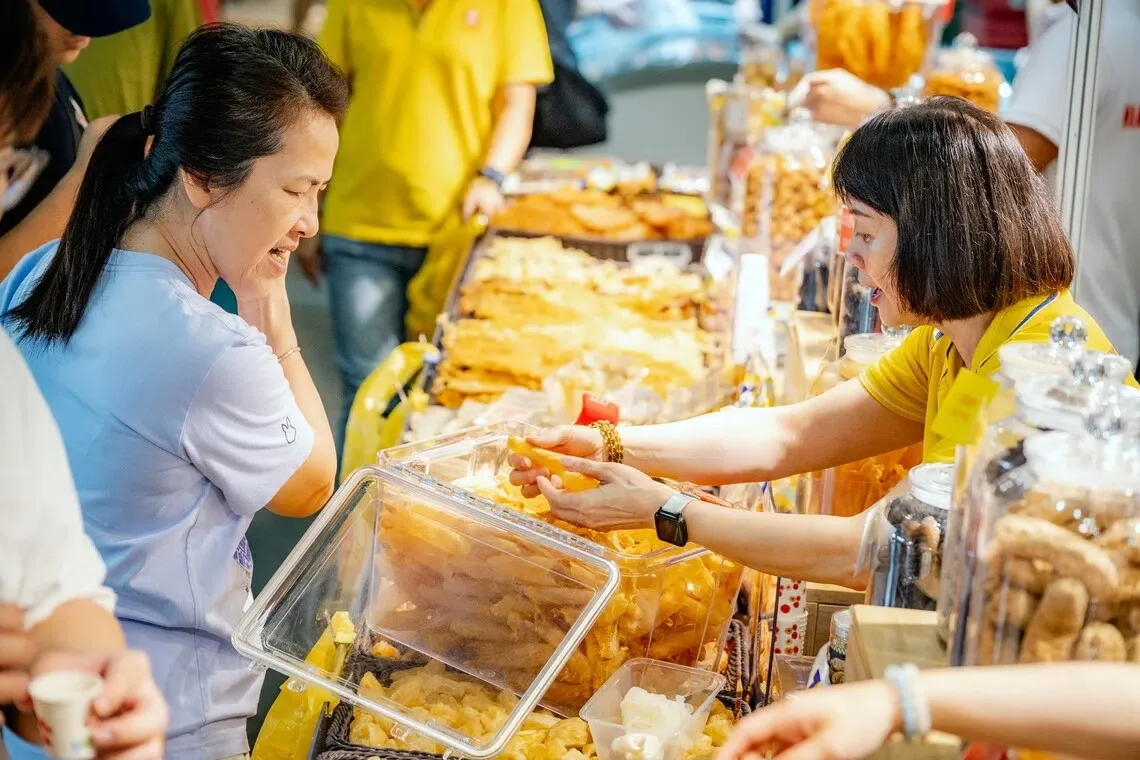
The Singapore Expo is scheduled to host the TLM Food Expo from September 25 to 27, and again for a subsequent period that year. These occurrences are referred to as the “final instalments for 2026.” This event, offering new brands from Hong Kong and Malaysia alongside local options, free admission, and goodie bags for early visitors, occupies a specific space in the city's public life. It is presented as a conclusive opportunity, a culmination for the year’s offerings. However, the framing of ‘final instalments’ rather than a definitive cessation suggests an underlying rhythm to cultural consumption that appears more orchestrated than simply cyclical.
Singapore has long presented public activities within defined structures, whether an expo, a festival, or a designated ‘pass’ for cultural spending. The fact that $539,000 of SG Culture Pass credits were spent on SingLit, as reported in April 2026, indicates an established infrastructure designed to channel residents towards local offerings. The Food Expo, by returning for multiple periods and then concluding its 2026 run, aligns with this pattern of scheduled, contained consumption. It functions as a pre-planned consumption node rather than an organic outgrowth of shifting tastes or spontaneous public interest. This raises a question: does this structured approach genuinely reflect the evolving habits of Singaporeans, or does it primarily direct them into pre-existing conduits?
Consider the alternative: cultural consumption in a city might develop from informal community gatherings, or from the spontaneous emergence of new culinary preferences. Here, however, the primary cultural signal is the formal announcement of an expo, an organised return of a 'popular food fair.' The emphasis is placed on specific, time-bound opportunities: 'final chance to catch all the gourmet action for 2026.' This suggests that the way Singaporeans encounter new food trends, or engage with regional flavours, is often mediated through large-scale, commercial events.
Such events, while providing access to a range of products and experiences — new brands, promotions, product launches — also implicitly delineate the boundaries of acceptable participation. They gather, they present, and then they conclude, leaving a space that is subsequently filled by the next scheduled occurrence. This cycle, a sequence of anticipated ‘final instalments’ rather than a continuous, diffused cultural evolution, reflects a particular mode of consumer behaviour. It is a habit of engagement driven by finite opportunities within designated spaces. What this suggests for the wider Asia-Pacific, particularly for cities that observe Singapore’s model, is a future where cultural discovery is increasingly defined by the formal calendar of large-scale commercial exhibitions rather than by emergent public spaces or evolving local practices. The habit that changes first may not be what people consume, but how and where they are instructed to consume it.
Sources
Newsletter
Pacific Daily
A curated briefing from Thailand, Asia-Pacific and the world.