The cultural currency of access: when loyalty becomes a tradable commodity
The reselling of 'exclusive' concert tickets reveals more than just market opportunism; it exposes fault lines in how status is conferred and consumed in Asia's celebrity culture.
SINGAPORE
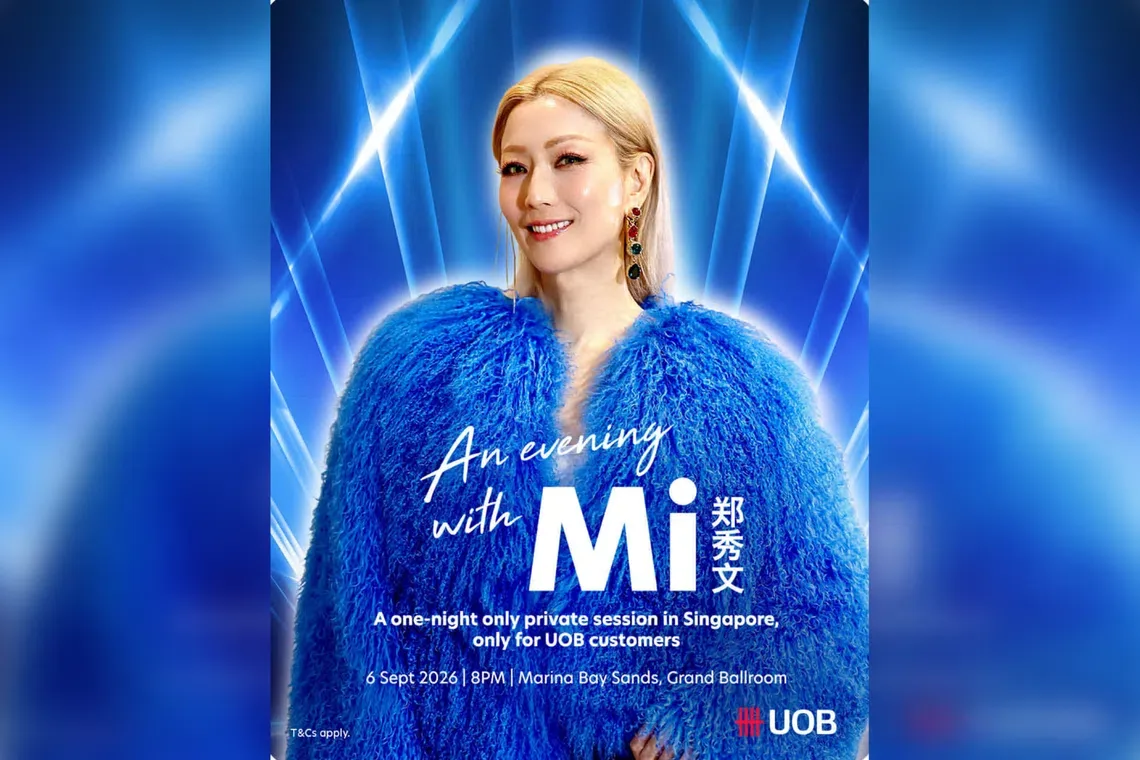
The digital landscape has reconfigured many social transactions, and the recent instance of tickets for Hong Kong singer Sammi Cheng’s private concert for UOB customers appearing online for up to $1,200 illustrates this reordering. These tickets, intended as a redemption-only perk through UOB card spending for a private session in September, are explicitly not for sale or transfer, a term the bank has reiterated while working to remove listings and warning against unauthorized purchases.
This phenomenon extends beyond simple opportunism; it speaks to a deeper cultural dynamic. In many Asian societies, exclusivity and access, particularly to celebrity events, function as potent symbols of status. Historically, such access was a reward for sustained loyalty or an indicator of social proximity. A private concert by an artist like Sammi Cheng, known across the region, is not just entertainment; it is an affirmation for those deemed 'valued customers' by an institution like UOB, Singapore’s third-largest bank. The bank's statement about denying entry or forfeiting tickets suggests an attempt to preserve the integrity of this value proposition, but the very existence of an unauthorized market challenges it.
The swift emergence of a secondary market for these redemption-only tickets highlights a tension between the curated experience and the commercial impulse. What UOB frames as a reward for loyalty and an exclusive privilege, the market reinterprets as a scarce commodity. The value, then, shifts from earned access to acquired access. It strips away the bank's intent to cultivate a relationship with its patrons through a unique offering, reducing it instead to a transaction where the ultimate 'price' is dictated by demand, not by pre-defined loyalty tiers. This commodification of access reflects a cultural predisposition to acquire what is perceived as desirable, regardless of the intended pathways.
Yet, to view this solely as a failure of policy enforcement or a breach of terms might miss the point. Such markets often arise precisely because the underlying 'product' – in this case, direct experience with a beloved cultural figure – holds immense, often emotional, value that official channels struggle to contain or quantify. The demand for Sammi Cheng, a Hong Kong star, across different markets like Singapore, illustrates the transnational nature of celebrity appeal in Asia. It indicates a willingness among certain fans to circumvent official structures for a perceived emotional or social gain. The fact that these tickets, which are meant to be 'free' via redemption, fetch hundreds of dollars, suggests that the perceived value of proximity to culture, however fleeting, often outweighs its original, intended cost or method of acquisition.
Ultimately, this episode reveals a persistent habit: the attempt to redefine social capital through financial means. It shows how the allure of a cultural figure can transform an intended reward into an object of trade, reflecting a broader pattern where experiences meant to cement loyalty are instead consumed as tradable assets. The cultural meaning of 'exclusive access' continues to evolve, reflecting not just what institutions offer, but what individuals are willing to pay to possess.
Sources
Newsletter
Pacific Daily
A curated briefing from Thailand, Asia-Pacific and the world.