Distinguishing 'World's Best' from its Copy: A Bar's Replication and its Repercussions
The recent appearance of a 'Bar Leone' in New York underscores a complex dynamic within global hospitality, raising questions about reputation, ownership, and the nature of success.
SINGAPORE
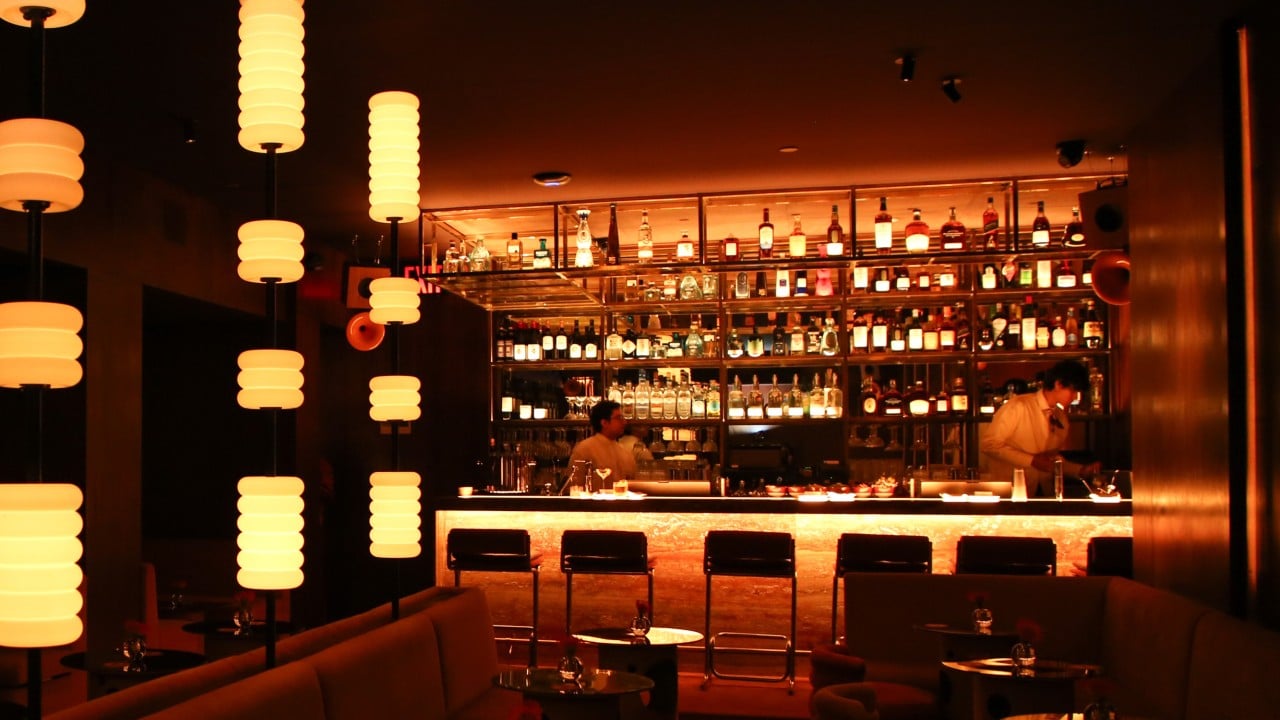
The report of a new establishment in New York City bearing the name 'Bar Leone' has sparked discussion, particularly concerning its relationship to the acclaimed Hong Kong bar of the same name. The Hong Kong Bar Leone, founded in 2023 by Lorenzo Antinori, has achieved significant recognition, including being named Asia’s Best Bar twice (2024-5) and currently holding the title of World’s Best Bar by 50 Best. This success led to a second location in Shanghai’s Huangpu district.
The simultaneous existence of a New York 'Bar Leone' creates a tension. On one hand, the Hong Kong institution has demonstrably earned its accolades, establishing a clear lineage and reputation. Its achievements are the product of specific management and a distinct location within the Asia-Pacific region. On the other hand, the emergence of a namesake in a significant global city like New York suggests a certain ambition, whether to capitalize on a recognized brand or to coincidentally share a popular name. The Hong Kong bar has stated it has no connection with the Lower Manhattan establishment.
The implication for the Asia-Pacific region, and for hospitality ventures globally, is a subtle challenge to the value of earned distinction. When a business, particularly one that has achieved 'World's Best' status, finds its identifier replicated, it forces a re-evaluation of what constitutes 'best.' Is it the name, the concept, the original location, or the specific individuals behind its operation? The immediate assumption might be that the New York bar intends to leverage the Hong Kong bar’s hard-won prestige. However, one might also argue that the new bar simply chose a name, perhaps without full awareness, or even with intent to establish its own, separate identity under a similar banner.
This situation highlights a fundamental vulnerability in brand building, particularly when operating across diverse international markets. The distinct identity cultivated by the Hong Kong Bar Leone, and its expansion into Shanghai, indicates a considered strategy. The New York development, disconnected from this strategy, introduces an element of uncontrolled association. For businesses in markets such as Thailand, which are increasingly gaining international recognition for their culinary and hospitality offerings, such incidents serve as a reminder of the need for clarity in brand and intellectual property, even in a field often characterized by rapid, informal idea exchange. The question is not merely about a name, but about the integrity of an earned reputation when it encounters an external, unmanaged echo. The industry must navigate how value is preserved when its symbols are replicated.
Sources
Newsletter
Pacific Daily
A curated briefing from Thailand, Asia-Pacific and the world.