Singapore's quiet retreat speaks to a wider shift in Asian luxury
An ageing Sentosa bungalow, refitted with ancient Japanese charring, suggests a turn from ostentation to a deeper engagement with place.
SINGAPORE
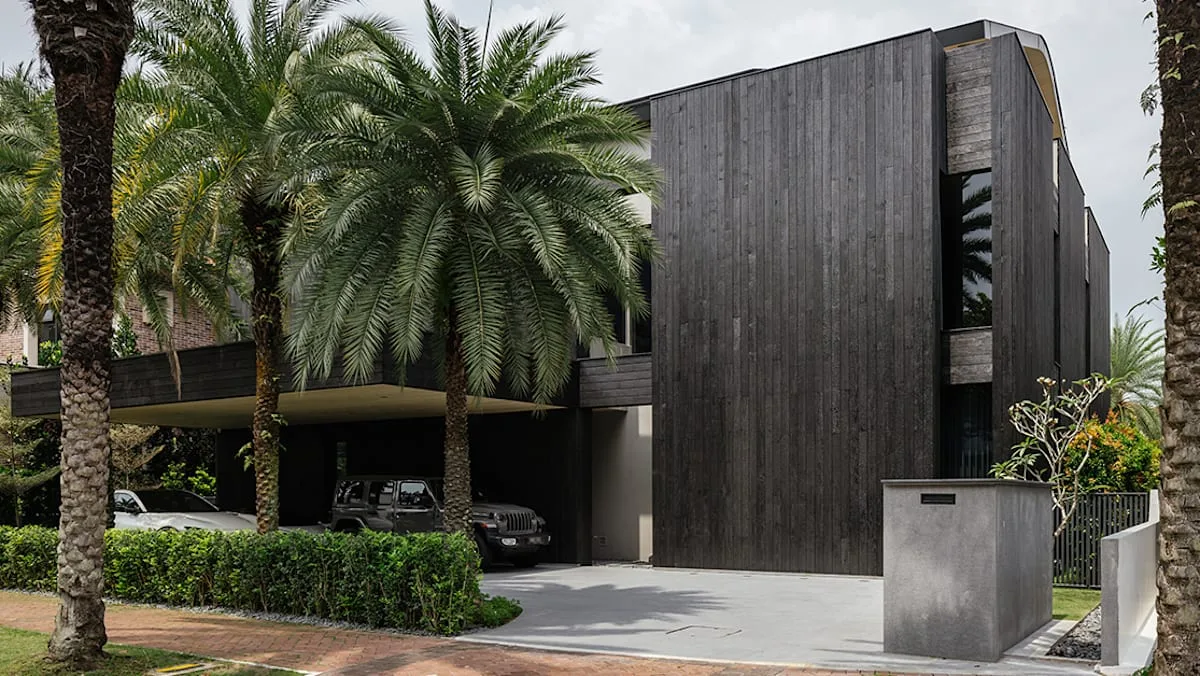
The waterfront bungalows of Sentosa Cove, for all their opulent intent, often present a uniform face. Grand, expansive, yet frequently defined by a certain sameness, they stand as symbols of a particular kind of aspiration. Yet, within this landscape, one recent renovation in Singapore offers a distinct counterpoint, a quiet re-evaluation of what a luxury home might ask of its inhabitants.
Architect Pan Yi Cheng, tasked with transforming an ageing waterfront bungalow, elected for an ancient Japanese technique: shou sugi ban. This charring of timber, a process thought to date to Japan's Edo period, creates a carbonised layer that enhances resistance to moisture, insects, and weathering, reportedly lasting for decades. The street-facing facade of this home now presents a charred black timber, a stark visual departure from its neighbours. This disciplined material choice, as described by CNA Lifestyle, aims for a “calmer, more cohesive home,” contrasting sharply with the glass-lined rear that remains open to the water.
This architectural decision in Sentosa Cove, a locale where Singapore’s second-richest billionaire Kwek Leng Beng recently sold the area’s only mall for over $75M, and where ultra-rich Asians have sought luxury homes, suggests a nuance often overlooked. The prevailing image of Sentosa is anchored in “superyachts and the sweet life,” as reported by The Straits Times from the Singapore Yachting Festival. The island’s high-end appeal is evident in facts such as a British expat paying $7,000 a month for rent. This context paints a picture of acquisition and display, where status is often communicated through scale and visible expense. To introduce shou sugi ban here, a technique rooted in durability and understated elegance, poses a subtle challenge to this prevailing mode.
The adoption of shou sugi ban might be interpreted simply as an aesthetic trend, a momentary turn towards a more minimalist, or even industrial, design. However, given its historical purpose and the architect’s stated aim for calmness and cohesion, it suggests something more. It asks occupants to consider a material that, by its very nature, embraces age and imperfection. Unlike the pristine, unblemished surfaces often associated with new luxury, charred timber matures with character. This choice, therefore, implies a shift from a purely consumptive relationship with space to one that values longevity and a certain gravitas. The house, by its outward appearance, asks its occupants and observers to look beyond immediate flash and consider enduring value.
The question remains whether this particular bungalow is an outlier or an early signal of a broader desire for more considered, perhaps even contemplative, luxury within Asia’s wealthiest enclaves. The strong pull towards visible affluence, evident in the market for superyachts and high-value property transactions, represents a significant counterargument to any sweeping claim of widespread change. Yet, even within these environments, a subtle reorientation towards materials with history and processes that speak to resilience and quiet strength could mark a small, yet significant, evolution in what high-end living in Asia might ultimately seek to become. The black timber facade, in its understated defiance, offers a meditation on presence rather than mere exhibition.
Sources
Newsletter
Pacific Daily
A curated briefing from Thailand, Asia-Pacific and the world.