Singapore F1 Sprint Pole: A Brief Resurgence Amid Broader Financial Realities
Max Verstappen's latest success on the Marina Bay Street Circuit underlines individual performance, yet the event's ongoing economic mechanics warrant closer scrutiny for regional stakeholders.
SINGAPORE
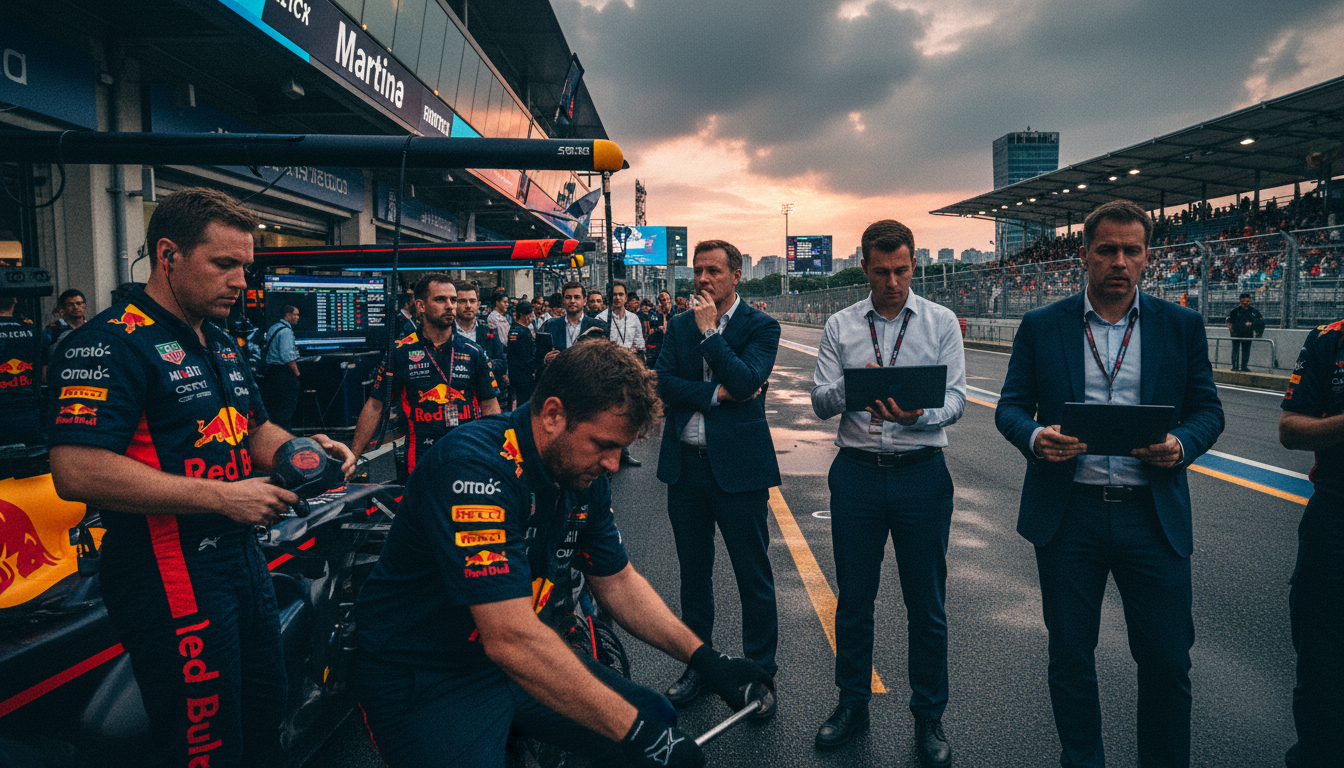
Max Verstappen secured pole position for the Singapore Grand Prix sprint race on Friday, October 9, 2026. He clocked 1 minute 31.156 seconds under lights at the Marina Bay Circuit. George Russell's Mercedes joined him on the front row for the 21-lap Saturday event, with the Ferrari of Charles Leclerc third and Oscar Piastri's McLaren fourth. This follows Verstappen's first win of the season last weekend in Malaysia, marking what some have termed a resurgence.
While Verstappen's performance provides a competitive narrative for Formula One, it is important to distinguish sporting achievement from the underlying financial implications of hosting such an event. The focus on individual driver success, though engaging for fans, often overshadows the significant costs borne by host cities. Singapore's Grand Prix takes place on a street circuit, which necessitates substantial logistical and infrastructural investment each year, from track setup to traffic management.
The cost of staging an F1 race, especially one on a street circuit like Marina Bay, is considerable. For the local economy, the benefits are typically framed in terms of tourism revenue and international exposure. However, these benefits accrue unevenly. While hotels and high-end restaurants may see increased occupancy and spending, the broader impact on local businesses and residents, who may face disruptions and inflated prices, is less uniformly positive. The haze enveloping the circuit on October 9, 2026, adds another layer of complexity, posing potential health and environmental considerations that could affect public sentiment and tourist appeal.
Verstappen's earlier remarks, attributed by Reuters, about his Red Bull car being "completely undriveable" after Chinese GP qualifying and his subsequent criticism, also reported by Reuters, of F1 as a "joke" after his retirement, highlight the inherent volatility within the sport. Team and driver performance can fluctuate dramatically, which means the draw of individual stars can shift. For a host city, reliance on a consistently thrilling race or dominant driver to justify large expenditures presents a risk.
The question for Asian-Pacific cities considering or continuing to host Formula One events is not simply whether a driver can achieve pole position, but at what occupancy rate the entire enterprise becomes financially viable for the host. The spectacle relies on sustained interest and consistent visitor numbers to offset operational expenses. Given the persistent costs associated with a street circuit, local decision-makers must weigh the tangible economic returns against the public funds invested, recognizing that an exciting qualifying session, while generating headlines, does not by itself guarantee a profitable outcome for the city.
Sources
Newsletter
Pacific Daily
A curated briefing from Thailand, Asia-Pacific and the world.