Ronaldo's Provisional Suspension Exposes Deeper Tensions in International Football Governance
The Portuguese Football Federation's action against Cristiano Ronaldo after a national team walkout highlights the shifting dynamics of player power versus institutional authority, with potential echoes for Asian federations navigating similar challenges.
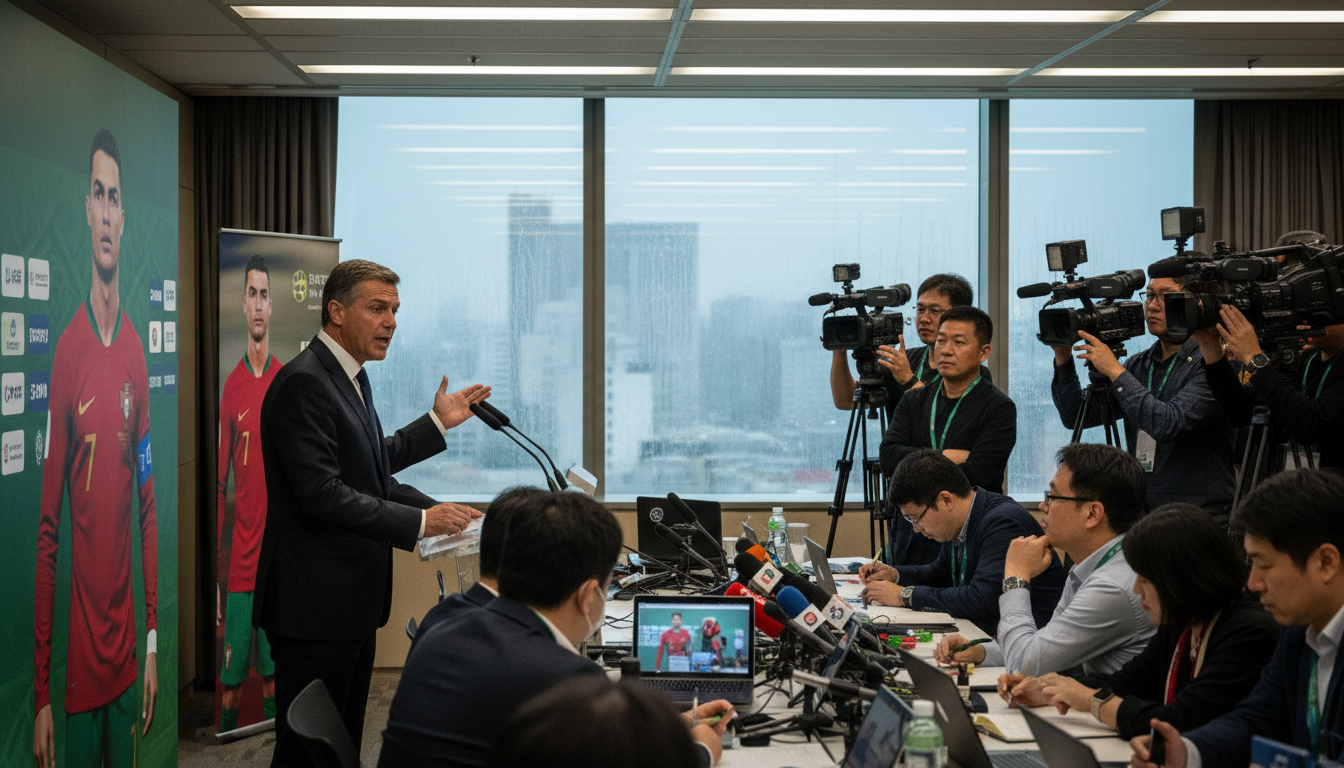
SINGAPORE
The provisional suspension of Cristiano Ronaldo by the Portuguese Football Federation (FPF) following his departure from the national team camp interrupts a familiar pattern where player status often dictates institutional response. Ronaldo, at 41, left the squad's base in Copenhagen ahead of Portugal's Nations League match against Denmark last week. This decision followed a reported rift with head coach Jorge Jesus, with Ronaldo, an unused substitute against Norway, accusing Jesus of twice breaking his word.
Such high-profile disciplinary actions, especially involving figures of Ronaldo's stature, are not isolated incidents in global sports. They underscore a broader pattern where individual player brands can sometimes clash with the collective discipline and authority that national federations seek to maintain. The FPF has initiated disciplinary proceedings, leading to Ronaldo's provisional suspension. While media reports confirm the suspension, the full details of the FPF's findings and the specific rules invoked remain to be seen. The unattributed quote stating, "Without prejudice to the automatic preventive suspension to which he was subject until the date of initiation, a non-automatic preventive suspension of the player was determined, and the proceedings were given urgent status," indicates a structured, albeit swift, response from the federation.
For Asian football, and specifically for nations like Thailand, these developments offer a comparative lens on player management and national team cohesion. Federations across Asia, including those in Southeast Asia, frequently contend with the delicate balance of nurturing star players while enforcing team discipline. The visibility of Ronaldo's situation provides a blueprint for how federations might respond when a prominent player disrupts team protocol. The FPF's move to suspend Ronaldo, rather than seek an immediate reconciliation, prioritizes institutional authority. This approach can set a precedent, affirming that even globally recognized athletes are subject to established regulations.
While the circumstances are specific to Portugal, the principle of a national federation asserting its authority over a superstar player has resonance elsewhere. Asian teams, too, grapple with the impact of player personalities on team morale and public perception. The FPF's decision indicates a willingness to enforce discipline even at the cost of immediate squad disruption, a consideration that could inform governance strategies in other regions. It reveals that the power of player brands, however immense, does not always supersede the formal structures of national sports organizations. The unresolved tension lies in the long-term impact on the Portuguese national team's performance and the broader implications for player-federation relationships in an increasingly globalized sport.
Sources
Newsletter
Pacific Daily
A curated briefing from Thailand, Asia-Pacific and the world.