Road Behavior in Khao Yai Reveals Wider Tensions
An incident involving a speeding driver and elephants highlights the daily costs of development in Thailand.
SINGAPORE
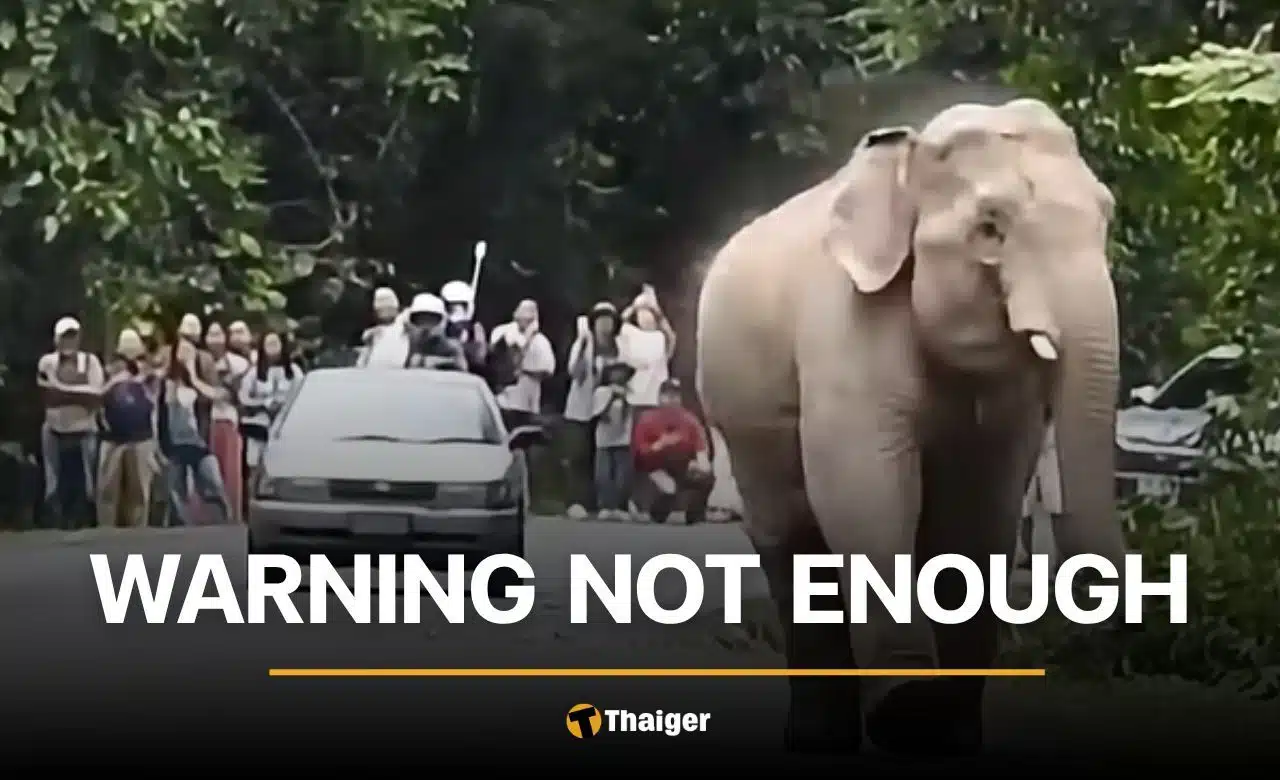
The report from Khao Yai National Park, detailing a driver's behavior that startled wild elephants Pho Ngathong and Tonkla, offers a localized view of a broader tension. On September 19, a car reportedly sped past a father and calf crossing a road. Online users, and subsequently Kanchana Silpa-archa, leader of the Chart Thai Pattana Party, criticized the driver. This event, where a political figure urges disciplinary action against an individual's conduct, points to an ongoing negotiation between human activity and the natural environment.
The immediate consequence of the driver's actions was that the calf, Tonkla, ran to the roadside and nearly collided with Pho Ngathong. This near-collision underscores the physical risks that human-wildlife encounters can present when human actors prioritize speed over caution. The online reaction, questioning the driver's 'regard' for the elephants, indicates a societal expectation for certain behaviors within protected zones like Khao Yai.
While the focus here is on a specific driver and a pair of elephants, the underlying issue is the cost borne by the natural environment and its inhabitants when infrastructure expands and human populations require faster transit. The Asian Development Bank has highlighted rapid crisis response across Asia due to energy and food price shocks, and other reports discuss the speed of AI data center builds and flight traffic increases in the Asia-Pacific. These broader trends indicate a regional push for economic activity and movement, which in turn places pressure on resources and shared spaces, whether for cargo or tourists.
The counterargument, often unstated but implicitly present, is that individual actions, even those criticized by the public and political leaders, are isolated incidents. It could be argued that the majority of park visitors or commuters adhere to safety protocols, and that one speeding driver does not reflect a systemic disregard. However, this perspective risks overlooking the cumulative impact of many such 'isolated' decisions. The frequent appearance of 'speeding' in reports of incidents, from a bus hitting an oil tanker in Pakistan to the incident in Khao Yai, suggests a pattern of behavior with tangible consequences.
Ultimately, the incident in Khao Yai National Park is not merely a story of a driver and two elephants. It serves as an everyday illustration of how rapid human movement and a perceived right to speed—even in a protected natural habitat—can directly endanger wildlife. The call for disciplinary action, while specific to this case, highlights the ongoing challenge for authorities to enforce behaviors that respect shared ecosystems amidst increasing regional development and mobility.
Sources
Newsletter
Pacific Daily
A curated briefing from Thailand, Asia-Pacific and the world.