Redefining ‘Soul’ in the Kitchen: Alta Adams and the Ambition of Culinary Identity
The evolution of a Los Angeles restaurant prompts questions for Asia's culinary scene, where tradition often dictates technique.
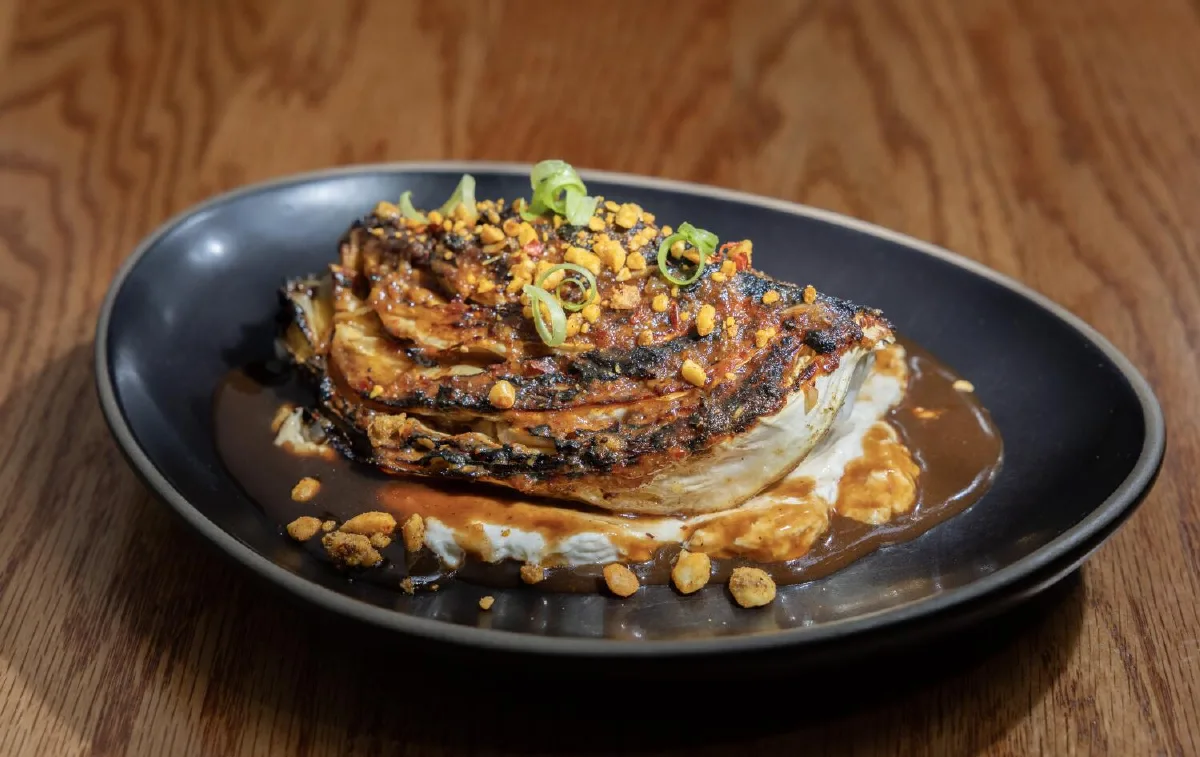
Keith Corbin, the chef behind Alta Adams, initiated a significant shift at his West Adams establishment not with an overhaul of concept, but through a dish: black-eyed peas. The Los Angeles Times Food reported on August 27, 2026, that this particular preparation is central to understanding the restaurant’s current direction. Alta Adams, which Corbin opened in 2018 with former partner Daniel Patterson, was initially characterized as California soul cooking, rooted in Corbin’s Watts upbringing. The recent focus on dishes that abstract ingredients from their usual contexts, transforming familiar flavors into something distinctly local to Los Angeles, marks a refinement in technique rather than a departure from its foundational identity.
This approach — reinterpreting staple ingredients through precise culinary technique to forge a new regional signature — offers a lens through which to consider the culinary landscape of Asia, particularly in places like Thailand. In many Asian cuisines, the mastery of traditional technique is often equated with fidelity to established dishes. The cost of sustaining this fidelity can be a resistance to innovation, where deviation might be perceived as a betrayal of heritage. Alta Adams’ evolution suggests an alternative: that true culinary identity might be found not just in preserving historical forms, but in a disciplined deconstruction and reconstruction of flavor profiles using familiar components. The black-eyed peas, in this instance, are not merely a recipe; they are a statement about technique and its capacity to reinterpret.
The Constraint of Authenticity
The challenge for a restaurant in Bangkok or Chiang Mai might be to apply such a philosophy without alienating a consumer base often drawn to established notions of ‘authentic’ regional cuisine. Thai food, for example, is globally recognized for its distinct balance of sweet, sour, salty, spicy, and bitter. Any significant reinterpretation of a dish like tom yum goong or pad thai, while potentially showcasing novel technique, risks being seen as inauthentic or, worse, an unwelcome dilution of tradition. This constraint is not solely cultural; it is also commercial. Restaurants often find success by catering to well-defined expectations, and radical departures can deter diners seeking reliable experiences.
Nevertheless, the underlying principle of Alta Adams’ shift bears examination. If a dish like black-eyed peas can come to represent a modern Californian soul, what analogous transformations could occur within the rigorous frameworks of Thai cooking? It is not a question of abandoning tradition, but of asking what new expressions are possible when technique is applied to familiar ingredients with an intent to redefine, rather than merely replicate, a sense of place. The unanswered question remains whether Asian diners and critics are as prepared to embrace such precise reinterpretation when their culinary heritage is so strongly defined by historical precedent.
Sources
Newsletter
Pacific Daily
A curated briefing from Thailand, Asia-Pacific and the world.