Beyond the Cocktail: Why Bangkok Is Becoming a Global Meeting Point for Bar Culture
BANGKOK
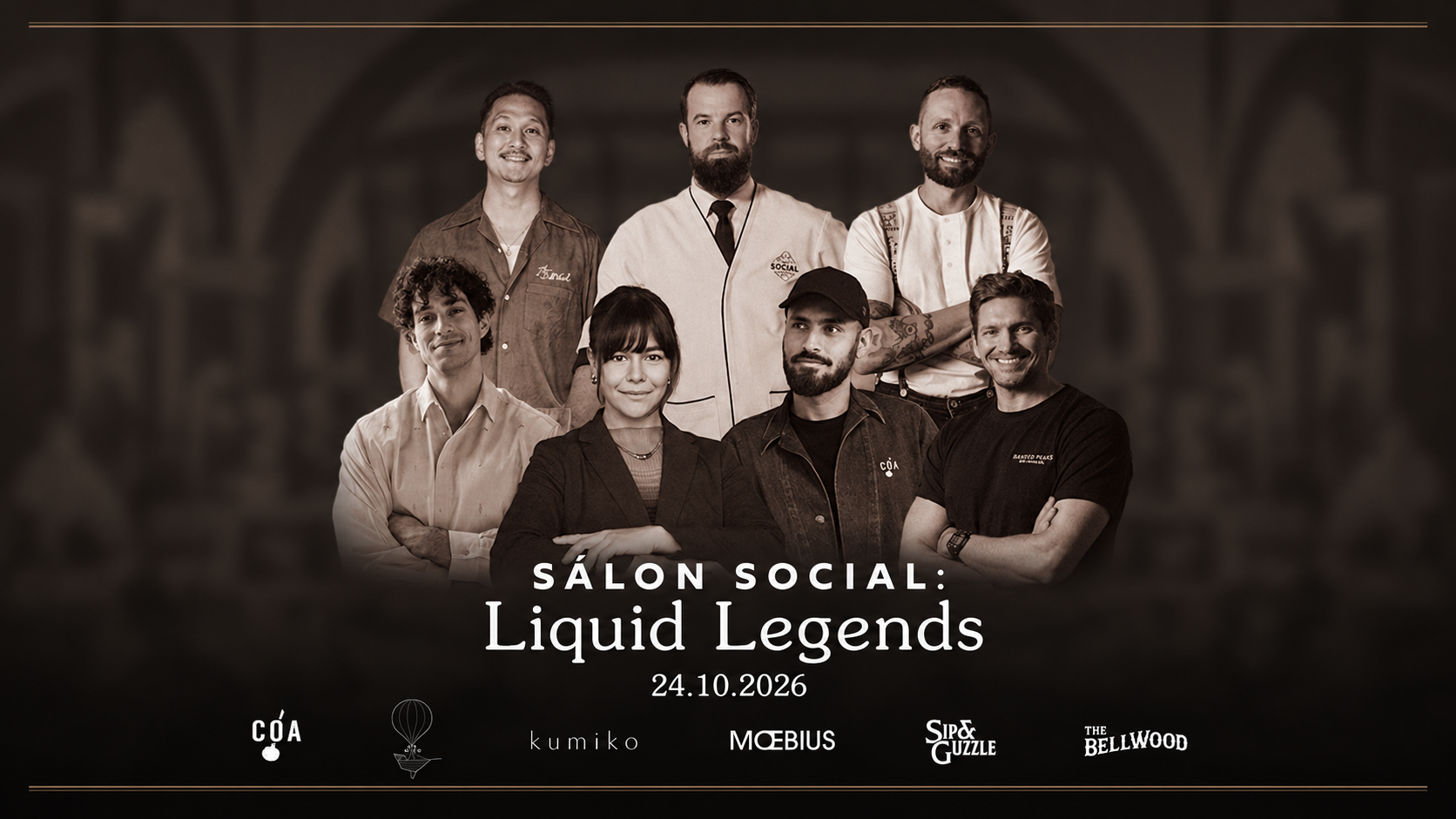
As six acclaimed bars from Tokyo, Hong Kong, Paris, Chicago, Milan and New York prepare to gather at Four Seasons Hotel Bangkok on October 24, the return of Sálon Social: Liquid Legends offers a timely perspective on the Thai capital's growing influence in international hospitality. With BKK Social Club climbing to No. 30 in The World's 50 Best Bars 2026, Bangkok is increasingly positioned not simply as a destination for exceptional cocktails, but as a meeting place for the people and ideas shaping contemporary drinking culture.
BANGKOK, THAILAND — October 9, 2026
For decades, the geography of international cocktail culture was shaped by a relatively familiar collection of cities. London, New York and Paris served as influential centres of hospitality, setting standards that establishments elsewhere often sought to interpret or reproduce.
That hierarchy has become increasingly difficult to sustain.
Across Asia, a new generation of bars has developed distinctive approaches to ingredients, service and cultural storytelling, challenging the assumption that innovation must originate in established Western capitals.
Bangkok offers one of the clearest examples of this transformation.
On October 24, Four Seasons Hotel Bangkok at Chao Phraya River will host the second edition of Sálon Social: Liquid Legends, an international gathering bringing together six prominent bars from Tokyo, Hong Kong, Paris, Chicago, Milan and New York.
Organised by BKK Social Club, the event will take place from 7 p.m. to 11 p.m. at The Lounge, where participating establishments will present original creations and share their approaches to hospitality.
For the Thai capital, the significance extends beyond an evening of internationally recognised bartending.
The gathering raises a larger question about the changing geography of global hospitality: what happens when Bangkok is no longer simply learning from the world's leading bar cities, but becomes a place where those cities exchange ideas?
A Timely Moment for Bangkok's Cocktail Industry
The event arrives at a particularly significant moment for its host.
On October 7, 2026, BKK Social Club rose to No. 30 in The World's 50 Best Bars rankings, climbing 19 positions from its placement the previous year.
The result was announced in Milan, placing the Bangkok establishment among a group of internationally recognised venues assessed through the awards organisation's industry voting process.
BKK Social Club was not the only Bangkok bar to attract attention.
Bar Us secured the No. 4 position globally, while Dry Wave Cocktail Studio reached No. 27.
Together, the three establishments illustrate Bangkok's presence across different expressions of contemporary cocktail culture.
Their recognition also points towards a broader development.
International visibility is no longer restricted to luxury hotel bars or establishments situated in traditional nightlife districts. The city's cocktail scene now encompasses a variety of independent concepts, each contributing to Bangkok's reputation through its own approach to ingredients, service and presentation.
Nevertheless, industry rankings should not be mistaken for comprehensive measures of hospitality quality.
They reflect the assessments of participating voters rather than the preferences of every customer, and they cannot fully capture the social or cultural significance of individual establishments.
Their importance lies partly in the international attention they generate, creating opportunities for collaboration, professional mobility and wider recognition.
Against this backdrop, Sálon Social: Liquid Legends takes on greater relevance.
It provides a platform through which Bangkok can demonstrate its position within an increasingly interconnected professional community.
Six Cities, Six Approaches to Hospitality
The six participating establishments represent different traditions, philosophies and interpretations of what a contemporary bar can offer.
From Tokyo, The Bellwood brings an approach associated with Japanese craftsmanship and the reinterpretation of traditional cultural forms.
Led by Atsushi Suzuki, the establishment is known for combining familiar Japanese influences with contemporary cocktail techniques, including its distinctive Cocktail Kaiseki concept.
The philosophy reflects a broader characteristic of Japanese hospitality: attention to detail is not simply a technical requirement, but part of how an experience communicates intention and respect for the guest.
Hong Kong's COA offers a different perspective.
Associated with Jay Khan and Michelle Ong, the bar has played an influential role in introducing audiences in Asia to the diversity of agave spirits and Mexican drinking culture.
Its significance extends beyond the preparation of individual cocktails.
By encouraging customers to explore spirits that may previously have received limited attention in their local markets, establishments such as COA demonstrate how specialist knowledge can influence consumer preferences and expand the cultural vocabulary of hospitality.
Paris is represented by Danico, where Nico de Soto and Corentin Gaudin have developed a creative approach informed by international travel and culinary traditions.
Rather than treating ingredients as belonging exclusively to one national cuisine, this philosophy explores how flavours encountered across different cultures can be interpreted through contemporary cocktail preparation.
From Chicago, Kumiko brings the influence of Japanese hospitality into an American setting.
Under the direction of Julia Momosé, its approach is closely associated with omotenashi, a philosophy often understood through thoughtful, anticipatory care for guests.
The significance of this concept lies in its emphasis on the relationship between service and experience.
A technically accomplished drink may impress the customer, but hospitality determines how that accomplishment is communicated and remembered.
Moebius Milano, meanwhile, approaches the bar as part of a wider creative environment.
Associated with Lorenzo Querci and a drinks programme led by Giovanni Allario, the Milan establishment combines cocktails with gastronomy, music, art and design.
Its participation reflects the increasingly blurred distinction between bars and multidisciplinary cultural venues.
Completing the international lineup is New York's Sip & Guzzle, created around the complementary visions of Shingo Gokan and Steve Schneider.
The establishment combines Japanese precision with the energy of New York's drinking culture, presenting contrasting experiences within a single hospitality concept.
Taken together, these six establishments reveal the diversity of contemporary bar culture.
Their differences lie not simply in recipes or ingredients, but in the cultural assumptions that inform how drinks are created, presented and served.
That diversity is central to the intellectual appeal of the Bangkok gathering.
The Cocktail as a Form of Cultural Expression
The global cocktail industry is often discussed through the language of innovation, craftsmanship and competition.
Yet the most interesting development may be the growing use of beverages as vehicles for cultural interpretation.
A cocktail can incorporate ingredients associated with particular regions, techniques inherited from different traditions and presentation styles influenced by architecture, design or historical references.
In this sense, contemporary mixology increasingly occupies a space between gastronomy and cultural expression.
The distinction matters because drinking traditions are never entirely separate from the societies in which they develop.
Japanese precision, Mexican agave production, European culinary experimentation and American hospitality each emerge from specific historical and social contexts.
When bartenders reinterpret those traditions, they participate in a form of cultural exchange.
The challenge is to ensure that such exchange involves understanding rather than superficial imitation.
Using an ingredient from another country does not automatically demonstrate meaningful engagement with its origins.
Similarly, presenting an unfamiliar spirit as fashionable or exotic may attract attention without necessarily communicating the traditions associated with its production.
For an event such as Sálon Social, the presence of bartenders who possess specialist knowledge offers an opportunity to move beyond that limitation.
Guests will be able to encounter different approaches through the people responsible for developing them.
The quality of those interactions may ultimately be as important as the cocktails themselves.
Why Bangkok Matters in This Conversation
Bangkok's emergence as an internationally recognised cocktail destination cannot be understood solely through rankings or luxury hotel investment.
The city's wider hospitality environment provides an important foundation.
Bangkok has long been associated with a diverse food culture, ranging from informal street dining to sophisticated restaurants and international hospitality establishments.
That diversity creates opportunities for experimentation.
Ingredients, flavour combinations and service traditions can move between different levels of the hospitality industry, contributing to new approaches without requiring a complete rejection of local identity.
The city's role as an international travel destination also brings visitors and hospitality professionals into contact with different culinary expectations.
These conditions do not guarantee innovation, but they create an environment in which distinctive concepts can develop and attract international attention.
For BKK Social Club, this environment provides both an opportunity and a challenge.
The bar's identity draws heavily on Latin American cultural references, particularly those associated with Mexico City, while operating within one of Thailand's most internationally connected hotels.
Its approach demonstrates that a hospitality establishment need not limit its creative identity to the geography in which it operates.
At the same time, the strength of any internationally inspired concept depends on whether the cultural references are translated into coherent experiences rather than reduced to decorative themes.
As Bangkok's reputation grows, such questions will become increasingly relevant.
The city's long-term position in global hospitality will depend not simply on attracting international talent, but on cultivating original ideas and professional expertise of its own.
Luxury Hospitality and the Economics of Cultural Exchange
Sálon Social also illustrates how luxury hotels are positioning themselves as cultural platforms.
The Four Seasons venue provides the physical setting, international visibility and organisational infrastructure required to bring together hospitality professionals from multiple countries.
For participating bars, the event creates opportunities to reach new audiences and strengthen professional relationships.
For the host hotel, it reinforces an identity associated with international cultural exchange.
For Bangkok, it contributes to the broader visibility of the city's hospitality sector.
These interests are compatible, but they should not be confused.
A commercially successful event can generate meaningful professional exchange, just as an intellectually engaging programme can also function as a valuable marketing initiative.
The relevant question is whether the collaboration produces something beyond the temporary concentration of prestigious brands in one location.
Professional partnerships, the exchange of technical knowledge and exposure to different service philosophies may offer longer-lasting value.
However, such outcomes cannot be assumed before the event takes place.
They will depend on the quality of the interactions that occur and whether participating establishments develop continuing relationships after the evening concludes.
The format also raises questions about accessibility.
With an admission price of THB 1,600 before service charge and applicable tax, the gathering is positioned as a premium hospitality experience rather than a broadly accessible public cultural festival.
That distinction is important.
Luxury events can contribute to a city's international reputation without necessarily representing the full diversity of its hospitality workforce or customer base.
Bangkok's broader cocktail culture includes independent bars, smaller businesses and professionals operating outside internationally recognised establishments.
A truly influential hospitality ecosystem must provide opportunities for these participants to develop alongside its most celebrated venues.
A Second Edition With Greater Expectations
Sálon Social: Liquid Legends made its debut in 2025, establishing the format of an international gathering hosted by BKK Social Club.
Its return in 2026 suggests an ambition to develop the event into a recurring platform rather than an isolated promotional occasion.
This year, the six participating bars will each introduce three original cocktails created for the gathering.
Guests will be able to move between the different presentations, meet participating bartenders and experience the contrasts between their approaches.
The structure encourages comparison without requiring every establishment to conform to a single creative theme.
That may be one of the event's most valuable characteristics.
International collaboration becomes more meaningful when differences are preserved rather than concealed beneath a standardised notion of excellence.
The Bellwood's reinterpretation of Japanese tradition, COA's expertise in agave, Kumiko's hospitality philosophy and Moebius Milano's multidisciplinary approach need not produce similar experiences to justify their presence together.
Their differences are precisely what make the gathering worth examining.
The Future of Bangkok's Bar Culture
As the international cocktail industry becomes more interconnected, the traditional distinction between established centres and emerging destinations is likely to become less useful.
Ideas now circulate across cities through professional collaborations, international competitions, guest appearances and digital communication.
Recognition can follow innovation wherever it emerges, although access to investment, networks and media attention remains uneven.
Bangkok's recent success illustrates both the opportunities and limitations of this changing environment.
Its internationally recognised bars have demonstrated an ability to compete for attention alongside establishments in cities with longer histories of global cocktail influence.
The next challenge is to ensure that this visibility contributes to the development of a broader, sustainable hospitality culture.
That means recognising technical craftsmanship, encouraging original ideas and strengthening professional opportunities beyond a limited number of celebrated establishments.
For Sálon Social: Liquid Legends, the most interesting measure of success will therefore not be the number of photographs shared online or the prestige of its guest list.
It will be whether the event creates genuine opportunities for exchange, understanding and future collaboration.
On October 24, Bangkok will welcome six internationally recognised expressions of cocktail culture to the banks of the Chao Phraya River.
The evening will undoubtedly carry the commercial appeal of an exclusive hospitality gathering.
But its wider significance lies in what it suggests about Bangkok's changing place in the world.
A city once viewed primarily as a destination for international visitors is increasingly becoming a place where global hospitality professionals meet, collaborate and exchange ideas.
The question is no longer whether Bangkok belongs in the conversation about the world's leading cocktail destinations.
It is what the city will contribute to that conversation next.
---
Event Information
Event: Sálon Social: Liquid Legends 2026
Host: BKK Social Club, Four Seasons Hotel Bangkok at Chao Phraya River
Date: Saturday, October 24, 2026
Time: 7:00 p.m. – 11:00 p.m.
Venue: The Lounge, Four Seasons Hotel Bangkok at Chao Phraya River
Address: 300 Charoenkrung Road, Yannawa, Sathorn, Bangkok 10120, Thailand
Admission: THB 1,600++ per person, including two cocktail tokens and canapés. The official ticket page currently displays THB 1,884 inclusive of service charge and tax.
Additional cocktails: THB 450++ each
Minimum age: 20 years
Dress code: Urban Resort Chic
Official event information and tickets: https://fsbangkokathome.com/products/salon-social-liquid-legends2026
Google Maps: https:https://shorturl.at/SBl4a
Newsletter
Pacific Daily
A curated briefing from Thailand, Asia-Pacific and the world.