Overpass Demolition Reveals Operational Gaps in Road Upgrades
A planned weekend demolition of an overpass in the Lower Mainland highlights the intricate balance required to maintain network function during critical infrastructure development.
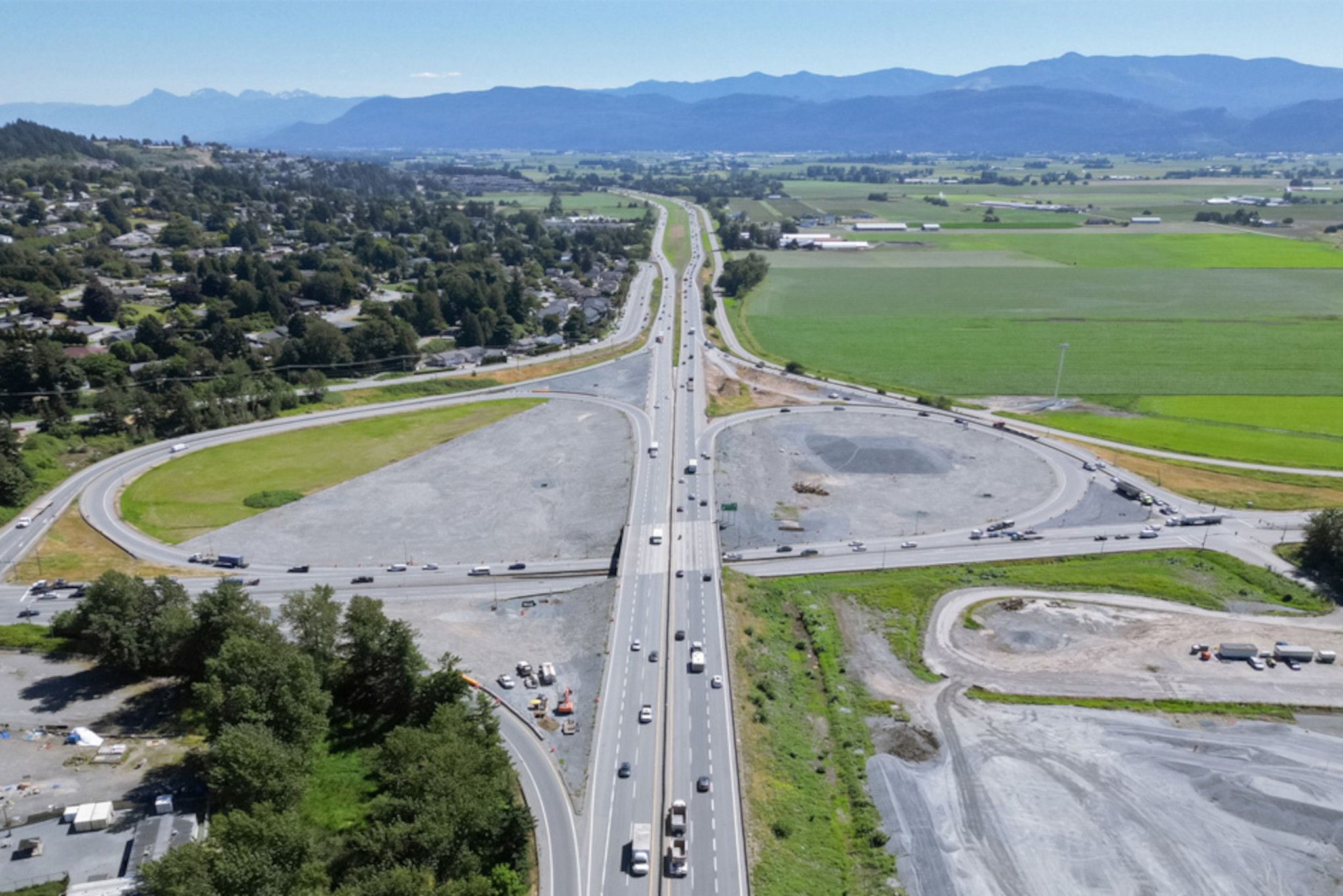
Work to widen Highway 1 continues this fall. Drivers are notified that a major phase of this project impacts commutes starting on Friday, October 2. The Government of B.C. announced traffic-pattern changes are planned on Highway 11 at Highway 1. Diversions will be in place from 9 p.m. on Friday, October 2 to 5 a.m. on Monday, October 5. These diversions allow crews to safely demolish the Highway 11 overpass, part of the widening and upgrade of the Trans-Canada Highway.
The new westbound on-ramp to Highway 1 from northbound Highway 11 will be closed throughout this weekend. Drivers will be detoured via Marshall Road and McCallum Road. This specific sequence of changes presents a focused example of how infrastructure operations can be stressed. The removal of a critical junction, even temporarily, forces traffic onto alternative paths. These paths, designed for lower volumes, must now absorb peak flows, creating an immediate test of their capacity and resilience. The plan's success hinges on the detours absorbing the transferred volume without themselves failing, a process that relies heavily on detailed traffic modeling and real-time management.
Demolishing an overpass and redirecting traffic over a single weekend concentrates all operational risks into a narrow timeframe. The project’s timeline is tight; any structural issue during demolition or unexpected weather could extend the closure. Such an extension would amplify congestion, disrupt local commerce, and delay freight movement, pushing the system past its designed limits. When one part of a complex system is deliberately removed for improvement, the interdependencies become acutely visible. The system's robustness is not measured by its ultimate capacity but by its ability to manage these temporary interruptions.
Further south, the Pacific Coast Highway in California fully reopened in January 2026 after three years of closure. This demonstrates the potential for extended impacts from major road work. While the scale differs, the operational principle remains. Any large-scale road intervention, whether an overpass demolition or a long-term highway closure, shifts loads onto adjacent infrastructure. The critical factor for these operations is not merely the efficiency of the construction itself but the capacity of the remaining network to function without cascading failures. The focus on a 52-hour window underscores an emphasis on speed during this phase. The integrity of traffic flow, therefore, now rests on the precision of the demolition and the ability of local roads to manage volumes they are not typically engineered for.
Sources
Newsletter
Pacific Daily
A curated briefing from Thailand, Asia-Pacific and the world.