New HKEX Index Additions Signal Operational Strain Points for Deep-Tech AI Firms
The HKEX Tech 100’s expanded focus on autonomous driving and AI drug discovery firms will test their complex physical and digital operational frameworks as they scale.
SINGAPORE
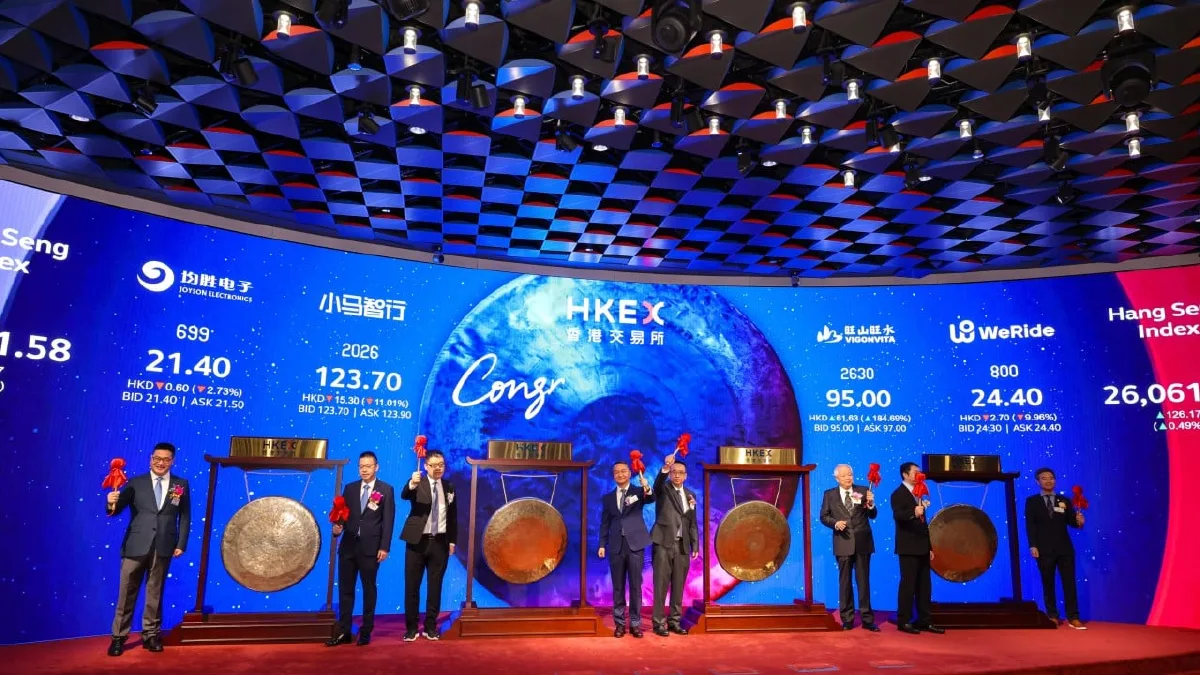
Hong Kong Exchanges and Clearing (HKEX) will add 10 companies to its Tech 100 Index. This quarterly reshuffle increases the benchmark’s exposure to artificial intelligence (AI) and other emerging technologies, according to SCMP Travel. Among these additions are autonomous-driving firms Pony AI and WeRide, AI drug-discovery specialist Insilico Medicine, enterprise AI company Beijing Haizhi Technology, and AI data-intelligence provider Mininglamp Tech.
This revision, designed to help the tech index recover from an underwhelming first half by tapping a new generation of Chinese AI firms, marks a strategic adjustment in market focus. For the companies entering the index, the primary implication is increased visibility and potential access to capital through Hong Kong's markets. Hong Kong proposed easing rules for dual-class share listings in a competitiveness push, as reported by Reuters. Separately, six companies sought up to $2.5 billion in Hong Kong offerings in June 2026, indicating an active capital market.
The challenge for these newly included companies, particularly those in nascent sectors like autonomous driving and AI drug discovery, will be managing the operational scaling required by increased market scrutiny and potential capital inflows. Companies like Pony AI and WeRide operate with complex physical infrastructure and logistical demands for testing, deployment, and maintenance of autonomous fleets. Insilico Medicine's operations involve advanced research, data management, and regulatory navigation in a sensitive sector. These are not merely software companies; their growth relies on integrating sophisticated AI with real-world, often physical, operations.
At full market exposure and investment, the operational infrastructure of these firms will face significant stress. This extends beyond financial reporting requirements to the practicalities of expanding R&D, manufacturing capacity, regulatory compliance, and talent acquisition. A sudden influx of capital might accelerate growth ambitions, but without robust operational frameworks to absorb this expansion, bottlenecks are likely. The operational demands of these deep-tech companies differentiate them from earlier generations of internet-focused firms whose scaling was primarily digital.
While the index inclusion offers these companies a platform for global market access, as highlighted by a 2025 SCMP report on HKEX helping Southeast Asia’s companies access capital, the integration of physical and digital operations at scale remains a critical, unresolved constraint. The success of this strategic pivot for HKEX and the included companies will depend on their capacity to manage this complex operational growth effectively.
Sources
Newsletter
Pacific Daily
A curated briefing from Thailand, Asia-Pacific and the world.