New Afghan-Persian Gulf Trade Route Signals Shifting Regional Power
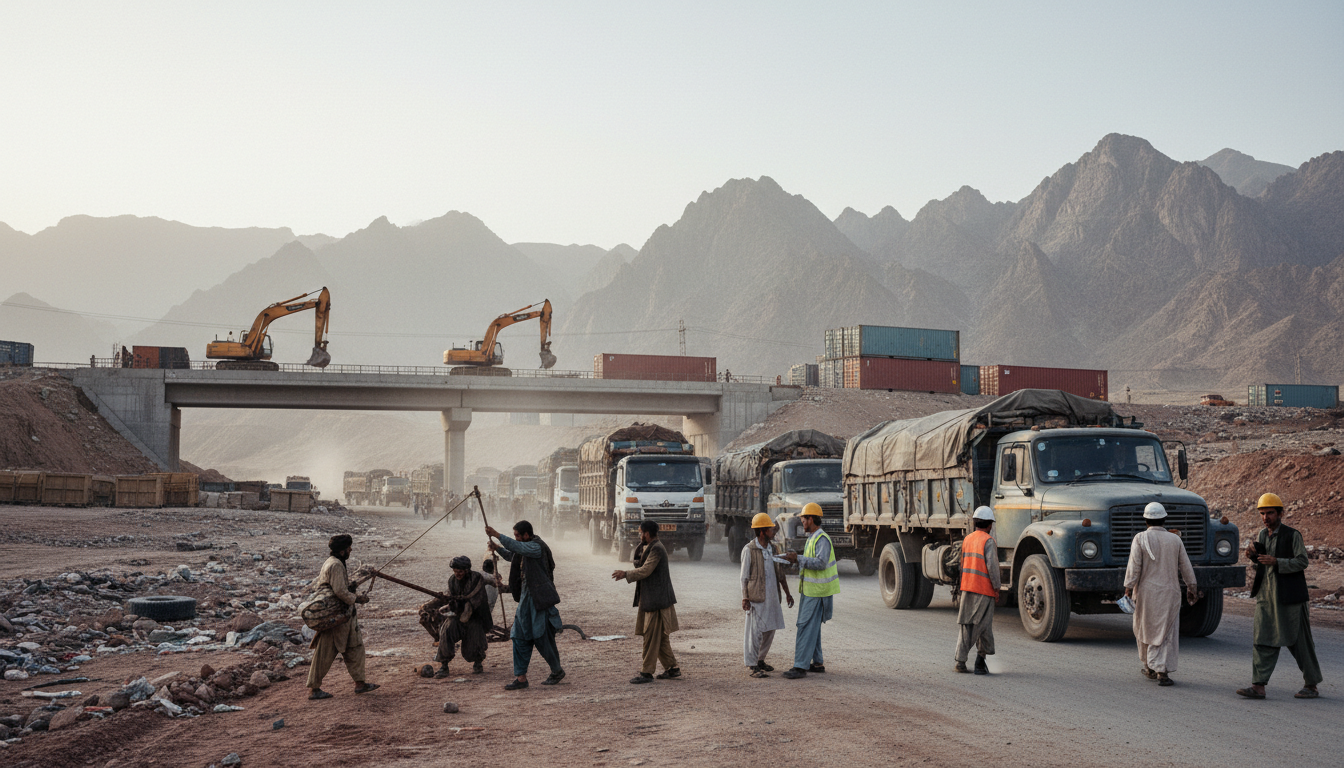
A proposed trade corridor from Afghanistan to the Persian Gulf, supported by China, introduces a new logistical variable in West and Central Asia, potentially reshaping established economic flows across the broader Asia-Pacific.
SINGAPORE
The reported opening of a potential trade route connecting Afghanistan to the Persian Gulf, as noted by Nikkei Asia on October 11, 2026, represents a development that could reconfigure regional trade architecture. For landlocked Afghanistan, this corridor offers direct access to a key maritime region, a move with significant implications beyond its immediate geographic scope. This initiative aligns with China’s deepening engagement with Taliban-ruled Afghanistan, as reported by The Diplomat on December 4, 2024.
While the direct impact is concentrated in Central and West Asia, the broader strategic and economic realignments warrant attention from Southeast Asia. Existing global trade routes heavily rely on established maritime pathways. Any successful diversification of logistical arteries, especially those offering alternatives to traditional chokepoints, could prompt a re-evaluation of current freight flows and infrastructure investments, even if such changes manifest incrementally over time. The development demonstrates a persistent effort to integrate landlocked regions into broader economic networks.
However, the viability of this new Afghan route faces considerable geopolitical complexities. The West Asia Crisis has already led to a realignment of regional trade through Pakistan, as reported by The Diplomat on June 8, 2026. This indicates an environment where trade routes are highly sensitive to political and military tensions. Afghanistan's own position, described by The Diplomat on March 20, 2026, as being caught between Pakistan and the Iran War, further highlights the inherent instability that could hinder consistent operations of any new transport corridor.
Furthermore, shifts in South Asian alliances, including India and Afghanistan aligning against Pakistan according to the South China Morning Post on November 26, 2025, introduce additional variables. Such realignments could influence the political will necessary for the sustained operation and expansion of new trade infrastructure. The effectiveness of this proposed corridor will depend not just on physical connectivity, but also on the navigation of complex regional rivalries and the mitigation of ongoing conflicts.
This development suggests a continuing trend where major powers seek to leverage infrastructure projects to influence economic geography. The fundamental constraint remains the persistent political and security instability in the region. This instability could significantly limit the practical impact and trade volumes realized by this newly opened access point, regardless of its potential strategic value.
Sources
Newsletter
Pacific Daily
A curated briefing from Thailand, Asia-Pacific and the world.