Manchester City's Anfield Victory: A Signal for Asian Broadcast Rights
Manchester City's 3-0 win over Liverpool at Anfield, reported by Channel News Asia, underscores the critical commercial value of top-tier football in Asia-Pacific, impacting media partnerships and content acquisition strategies.
SINGAPORE
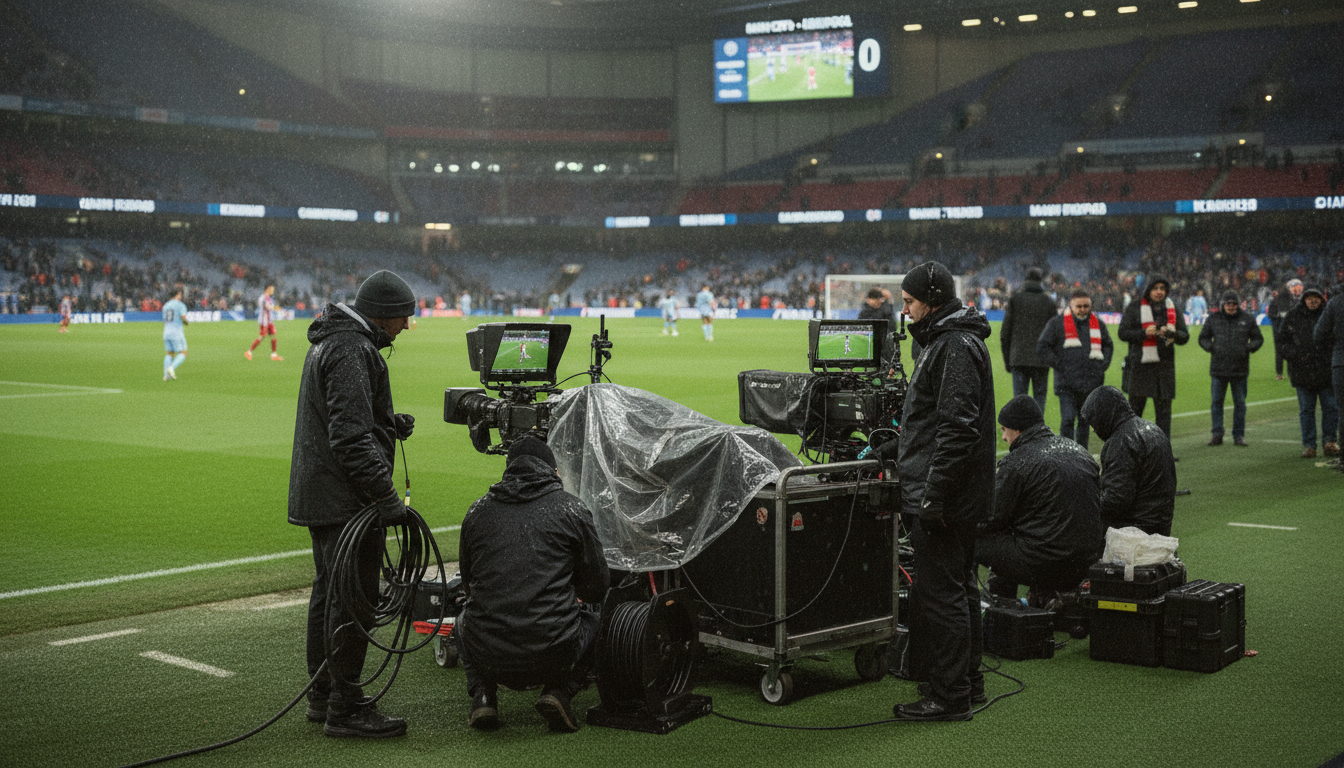
Manchester City's 3-0 victory against Liverpool at Anfield on October 11, 2026, as reported by Channel News Asia, transcends a mere sports result. This outcome, with Erling Haaland celebrating a goal and players like Milos Kerkez and Iliman Ndiaye in action, reflects a concentrated asset value for media entities in the Asia-Pacific region.
The Premier League consistently draws significant viewership in Asia. The Guardian reported in May 2024 that Asian fans were preparing to tune in for the FA Cup final between Manchester City and another team from Manchester. This indicates a pre-existing, strong engagement with English football. Such a decisive away win in a high-profile match against a traditional rival like Liverpool directly amplifies the perceived worth of Manchester City's content.
Media outlets across the Asia-Pacific region are actively forging new partnerships, as evidenced by the South China Morning Post's September 2026 report on collaborations ahead of the Shenzhen APEC summit. These partnerships are not solely political or economic; they extend to content distribution and acquisition. A compelling, clear-cut result in a marquee fixture, particularly featuring widely recognized players, presents a tangible product for these developing media networks.
From a financial perspective, the value of broadcast rights for such events is directly linked to audience size and engagement. A 3-0 victory for Manchester City, especially at a venue like Anfield which is described as 'hostile', delivers a definitive narrative. This narrative can be repackaged and promoted across various platforms, from traditional television to digital streams. The more dramatic or decisive the outcome, the more marketable the content becomes.
Conversely, a key limitation is the absence of specific financial metrics in the reported fact. While the Guardian's 2024 reporting on Asian fan interest establishes a general demand, precise figures on broadcast rights, viewership numbers for this specific match, or subsequent changes in media investment are not available. This prevents a quantitative assessment of the direct commercial impact of this particular game's result.
Furthermore, the enthusiasm for specific teams like Manchester City (and Liverpool) does not necessarily translate uniformly across all Asia-Pacific markets. Varying local preferences, economic conditions, and existing media landscapes mean that while the overall trend of engagement is upward, the localized return on investment for media rights might differ significantly country by country. The United Nations Development Programme's June 2024 discussion on building 'future-ready cities' in Asia and the Pacific, and VnExpress International's March 2026 report on worker happiness, highlight the diverse socio-economic backdrop against which these media investments are made.
Despite these limitations, the nature of the win — a dominant performance by Manchester City — provides a strong data point for media companies evaluating content value. It reinforces the marketability of Premier League football as a regional draw. The outcome now depends on how aggressively media companies convert this sustained interest into strategic content acquisitions and profitable partnerships, considering the competition for premium sports content.
Sources
Newsletter
Pacific Daily
A curated briefing from Thailand, Asia-Pacific and the world.