Land disputes threaten stability for Phuket's long-term residents
A legal battle over private land in Khok Tanod highlights the precarious position of thousands in a rapidly developing region.
PHUKET
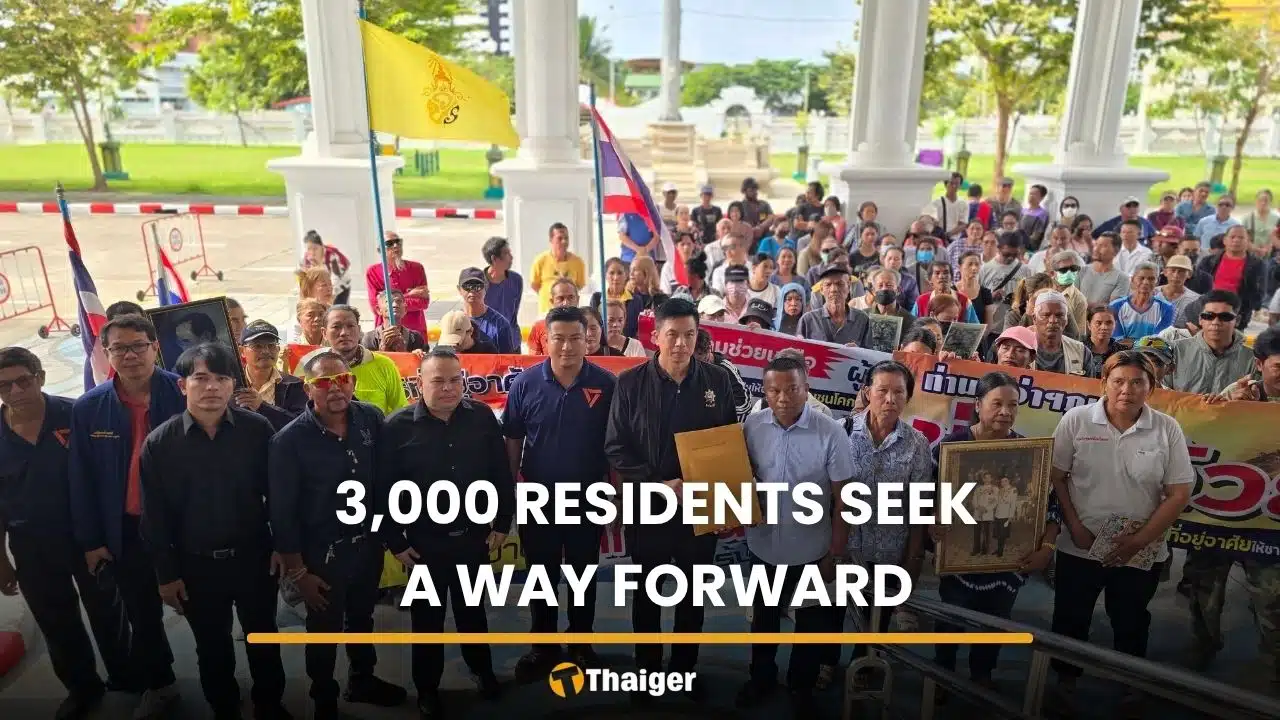
More than 3,000 residents in Phuket's Khok Tanod community face potential displacement, a consequence of ongoing legal action concerning privately owned land. Community representatives from Moo 9 in Chalong submitted a petition to the Phuket Damrongdhama Centre on September 21, seeking government intervention. Their request includes protection of residents' rights during the legal process and the provision of housing support for 669 households that may eventually have to leave. Many of these families are described as low-income, with no alternative housing.
The situation in Khok Tanod, officially recognized as Moo 9 in Chalong, underscores a recurring tension in regions experiencing rapid development, especially those attractive to tourism and investment. While the immediate concern is for thousands of individuals, the broader implication is how such disputes affect the social fabric and long-term stability of a place like Phuket. This island, known for its luxury resort residences and increasing popularity, also grapples with practical challenges such as waste management, as reported in January 2025.
The core of the issue is the assertion of private land ownership against the established, albeit informal, presence of a community. The fact that a significant number of households, particularly those with low incomes, do not possess other housing highlights a vulnerability. It suggests that economic development, while bringing investment, may also exacerbate existing inequalities if not managed with a focus on local populations. The outcome for the 669 households in Khok Tanod will determine not just their immediate future, but could also set a precedent for similar cases in other rapidly urbanizing areas across the Asia-Pacific.
The outcome for the 669 households in Khok Tanod will determine not just their immediate future, but could also set a precedent for similar cases in other rapidly urbanizing areas across the Asia-Pacific.
The counterargument often presented is the primacy of private property rights. The legal system is designed to uphold these rights, and land disputes often follow established legal pathways. From this perspective, the residents of Khok Tanod are occupying land that is not legally theirs, and the landowners are within their rights to pursue eviction. However, the appeal to the Phuket Damrongdhama Centre indicates a belief that there is a societal responsibility to mitigate the human cost of such legal actions, especially when large, settled communities are involved. The petitioning of government officials suggests that while the land may be privately owned, the social impact of mass eviction is seen as a public concern.
What this situation actually changes in someone's month is immediate insecurity and potentially the loss of their home and community. For local government, it means balancing legal principles with social welfare demands. The episode says something about the wider habit of economic expansion often outstripping infrastructure and social planning. The ongoing challenge for authorities will be to navigate these complex claims, ensuring that while legal rights are respected, the vulnerable are not left without recourse. The question now depends on how the Phuket Damrongdhama Centre and other officials choose to respond to the community's plea, and whether their actions can offer a stable resolution beyond merely enforcing property law.
Sources
Newsletter
Pacific Daily
A curated briefing from Thailand, Asia-Pacific and the world.