Khao Lak’s Dual Marriott Project: Precision over Broad Development
Marriott International’s agreement for two distinct properties in a 200-hectare coastal development suggests a focused capture of specific tourism segments, rather than a broad diversification of the region’s economic appeal.
SINGAPORE
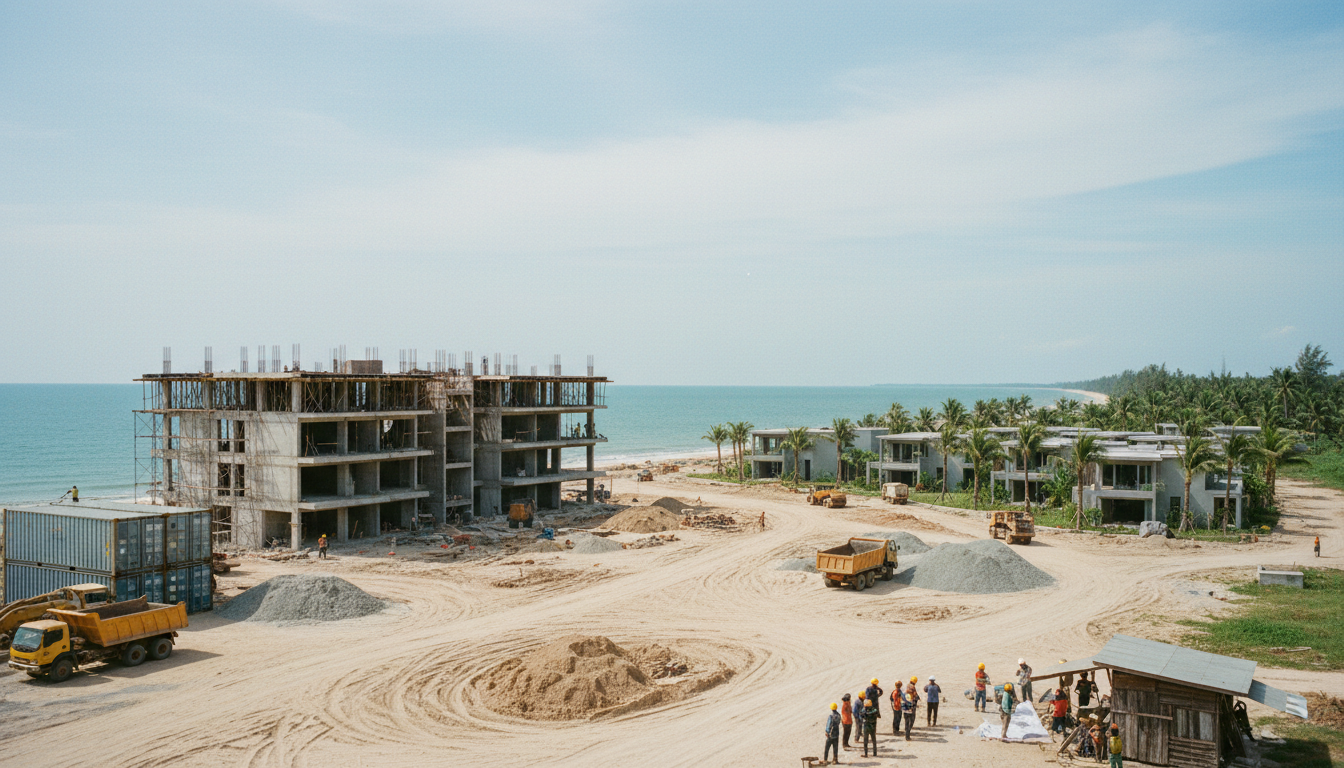
Marriott International’s agreement with KS Hotels and Resorts to develop two properties at Matalay, a 200-hectare development on the Khao Lak coast in Thailand, signals a highly specific intervention into the regional tourism market. Moxy Khao Lak Memories Beach and Matalay Khao Lak, Apartments by Marriott Bonvoy, both situated at Memories Beach, represent a calibrated response to a perceived market demand. Marriott International’s President for Asia-Pacific has affirmed that hotel demand is back on track, despite geopolitical events.
The Moxy Khao Lak Memories Beach, expected to have 160 rooms surrounding a pool, alongside the expected debut of the Apartments by Marriott Bonvoy brand in Thailand, establishes an architectural duality. This strategy aims to cater to different traveler preferences. One property appears to target an experiential segment, while the other addresses the needs of longer-stay guests or families. Such a dual-brand approach within a single large development like Matalay suggests an attempt to capture distinct, yet adjacent, segments of the traveler market simultaneously. The underlying commercial logic implies these two brands, with their differing spatial programs and operational models, are intended to complement each other in attracting specific visitor profiles to Khao Lak.
Choosing Khao Lak for such a concentrated investment, rather than more established hubs like Phuket, which saw Capstone go “all in” in 2025, reflects a calculated shift in focus. This development is more than just adding hotel rooms; it is a designed environment intended to draw particular types of guests to a locale that might otherwise be considered a secondary destination. This strategy aligns with observations that secondary city travel in the Asia-Pacific region is receiving an unexpected boost.
However, the architectural response here, while expanding Marriott’s presence within Khao Lak, does not necessarily broaden Khao Lak’s overall tourism appeal. Instead, it seems to reinforce an existing or emerging niche. The design parameters for each brand suggest distinct experiences: one implies a social, amenity-rich environment, the other a residential-style stay. Both are iterations of a leisure-driven, resort-style tourism model. This approach, while commercially sound for Marriott International, confines the architectural ambition to service a narrow, albeit growing, segment of the market.
What these properties refuse to do is integrate with the existing local fabric beyond their designated 200-hectare site at Memories Beach. They are not conceived as catalysts for broader urban or economic transformation in Khao Lak. They function instead as self-contained ecosystems. This raises questions about the long-term impact on the host community, particularly as the region’s middle class fuels regional travel growth.
The introduction of these two Marriott properties in Khao Lak, therefore, is less about architectural innovation for the region and more about the precision engineering of demand. It is a refinement of the destination, aiming to make it more appealing to specific visitor types. This concurrently circumscribes its potential for broader economic or cultural exchange. The constraint that remains unresolved is how such self-contained developments genuinely contribute to the sustained, diverse development of the wider Khao Lak coastal economy, beyond the confines of their 200 hectares.
Sources
Newsletter
Pacific Daily
A curated briefing from Thailand, Asia-Pacific and the world.