Individual Capability and Equipment Alignment Face Institutional Constraints Across the Pacific
Bernd Roediger's pursuit of an elusive world title tests the boundary between individual improvisation and technical manufacturing discipline in elite ocean racing
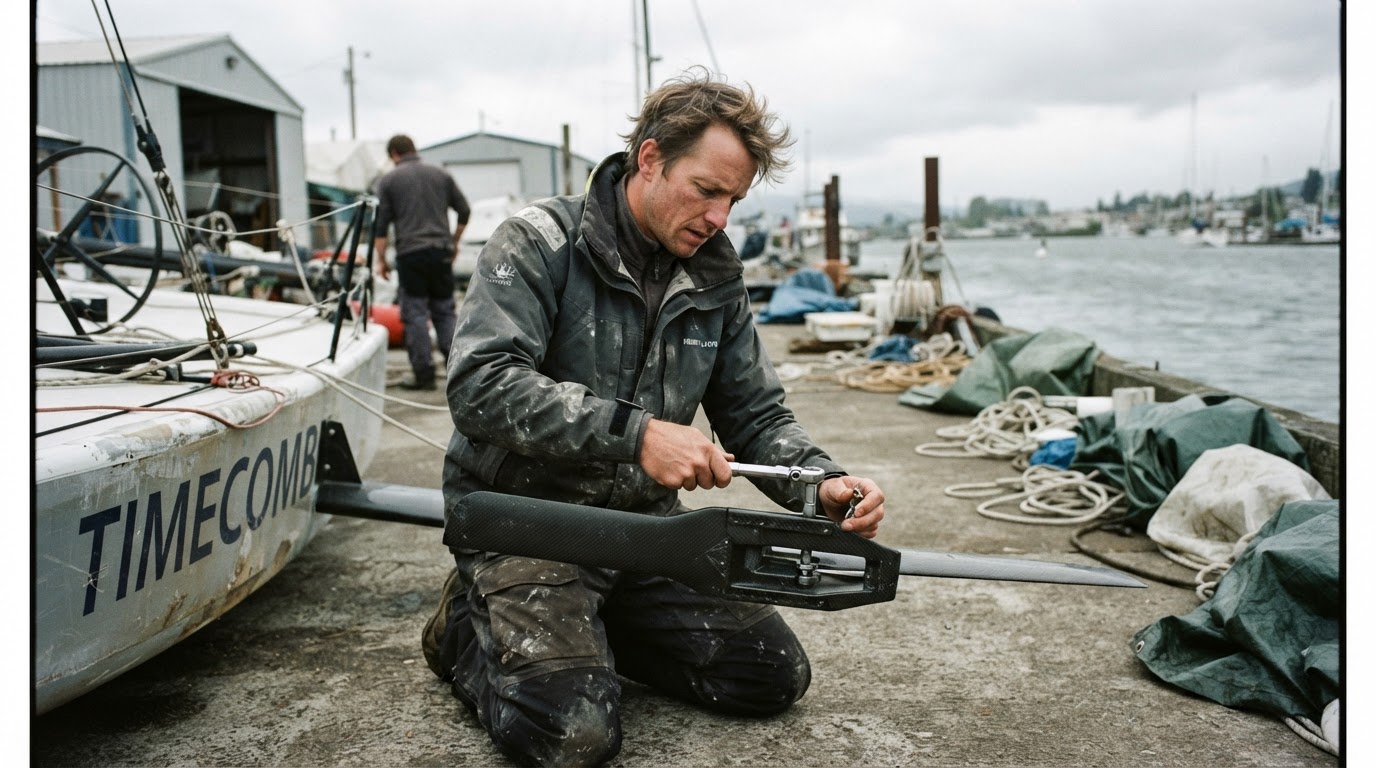
Elite maritime athletics in the Pacific has long maintained a strict boundary between technical capability and individual mythology. Solitary athletic prowess rarely dictates the outcome of an international campaign on its own. Championship standing depends instead on whether material configurations can absorb severe environmental variation while maintaining systemic precision under competitive pressure.
Sail World Asia reports that Hawaii competitor Bernd Roediger, racing with equipment backing from Hot Sails and Flikka, reaches a decisive threshold where an elusive world title remains contested. Commentary surrounding the campaign frames the challenge as a demand for a singular tactical trick, relying on Roediger's reputation for unorthodox execution. That framing mischaracterises maritime sports. When commentators substitute metaphors of performance wizardry for operational mechanics, they overlook the material distribution of risk that actually governs elite ocean competition. The core strategic question is not whether a competitor can improvise under pressure, but whether the equipment and structural apparatus behind that competitor can deliver repeatable performance across changing maritime environments.
Competitive ocean racing does not reward spectacle without stability.
Technical Alignment Across Ocean Regimes
Regional maritime circuits test logistical endurance as much as physical reflexes. A competitor grounded in Hawaii maintains deep familiarity with local wave intervals and trade winds, but exporting that competence into a diverse international circuit requires an equipment architecture that performs predictably across conflicting sea conditions. Specialised partnerships with Hot Sails and Flikka represent a calculated trade-off. Tailored sail shaping and custom board designs allow minute aerodynamic and hydrodynamic refinements, giving a racer specific responsiveness. Yet that bespoke focus functions with narrow margins. Unlike industrial conglomerates with vast fleets and uniform components, smaller partnerships must achieve exact tolerances on every run, leaving little structural cushion if atmospheric pressure or wave friction deviates from baseline models.
Technical misalignment dismantles tactical positioning far more decisively than any hesitation in athletic intent.
Structural Pressures and Competitive Margins
Advocates of individual primacy argue that intuitive navigation overrides material systems, especially in chaotic surf zones where standard hydrodynamic models degrade. This perspective has genuine merit. Oceanic volatility frequently shatters predictable lines, demanding immediate physical recalibration to salvage speed through turbulent sections. A veteran sailor can exploit sudden wave anomalies that pre-race calibration never factored into board selection, sustaining momentum through balance alone.
Nevertheless, athletic intuition operates within unyielding mechanical boundaries. Exceptional physical coordination cannot generate propulsion if sail profiles collapse in shifting air currents, nor can agile posture negate hydrodynamic drag if hull rigidity fails to match sea surface resistance. Championship titles across the Pacific circuit reflect cumulative technical reliability across numerous heats rather than episodic displays of flair. While solitary craft and dramatic monikers satisfy spectators, institutional persistence and equipment integration determine who absorbs ocean volatility and who succumbs to it.
The decisive contest confronting Roediger is whether bespoke material calibration can endure the friction of an aggregate season, leaving the tension between personal improvisation and industrial consistency unresolved.
Sources
Newsletter
Pacific Daily
A curated briefing from Thailand, Asia-Pacific and the world.