Cold Front Projections Meet Pacific Volatility
Forecasts of falling temperatures from the CWA underscore the operational risks facing regional supply networks and retail planning
SINGAPORE
Meteorological authorities at the CWA have verified that approaching weather systems will bring lower temperatures across the territory, arriving precisely as broader climatic disturbances strain regional planning. The announcement points to immediate seasonal disruption, yet the practical implications extend well beyond short-term atmospheric shifts. When localized cooling confronts wider oceanic instability, the margin of error for commercial distribution, agricultural logistics, and civic infrastructure narrows rapidly.
Forecasting agencies routinely issue seasonal advisories, but tracking operational preparedness against volatile atmospheric patterns exposes substantial vulnerabilities across supply chains. The Guardian previously reported that Asia has had to prepare for a supersized El Niño, while the BBC documented that a super El Niño broke sea temperature records weeks ahead of an expected peak. Such macro-level atmospheric shifts produce erratic conditions that complicate baseline planning for power grids, municipal services, and industrial shipping lanes across the Western Pacific.
The Commercial Exposure of Unstable Forecasts
Commercial sectors often assume seasonal transitions follow predictable rhythms, an assumption that market data regularly contradicts. The South China Morning Post noted that the Asia-Pacific region was projected to lead global retail sales while weathering conflict in the Middle East. Sustaining retail momentum during volatile weather patterns requires inventory distribution networks that can withstand sudden regional drops in temperature without suffering localized delivery bottlenecks or unexpected freight delays.
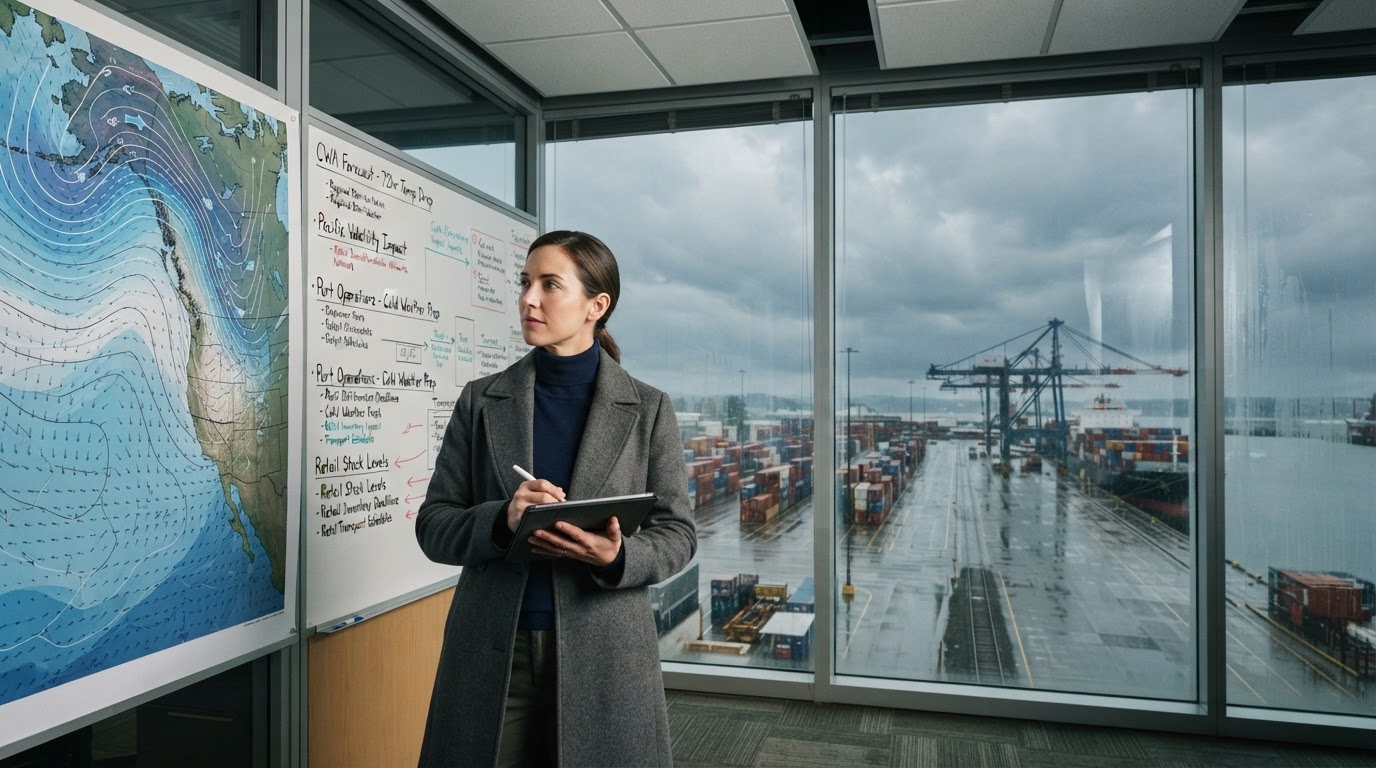
Weather systems to bring low temperatures: CWA
Wholesale buyers and logistics operators base procurement cycles on historical averages that no longer match the pace of rapid atmospheric fluctuations. When cooling trends arrive earlier or with greater intensity than standard models anticipate, heating demand shifts abruptly, refrigerated transport costs adjust, and consumer retail traffic patterns diverge from annual forecasts. The physical infrastructure underpinning cross-border trade remains rigid even as meteorological monitoring systems deliver faster, higher-resolution alerts.
Structural Limits in Atmospheric Planning
Regional institutions face an increasingly difficult task translating meteorological warnings into actionable municipal policy. The core tension lies between short-range warning advisories and long-term capital deployment. Public utilities can track forecasts from the CWA and adjust generation reserves, yet grid expansion and flood management infrastructure require multi-year budgeting that cannot pivot on weekly forecasts.
Critics might argue that regular cold weather systems represent routine seasonal turnover rather than systemic economic hazards. That interpretation overlooks how overlapping climate disruptions compound standard winter disruptions. When record oceanic temperatures coexist with sharp continental cold surges, seasonal volatility ceases to be a marginal operational issue and becomes a structural commercial variable.
The broader lesson for administrative bodies across the Asia-Pacific centers on execution rather than detection. Meteorology provides earlier notification of impending drops in temperature, but industrial supply lines, municipal energy reserves, and corporate retail networks cannot adapt if contingency reserves remain static. Long-term commercial resilience across the region now depends entirely on whether institutional logistics can match the speed of official atmospheric alerts.
Sources
Newsletter
Pacific Daily
A curated briefing from Thailand, Asia-Pacific and the world.