Himalayan Flooding and Asia's Recurring Reactive Measures
The recent flash floods near the Nepal-China border, exacerbated by a newly formed lake, illustrate a persistent pattern of reactive responses in regions acutely exposed to hydrological shifts. This dynamic holds particular relevance for Thailand and the broader Asia-Pacific.
SINGAPORE
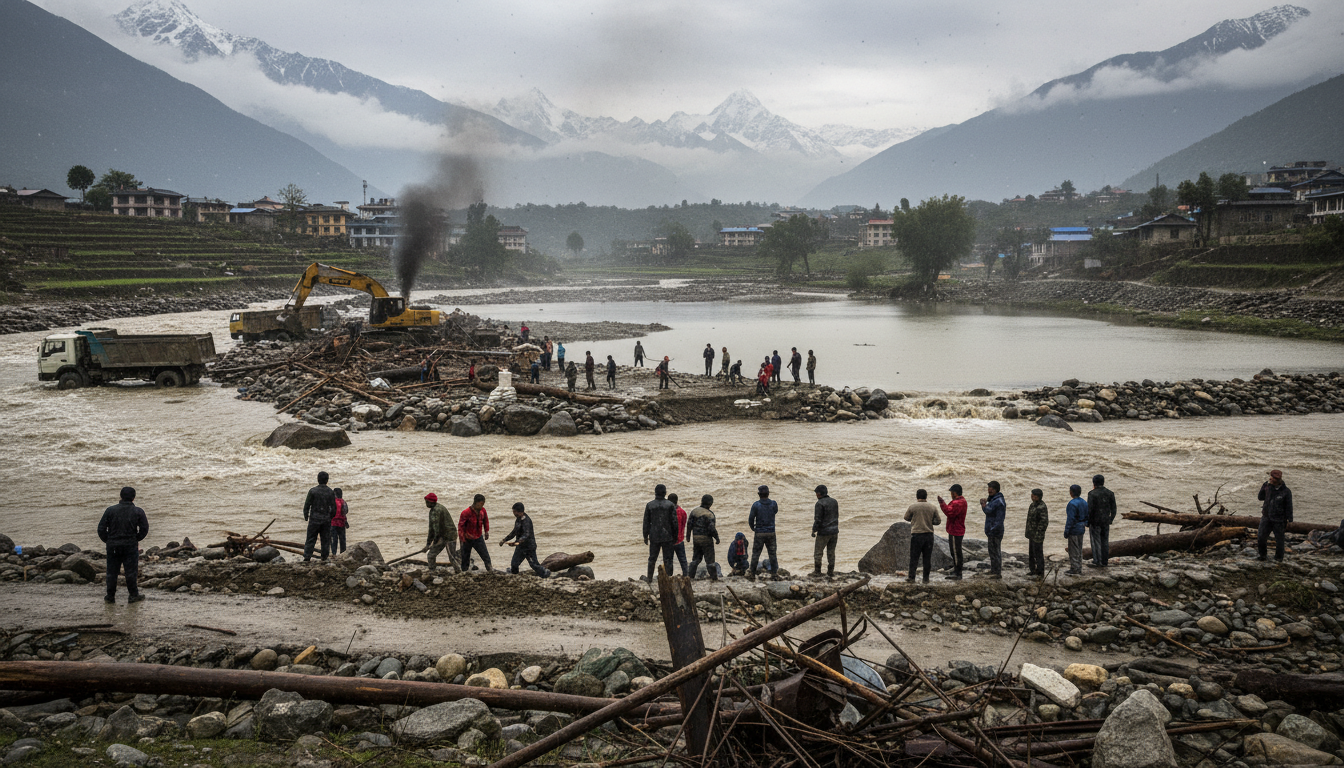
The recent devastation along the Himalayan border between Nepal and China, marked by catastrophic flash floods and mudslides, presents a case study in regional vulnerability and the challenges of proactive policy. Even as rescue operations continued, Nepalese authorities issued warnings regarding a newly formed, overflowing lake that posed a risk of further flooding. Security personnel, rescue workers, and members of the public involved in relief efforts were advised to maintain high alert and relocate if necessary, as reported on August 28, 2026, by Mongabay Asia.
This incident is not isolated. Historically, regions across the Asia-Pacific have contended with the consequences of rapid hydrological change, often with delayed, crisis-driven responses. Flash floods and landslides in Nepal have been a recurring concern, as illustrated by fears of flash floods that arose following landslides. What differentiates the current situation is not merely the scale of destruction, which includes casualties in both Nepal and China as reported by The Japan Times on August 26, 2026, but the explicit emergence of new geographic features — in this case, a lake — as direct drivers of subsequent risk. This highlights a persistent tension between the rapid pace of environmental change and the slower, often reactive, mechanisms of regional planning.
The Recurring Pattern of Consequence
The immediate focus on rescue and the warning about the newly formed lake demonstrates a response centered on mitigating present danger. While essential, this approach often falls short of addressing the underlying systemic vulnerabilities. For instance, the context of shifting weather patterns, such as the Ada-spawned rain that caused fears for evacuees in Negros Occidental shelters in January 2026, illustrates that diverse climatic events across the region can yield similar anxieties about population displacement and safety. The challenge for strategists is to move beyond event-specific reactions toward regional policies that anticipate such changes, particularly in transboundary river systems and coastal zones.
Thailand, with its extensive coastline and reliance on riverine systems, faces parallel challenges. While the specifics of glacial melt and high-altitude lake formation differ from coastal erosion or saline intrusion, the core strategic question remains: which coastline pays for a policy written inland? Decisions made without a comprehensive understanding of regional hydrological dynamics and their downstream or coastal impacts often leave peripheral communities exposed. The reactive warning system in Nepal, while prudent for immediate safety, reflects a broader pattern of policy lagging behind environmental realities. The long-term implications for population centers and infrastructure along major river basins and coastal areas in countries like Thailand suggest a need for regional frameworks that prioritize predictive modeling and cross-border resource management over purely localized, post-event responses. Without such a shift, the region risks a continuous cycle of managing new crises rather than mitigating their emergence. This unresolved tension between immediate response and preventative strategy continues to define regional climate preparedness.
Sources
Newsletter
Pacific Daily
A curated briefing from Thailand, Asia-Pacific and the world.