Grey-Zone Constabulary Law Rewrites Pacific Transit
Mainland maritime patrols east of Taiwan convert open navigation into an arena of administrative friction.
SINGAPORE
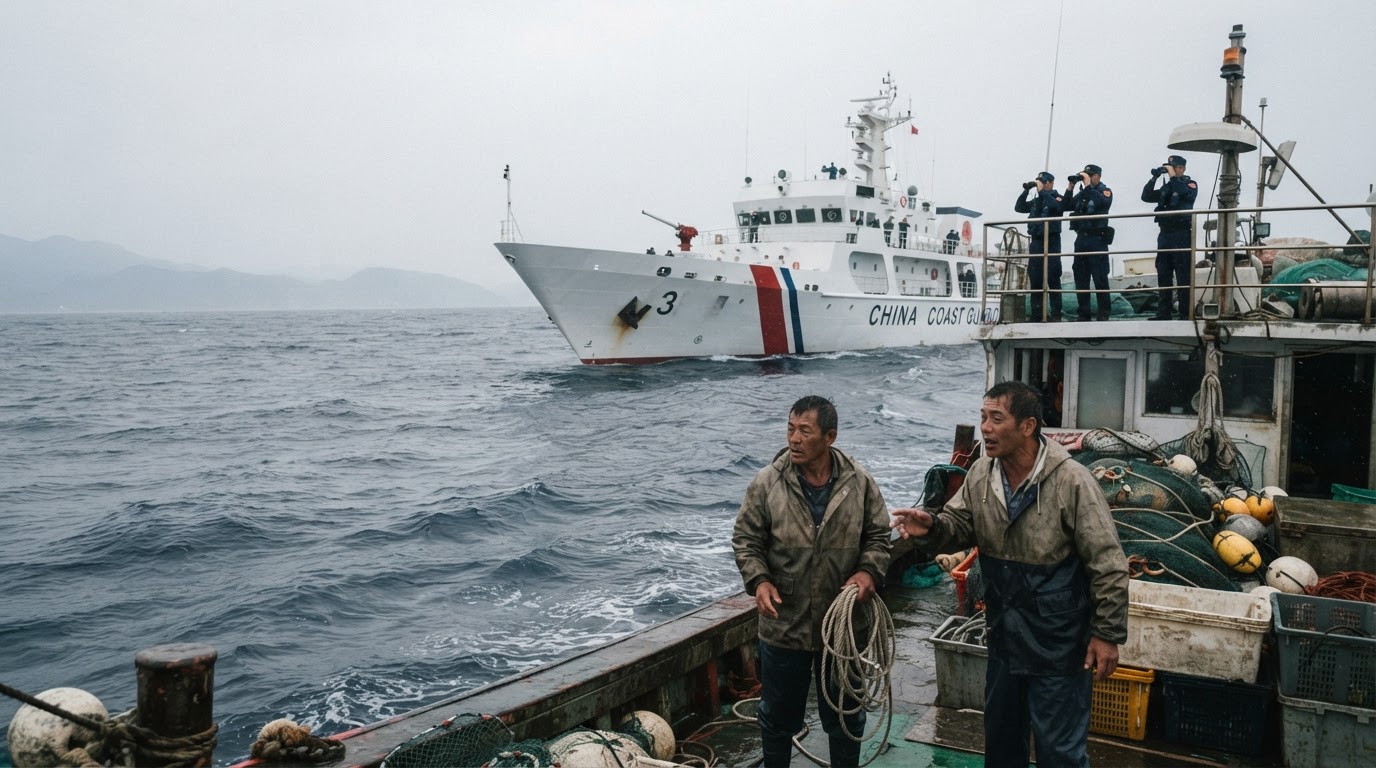
Maritime transit along deep offshore routes has long depended on political predictability, yet sovereign authority is increasingly asserted through administrative friction rather than direct naval engagement. For decades, merchant traffic navigating seaward of Taiwan treated the eastern coastline as an unhindered maritime corridor where standard rights of passage governed daily voyages. That baseline operational assumption is eroding under concerted pressure. Official disclosures from the CGA state that China is harassing commercial shipping with an east coast patrol off Taiwan. This development systematically shifts constabulary activity out of disputed littoral shoals and directly into established international sea tracks.
The operational pattern follows a documented institutional sequence. Authorities in China launched coast guard patrol activity east of Taiwan in July, pressing forward despite sustained international pushback from regional partners. By October, an exclusive maritime patrol spotted a China militia boat operating off Taiwan's east coast for the first time on record. When state surveillance transitions from baseline reconnaissance to direct merchant encounters, routine commercial routes become testing grounds for jurisdictional power. A policy formulated inland to broaden enforcement authority inevitably forces commercial shipping and coastal communities to pay for its implementation.
The Friction of Constabulary Expansion
Commercial shipping relies on predictable ocean transit to maintain tight schedules and disciplined logistics budgets. When patrol vessels actively shadow, challenge, or interdict cargo hulls, that foundational certainty vanishes without a single projectile being launched. Disclosures from CGA Taiwan describe persistent friction directed against civil transport vessels navigating waters east of the island. These tactical encounters generate immediate logistical disruption for maritime carriers. Merchant operators confronted by irregular constabulary patrols face rerouting decisions, operational delays, and creeping maritime insurance adjustments that erode commercial viability.
Commercial shipping corridors lose their operational stability when civil enforcement vessels project unilateral jurisdiction across deep ocean routes.
Skeptics of Taiwan's assertions present a contrasting interpretation of these eastern ocean transits. Proponents of Beijing's maritime enforcement argue that coast guard cutters perform routine statutory duties, monitoring maritime safety and policing irregular maritime movements within designated jurisdiction. From that viewpoint, maintaining patrol vessels east of Taiwan constitutes standard maritime administration rather than deliberate commercial interference. That interpretation, however, dismisses the severe structural asymmetry borne by civilian mariners. Commercial vessels lack the legal standing or physical protection to contest sovereign commands, leaving merchant crews caught in an administrative grey zone between competing authorities.
Ripple Effects Across the Asia-Pacific
The systemic effects of this maritime strategy do not stop along the immediate shores of Taiwan. Deep-water corridors traversing eastern coastal waters form vital trade conduits serving major regional industrial centers, connecting cargo vessels to destinations in Japan. Sustained disruption along these corridors introduces strategic vulnerability across regional shipping networks throughout the Asia-Pacific. Furthermore, diplomatic cooperation across neighboring capitals has already experienced notable strain. Regional partners reacted with visible frustration in October when China moved portions of an Asia-Pacific summit online, illustrating how friction on open water runs parallel to fractures in multilateral governance.
For the CGA, sustaining defensive vigilance while avoiding armed escalation requires rigorous tactical balance. Deploying response vessels to track external cutters consumes institutional resources and forces commercial mariners to negotiate ambiguous jurisdictional boundaries during routine transit. Global commerce routinely adapts to physical bottlenecks, but it cannot easily hedge against expanding administrative interdiction across open seas. As domestic enforcement assets push farther into open oceanic channels, the central tension remains starkly unresolved between the preservation of neutral navigation and the expanding reach of inland geopolitical mandates.
Sources
Newsletter
Pacific Daily
A curated briefing from Thailand, Asia-Pacific and the world.