Ecuador Curfew Shows the Household Cost of Hard Security
Nighttime movement bans in coastal provinces interrupt daily cash flow long before they dismantle criminal networks.
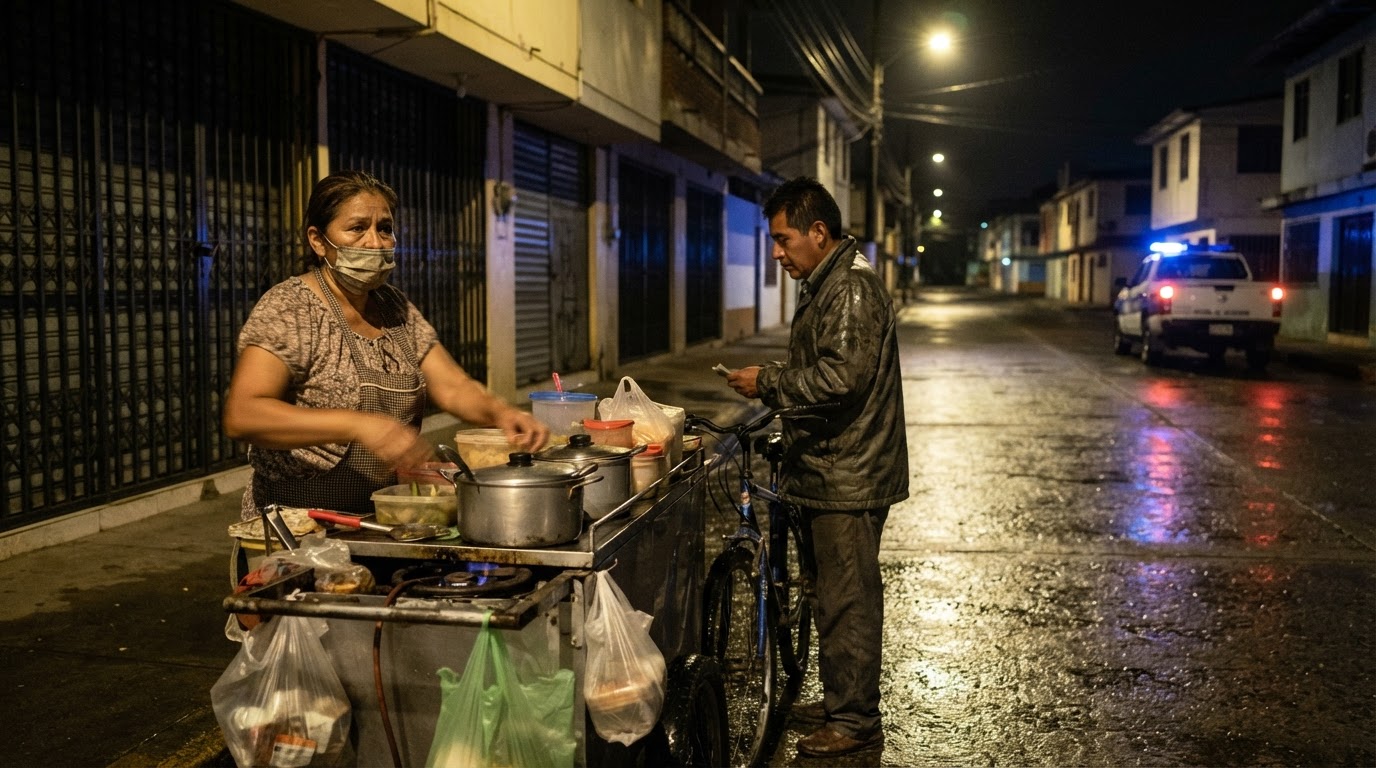
Nighttime commerce operates on hours that formal policy frequently ignores. Street stalls, dockside transport, neighborhood groceries, and food vendors take in essential daily income precisely during the evening window. When movement stops by executive order, that daily cash stream vanishes immediately.
President Daniel Noboa announced Wednesday that a new curfew would be imposed in coastal provinces from Nov. The measure forms part of special security operations against criminal organizations across coastal territory. Official statements frame the order as an unavoidable security response. Yet emergency decrees of this type transfer operational friction directly down to family ledgers.
Ecuador has experienced escalating gang violence that disrupted normal civilian life and prompted emergency measures throughout 2024. Noboa has relied repeatedly on states of emergency and troop deployments. For coastal residents, however, closing streets after dark halts micro-enterprise operations that cannot shift their trade to daylight hours. Wholesale transport drivers, market suppliers, and casual laborers absorb the losses without safety cushions. Household budgets contract within hours of an enforcement patrol setting up checkpoints.
The Commerce of the Coast
Security crises do not happen in isolation from trade corridors. Coastal provinces serve as the maritime conduit linking the country to external markets, including maritime routes connecting to China. When port hinterlands operate under security restrictions, logistics face delays that ripple across wholesale distribution chains. Supply schedules adjust, inventory costs rise, and ordinary neighborhood retailers find wholesale produce more expensive the following morning.
State officials point out that unrestrained gang extortion and territorial violence extract a severe private toll on businesses. Proponents of military enforcement maintain that without aggressive curfews, merchants face persistent threats and kidnapping hazards. Under this reasoning, losing several hours of evening trade constitutes a tolerable short-term sacrifice to reestablish basic social order. Noboa has pressed this hard-line security doctrine persistently, framing strict public control as the prerequisite for civic recovery.
That argument assumes working families possess sufficient liquid savings to outlast repeated commercial disruptions. Most do not. While security operations seek to disrupt illicit transit, sudden curfews act as an involuntary halt on everyday survival trades. Street vendors do not operate on credit lines. Small transport drivers do not maintain bank reserves that withstand lost evening runs. Each interrupted night represents groceries unpurchased and transport fares unpaid.
Geopolitics and Local Balances
International commentary often views these domestic security interventions through external alignments. Observers analyze how ties with figures like Trump shape the diplomatic posture of Noboa, or how security cooperation involving the United States reflects broader Pacific Rim dynamics. Strategic analyses weigh foreign partnerships, naval access, and trade interests that span bilateral ties with China.
Enforcement measures that silence storefronts demand clear economic remedies.
Such high-level perspectives routinely bypass the counter where an artisan or grocer counts coins at dusk. Strategic alignment provides no substitute for basic working capital. While foreign defense pacts and bilateral security aid dominate political agendas, coastal households experience state power primarily as an empty market street and armed soldiers enforcing early closure.
Repeated lockdowns create a predictable pattern. Security forces clear public thoroughfares, yet criminal networks adapt their timetables while ordinary workers simply forfeit revenue. Restoring sustainable public safety requires reliable local policing, transparent justice, and steady job opportunities. Without measures that protect daily commercial subsistence, each successive curfew risks weakening the economic resilience of the very communities it promises to defend.
Sources
Newsletter
Pacific Daily
A curated briefing from Thailand, Asia-Pacific and the world.