Crete Rhino Skull Highlights Gaps in Southeast Asia's Ancient History
The reported discovery of an eight-million-year-old rhino skull in Crete underscores how uneven paleontological understanding can be across regions, affecting our grasp of early life and human migration.
SINGAPORE
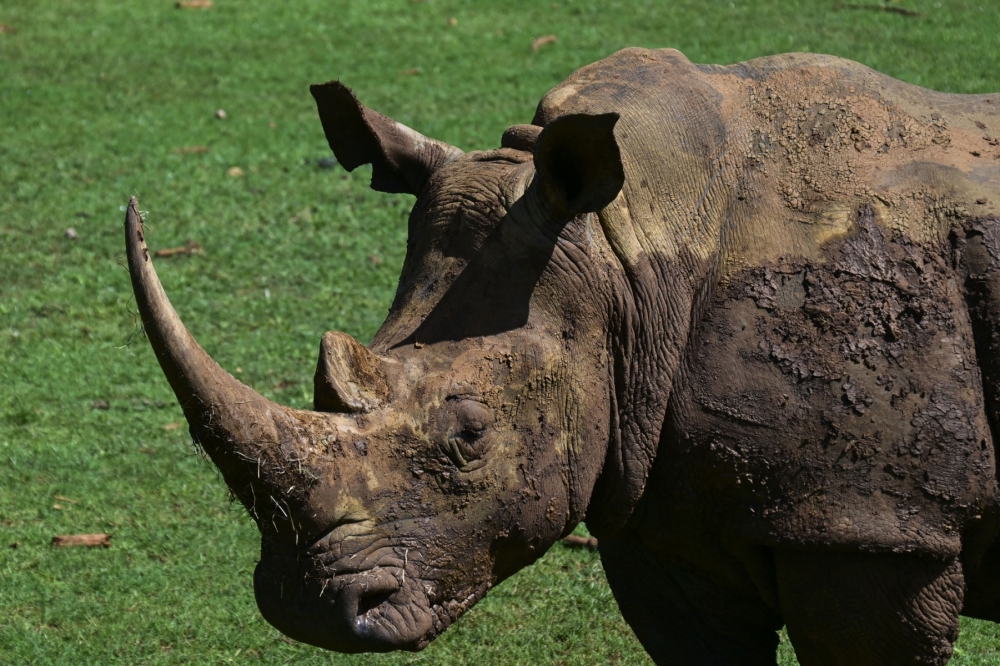
The reported discovery of an eight-million-year-old rhinoceros skull in Crete offers a distinct marker of geological time. This finding, noted by Malay Mail Life on September 30, 2026, provides a specific date for a significant fossil. Such discoveries routinely refine understandings of ancient ecosystems and the dispersal of species.
For residents in Thailand and the broader Asia-Pacific, such a distant find might seem remote from daily concerns. Yet, this discovery brings into focus the comparatively less understood ancient past of Southeast Asia. While a rich fossil record exists in many areas globally, the paleontological landscape of Southeast Asia, particularly concerning large mammals like rhinos, is not as thoroughly documented.
Rhinos, for example, have a long history in Asia, with several species native to the region, including Thailand. However, the precise evolutionary pathways and ancient migratory patterns of these animals within Southeast Asia are still being pieced together. When a fossil of such antiquity is found, it invites a comparison to what remains unearthed or unstudied in a region like Thailand.
The implications extend beyond just animal history. The movement of ancient fauna often correlates with changes in climate, geography, and eventually, the paths taken by early hominids. If the deep paleontological record of Southeast Asia remains incomplete, so too does a comprehensive understanding of early human presence and migration through the region. This is not to say no work has been done; numerous sites exist, but the breadth of discovery seen in parts of the world, exemplified by the Crete rhino, indicates a potential for more.
Understanding what happened eight million years ago in Crete helps build a global picture. The absence of comparable, clearly dated finds in Thailand means that local timelines for similar epochs are often inferred or based on less direct evidence. This gap affects how researchers reconstruct ancient environments and the interactions between different species, including hominids, as they traversed the landmasses that eventually formed modern Southeast Asia. The question then becomes how comprehensively the region's ancient story can be told without its own eight-million-year-old rhino skull to anchor it. What is missing from the ground also shapes what is missing from our understanding of the past, and consequently, how we interpret the present environmental challenges facing Thailand's wildlife.
Sources
Newsletter
Pacific Daily
A curated briefing from Thailand, Asia-Pacific and the world.