Conveyor Belt Economics Demand Volume Over Novelty
Mechanised sushi service eliminates floor labour, but rotating plates transfer commercial risk entirely to turnover speed.
SINGAPORE
Mechanisation in commercial dining promises friction removal, yet physical transport belts rarely solve underlying kitchen economics. Downtown Vancouver is preparing for the arrival of Zumi Revolving Sushi Bar, an operation marketing itself on social channels as Vancouver’s first revolving sushi bar. The venture imports the kaiten sushi model, long standard across Tokyo and urban hubs throughout Japan, into a high-rent commercial address on Alberni St. On paper, the appeal relies on mechanical speed and eliminating traditional floor service bottlenecks.
According to statements published on the restaurant's website, the operational premise rests on immediacy. The business asserts that its belt provides the shortest path from cutting board to chopsticks, with each plate moving from kitchen hands to a customer seat in under a minute. By removing physical tickets and glass covers, management argues that product quality remains intact while table turns accelerate. Such assertions treat logistical velocity as an unalloyed commercial virtue. Cutting out order tickets and floor runners certainly suppresses front-of-house wage costs, an attractive proposition for operators confronting downtown commercial leasing overheads.
The Friction of Continuous Motion
Yet moving sushi along a track alters how kitchen margins function. When food travels on an automated loop rather than executing to order, production shifts from demand-driven assembly to continuous exposure. Every plate placed on a mechanical runner represents committed inventory depreciating in real time. If seats sit vacant or guest selection hesitates, the cost of discarded raw product swiftly overtakes whatever payroll savings were captured by removing floor waitstaff.
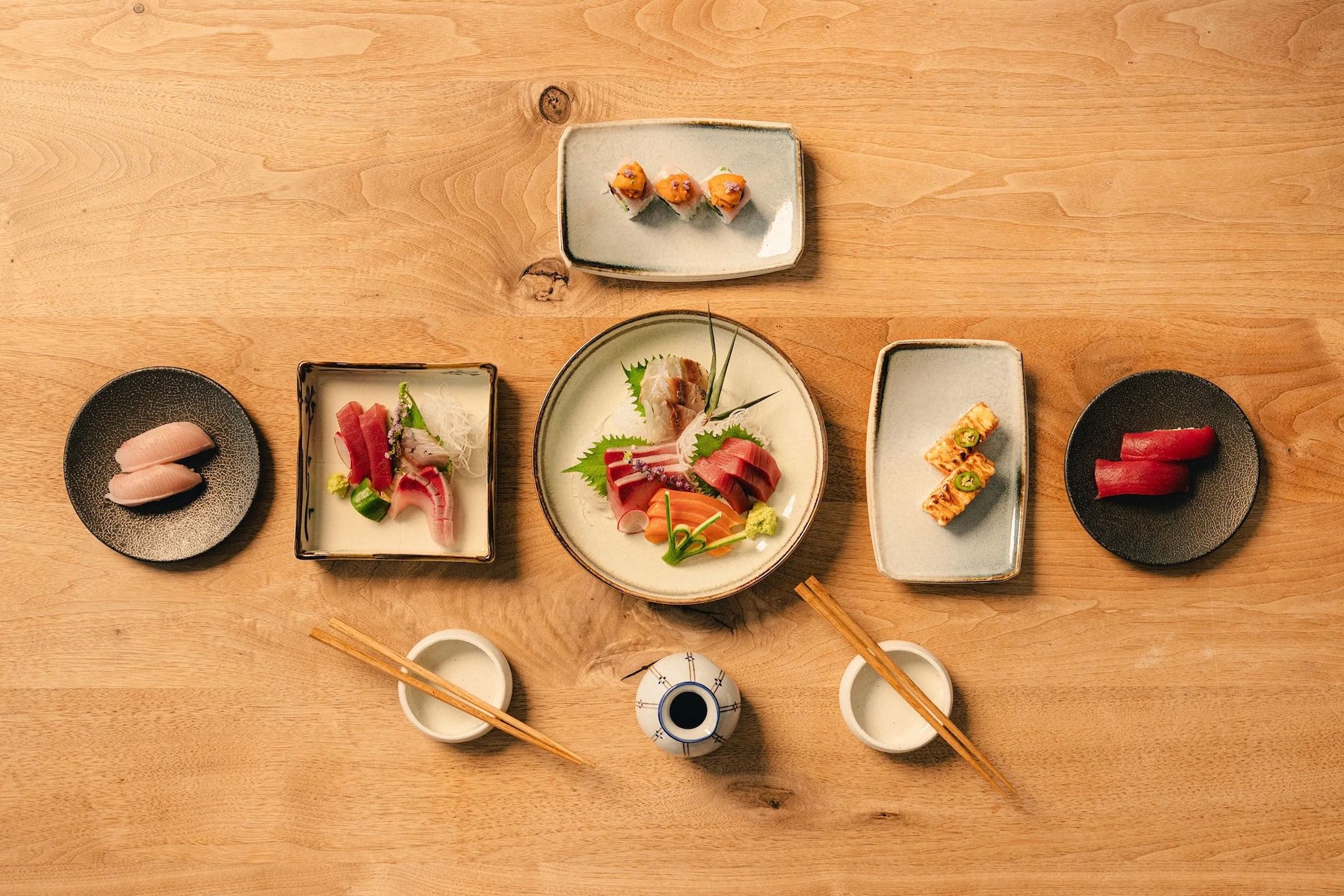
The belt is the shortest path from the cutting board to your chopsticks. Each plate leaves the chef’s hands and reaches your seat in under a minute, so nothing sits under glass and nothing waits for a ticket.
Promotional claims regarding local precedence function primarily as commercial leverage. Conveyor dining is neither novel nor technically intricate across urban centres in Japan, where chains refined high-density kaiten operations decades ago to capture slim margins across sustained customer throughput. Transporting the format overseas frequently encounters a fundamental operational divide. Without the dense, all-day foot traffic that animates Tokyo transit nodes, revolving venues often struggle to maintain the tight replacement cycles required to keep raw fish viable on an open track.
Margins Across the Counter
Zumi intends to present multiple formats, including takeaway arrangements under Zumi To Go alongside sit-down dining. Splitting output across pre-packaged sales and moving belts reveals a pragmatic acknowledgement of standard restaurant risk. A fixed conveyor belt cannot contract during quiet mid-afternoon hours. The electricity, prep labour and cooling requirements continue running regardless of whether chopsticks are actively picking up plates.
Defenders of the format contend that modern kaiten operations drastically shorten dining duration, permitting higher daily guest volumes that easily offset spoilage. That calculation functions admirably when queues consistently line the pavement outside. It buckles when novelty subsides and downtown office foot traffic fluctuates. Mechanised service strips away hospitality friction, but it leaves kitchen prep margins entirely hostage to relentless seat occupancy.
Sources
Newsletter
Pacific Daily
A curated briefing from Thailand, Asia-Pacific and the world.