Consumer Hardware Enters the Acoustic Commons
Apple’s provincial rollout of hearing software illustrates how personal audio devices are quietly absorbing medical functions without altering consumer design
SINGAPORE
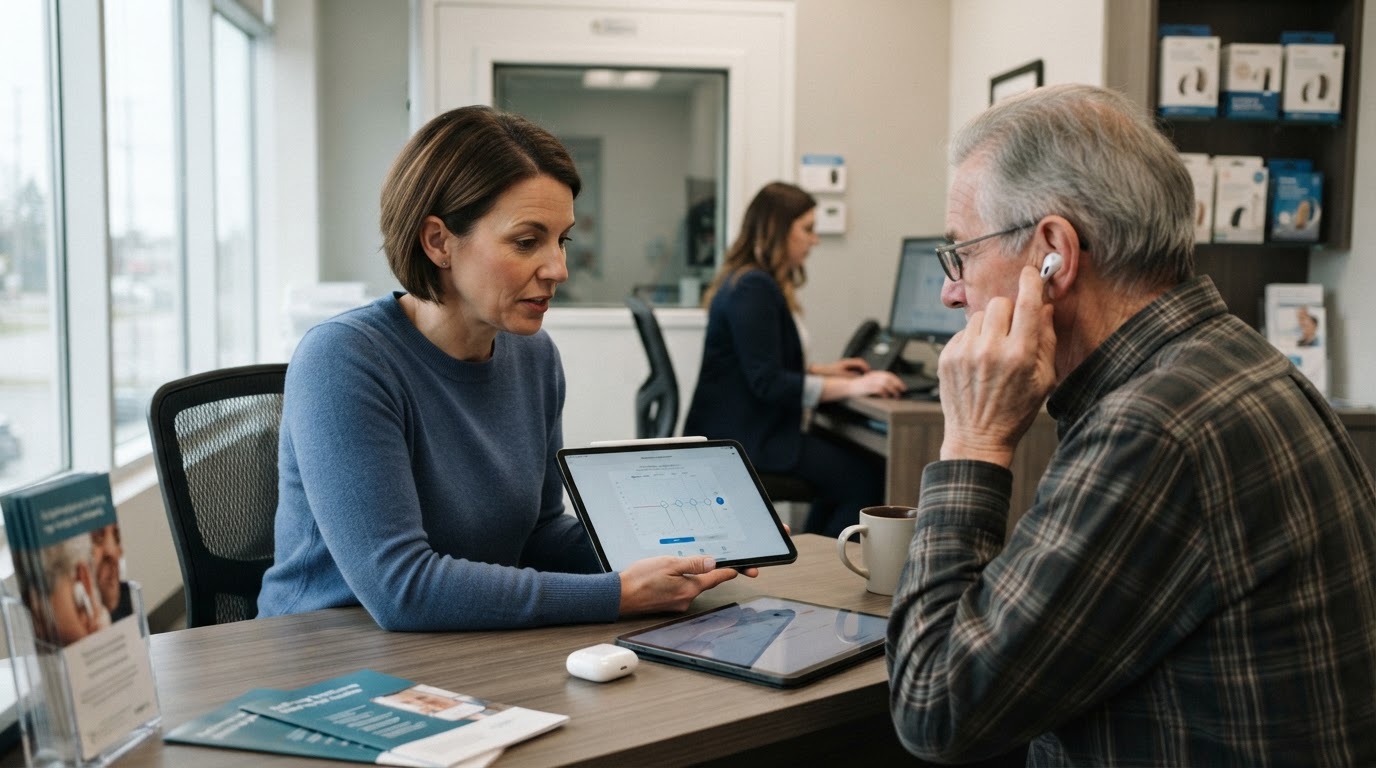
The mechanics of acoustic filtering depend on a simple technical premise: isolate target frequencies while suppressing background interference. When an individual sits in a crowded room, ambient reverberation frequently degrades speech comprehension, turning social engagement into an exhausting exercise in acoustic deciphering. Consumer technology firms have spent years refining software to counteract that degradation. In Canada, Apple has begun activating the Hearing Aid feature across AirPods Pro 2 and AirPods Pro 3 hardware in permitted jurisdictions, including B.C.
Technological containment has traditionally separated certified auditory prosthetics from commercial entertainment gear. Dedicated clinical hearing devices demand individual fitting, high unit expense, and visible hardware profiles that many users actively resist. Consumer wireless earbuds operate on an inverse commercial model. Millions of listeners already wear them throughout daily routines, treating white plastic stems as standard equipment rather than clinical interventions.
Jurisdictional Gatekeeping
Regional distribution remains fragmented because software features addressing physical impairment encounter distinct regulatory categories. Daily Hive Vancouver reported that the functionality is not yet available across all Canadian provinces, rolling out instead through select permitted jurisdictions. According to Statistics Canada, nearly one in five Canadians report hearing difficulties. Research cited alongside those findings links untreated hearing loss to broader well-being deficits, including elevated risks of social isolation.
Deploying clinical assistance through general consumer electronics alters how users interact with acoustic environments. Earbuds designed originally for music streaming now perform real-time signal processing to amplify proximate voices and attenuate surrounding din. The physical apparatus remains entirely unchanged. What shifts is the internal algorithmic execution, turning an ordinary lifestyle purchase into an acoustic intermediary.
Yet the structural limitations of consumer hardware cannot be engineered away entirely through firmware updates. Standard lithium-ion batteries inside miniature earbuds support only hours of continuous amplification before demanding replenishment inside a charging case. Dedicated clinical hearing aids, by contrast, run continuously across full waking days on dense zinc-air cells or specialized power systems. A user relying on mass-market earbuds to participate in communal dinners or extended family conversations faces abrupt battery depletion, forcing an unchosen return to acoustic isolation.
The Commercial Boundary
There is also the counterargument that medicalizing consumer accessories creates regulatory confusion without matching professional diagnostic standards. Audiologists calibrate devices against precise individual audiograms, accounting for ear canal geometry and asymmetric frequency loss. Software-based calibration on mass-market smartphones offers convenience, but algorithmic self-testing risks misjudging progressive auditory pathology. Relying on commercial audio gear may encourage consumers to bypass formal clinical diagnoses, mistaking software amplification for comprehensive audiological healthcare.
Corporate strategy nevertheless points toward deeper ecosystem integration. Reporting reflects a firm navigating complex regional friction, from shifting hardware production lines between Houston and Asia to hiring Uber’s Asia-Pacific government relations chief to manage cross-border scrutiny. As consumer electronics makers look to expand device utility amid climbing component costs, embedded health capabilities provide critical customer retention across consumer markets.
Sensory consumption ultimately relies on continuous access. Modifying personal audio hardware allows users to navigate loud communal spaces without medical stigma. Until consumer battery chemistry matches the sustained endurance of professional medical engineering, however, ambient accessibility will remain an intermittent convenience rather than a complete replacement for clinical care.
Sources
Newsletter
Pacific Daily
A curated briefing from Thailand, Asia-Pacific and the world.