Commerce Redefined: When Car Dealerships Enter Singapore's Heartland Malls
The arrival of high-value transactions within local community spaces signals a quiet, fundamental shift in their purpose, reflecting broader changes in consumer engagement across the Asia-Pacific.
SINGAPORE
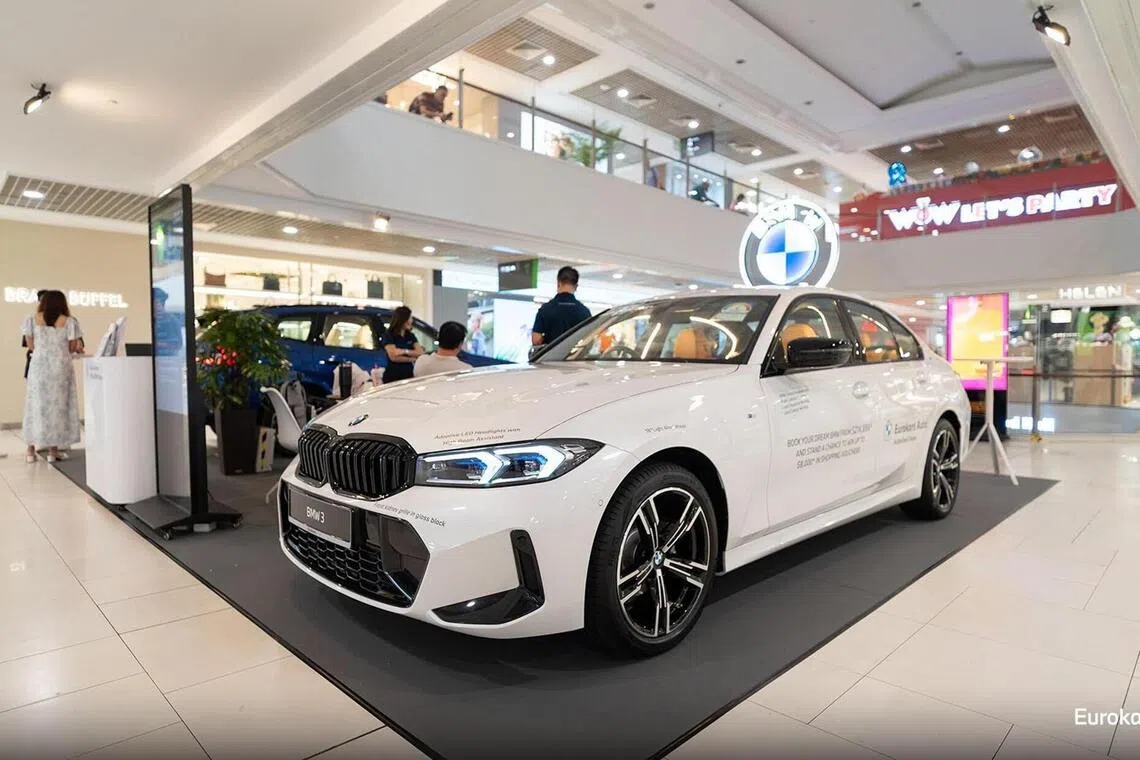
The presence of car dealerships within Singapore’s heartland malls this weekend, featuring brands like Honda and BMW at Bukit Panjang Plaza, Tampines 1, and Parkway Parade, marks a notable evolution in commercial practice. The official BMW dealer is holding a roadshow at Parkway Parade from September 16 to 20. Honda agent Kah Motor is at the ground floor of Bukit Panjang Plaza until September 20, displaying models such as the Freed multi-purpose vehicle and ZR-V crossover. Offers include a $6,100 discount on all models, with selected cars. This move, characterized by motor dealers rolling into suburban malls to reach buyers despite high certificate of entitlement (COE) premiums, reconfigures the traditional understanding of retail spaces.
Historically, the heartland mall served as a communal hub, its architecture and tenant mix reflecting an ecosystem designed for daily necessities and local services. This pattern long defined urban planning across parts of the Asia-Pacific region. The integration of high-value goods like automobiles into these spaces, alongside ongoing promotions such as DBS’s PayLah! cashback campaigns that incentive everyday transactions, indicates a merging of distinct commercial realms. While malls have been undergoing transformations, described by one source as 'Singapore’s great mall makeover,' and entities like Hang Lung are reportedly looking 'beyond luxury amid changing consumer tastes,' this specific deployment of car pop-ups suggests a more fundamental re-evaluation of accessibility and consumer engagement.
This phenomenon can be interpreted as a pragmatic response to economic conditions, where motor dealers seek direct access to residential populations, capitalizing on the established foot traffic of local shopping centers. It reflects a tactical adjustment in marketing and sales strategies, bringing the showroom experience directly to consumers within their established routines. The mall, in this context, becomes less a dedicated retail destination and more a versatile platform for varied commercial outreach, blurring the lines between specialized and general consumption. This change, while seemingly offering convenience to consumers by providing car deals alongside groceries and apparel, alters the intrinsic character of these community spaces.
Evolving Communal Spaces
The heartland mall, once defined by its local cadence, begins to absorb the aspirations and transactional weight of larger purchases. The idea that 'the mall the merrier' dynamic, once a measure of retail vibrancy, now extends to encompass an array of goods far beyond its original scope. This quiet expansion of commercial purpose within the familiar confines of local life risks subtly eroding the specific, communal identity that these spaces have long preserved, replacing it with a more undifferentiated commercial landscape. What is preserved here are the physical structures, but what is being quietly replaced is their foundational community role.
Sources
Newsletter
Pacific Daily
A curated briefing from Thailand, Asia-Pacific and the world.