China's EV Battery Swapping: Standardisation Efforts Face Operational Bottlenecks
Nio and Geely's agreement to unify battery swap standards in China is a structural advance, but its application across the Asia-Pacific region will contend with varying regulatory and infrastructure conditions.
SINGAPORE
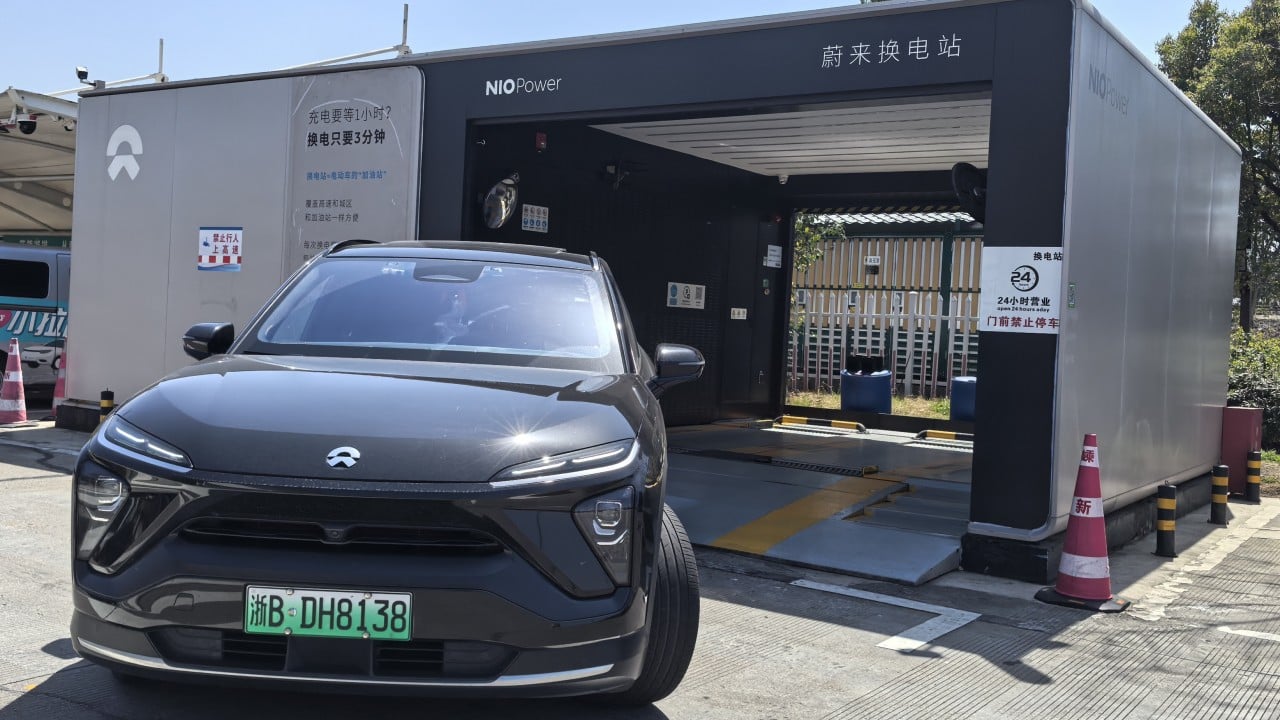
Nio has agreed to sell a 30 percent stake in its battery swap subsidiary, Nio Power, to Zhejiang Geely Holding Group. For this 30 percent share, Geely will pay 640 million yuan in cash and contribute its wholly owned battery-swapping unit, Yiyi Internet Technology. This transaction values Nio Power at 16 billion yuan (US$2.4 billion). The agreement follows a November 2023 strategic cooperation between the two Chinese electric vehicle manufacturers, which aimed at establishing common battery standards and infrastructure across a range of models. Their primary stated objective is to develop a unified battery swapping network in China to lower manufacturing costs, accelerate the expansion of swap stations, and enhance user convenience for compatible EV models.
Traditionally, the absence of a common standard has been a significant operational constraint for EV battery swapping. Each manufacturer's proprietary battery design and swap station architecture restricted interchangeability, limiting market adoption and increasing per-unit infrastructure costs. The Nio-Geely agreement directly addresses this by formalising a joint effort to integrate their technologies. This step consolidates development and deployment resources, aiming to create a more efficient ecosystem for battery swapping within China. The commitment to a unified standard intends to reduce infrastructure redundancy and focus investment for network expansion, a factor critical for meeting increased demand as EV penetration grows.
While this initiative focuses on the Chinese domestic market, its implications extend to how EV infrastructure might evolve in the broader Asia-Pacific. Scaling battery swap technology, even with standardisation, involves substantial operational challenges. Each swap station requires real estate acquisition, a reliable grid connection, and consistent battery inventory management. The efficiency of a swap network depends directly on the density and reliability of these stations. In regions with fragmented regulatory landscapes or nascent EV markets, a unified standard framework may face considerable resistance. For instance, differing national electricity grid capacities, such as those found in Thailand, Vietnam, or Indonesia, present distinct barriers to a rapid, uniform rollout of a high-power infrastructure like battery swap stations.
Further, the success of a standardised system depends on the willingness of other major EV manufacturers to adopt these common specifications. Without broader industry participation, the Nio-Geely alliance, though significant, may establish a dominant standard for only a segment of the Chinese market. The operational complexities involved in managing battery life cycles, charging patterns, and logistics across a large, interoperable fleet remain critical to long-term economic viability. The immediate benefits to the Chinese market center on a more streamlined expansion of an alternative charging solution. However, the path for this model to propagate across diverse Asia-Pacific markets will hinge on regulatory alignment and a clear economic advantage over established charging methods, which are not uniformly present.
Sources
Newsletter
Pacific Daily
A curated briefing from Thailand, Asia-Pacific and the world.