Cantonese Opera's Digital Echoes: A Culinary Parallel
The challenge of preserving tradition, from the stage to the plate, reveals a fundamental tension for Asia-Pacific's cultural landscape.
SINGAPORE
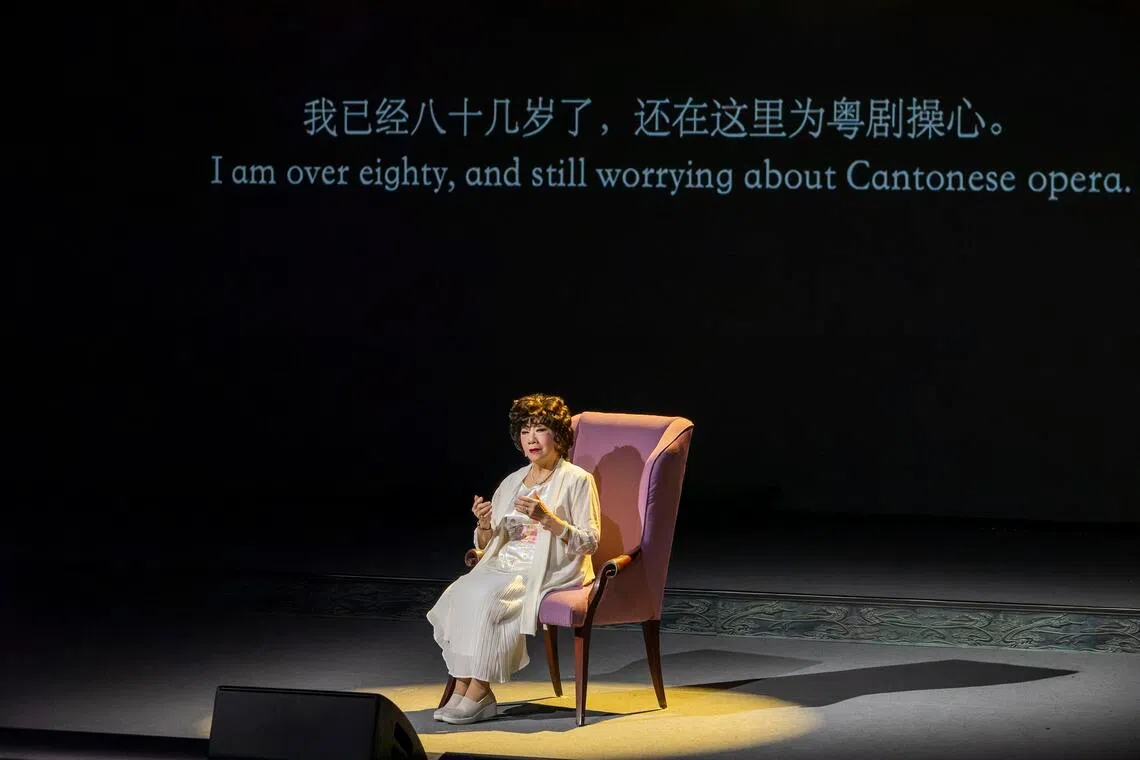
The Straits Times Life reported on September 21, 2026, on “One Love, A Legacy,” a docu-theatre piece celebrating Joanna and Leslie Wong, founders of the Chinese Theatre Circle. This production employs minimalist staging and integrates archival visuals, along with modern elements such as AI to revive Leslie Wong’s voice. The primary aim is to honor their dedication to preserving Cantonese opera amid cultural challenges. However, the source summary states the piece is mostly pedantic, despite some bright spots, and highlights ongoing struggles to maintain the art form’s relevance for future generations.
This tension between heritage and contemporary appeal is not unique to the performing arts; it resonates deeply within the culinary traditions of the Asia-Pacific. Just as Cantonese opera faces the imperative to adapt while retaining its essence, so too do regional cuisines. The use of AI to reconstruct Leslie Wong’s voice is a factual application of technology in a bid to bridge generational divides and sustain interest. This technological intervention, however, prompts a critical question: does digital reconstruction truly preserve the art, or merely its echo? For a restaurant critic, the equivalent is observing a chef who replaces a fundamental ingredient with a lab-created substitute, arguing it maintains the dish’s “spirit.” The technique might be precise, but the provenance changes.
The challenge is one of authenticity versus accessibility. Joanna Wong, an 87-year-old Chinese opera doyenne, still takes the stage. This demonstrates a living, breathing connection to tradition. Yet, the broader context of “One Love, A Legacy” implies that such direct lineage is insufficient for long-term viability. The production’s noted struggle to sustain relevance for future generations indicates that mere celebration, however warm, does not guarantee continuity. The parallel in cuisine is palpable: a traditional dish, meticulously prepared according to centuries-old recipes, might struggle to find a contemporary audience if its presentation or dining context is perceived as outdated or inaccessible to younger palates.
The essential query remains: who grows this, and what margin survives the plate? In Cantonese opera, it’s about the cultural growers—the performers, the educators, the audience—and the sustenance that allows the art form to thrive, not just exist as an attributed claim of legacy. The financial and societal margins must allow for innovation that respects the source, rather than simply replicating its surface. The perceived pedantry of the docu-theatre piece, despite its noble intentions, suggests that the integration of modern elements like AI must transcend mere novelty. It must fundamentally enhance understanding and engagement without diluting the core integrity. Otherwise, the preservation becomes an exercise in embalming rather than revitalizing. The goal should be to cultivate new audiences and practitioners who value the depth of the tradition, not simply to digitize its past.
Sources
Newsletter
Pacific Daily
A curated briefing from Thailand, Asia-Pacific and the world.