Brazilian Ranchers' Blockade Illustrates Broader Resource Competition in South America
A dispute over Indigenous land demarcation in Brazil's Pará state points to persistent tensions between agricultural expansion and environmental protection, a dynamic relevant to Asia-Pacific resource flows.
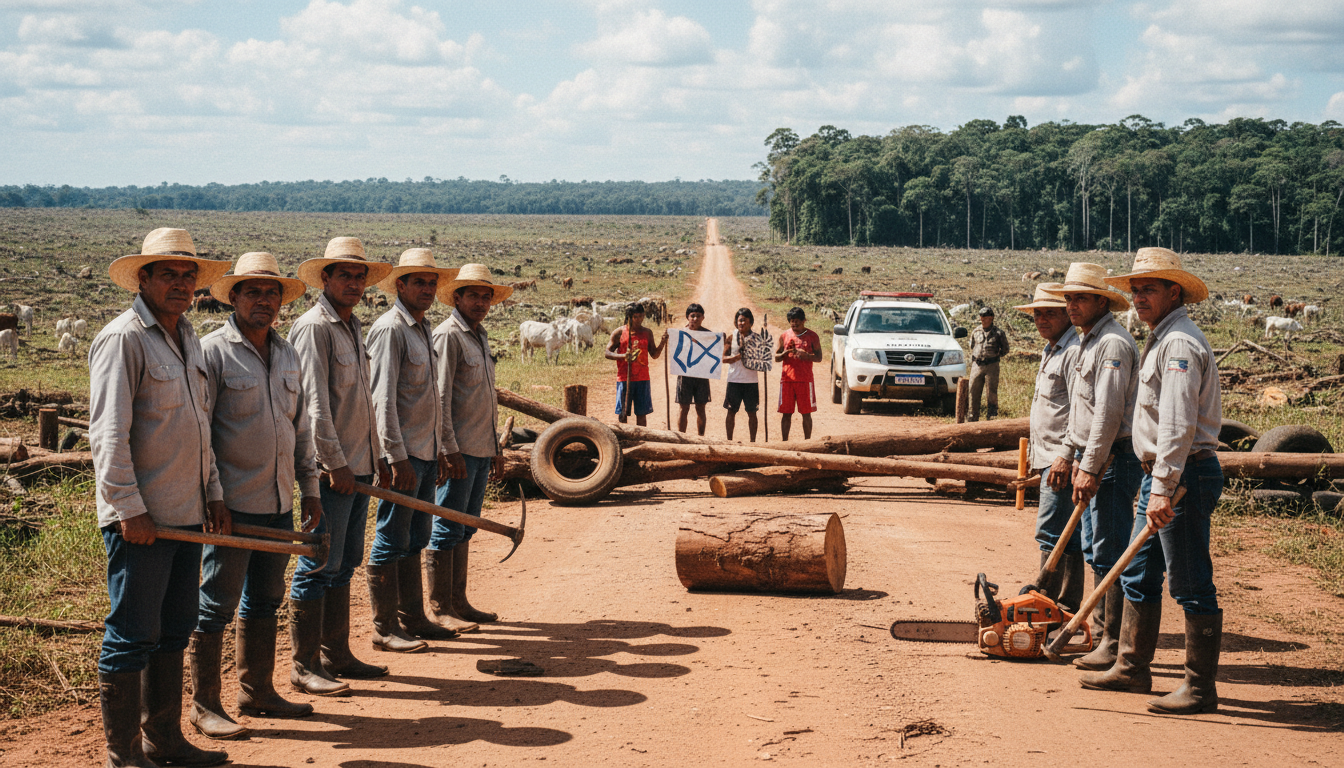
Since September 23, a blockade orchestrated by a group of rural producers has impeded access to the Paquiçamba Indigenous Land in Brazil’s Pará state. This action, supported by local politicians, specifically targets government officials from the Indigenous Affairs Agency (Funai), preventing them from completing the physical demarcation of land traditionally occupied by the Juruna (Yudjá) Indigenous people. The demarcation process, which involves georeferencing, placing boundary markers, and installing signage, constitutes a necessary step before formal presidential approval and registration of the territory.
The stated goal of the protestors is to prevent Funai's entry, thereby halting the official recognition of the Indigenous territory. This standoff delays the final stage of a process that would legally secure the land rights of the Juruna (Yudjá) people. An unattributed statement indicates that Funai is seeking legal recourse to ensure the continuation of its work, access to the border areas, and the safety of its teams. This situation highlights a fundamental tension between the agricultural sector's interests and the rights of Indigenous communities, a long-standing conflict in Brazil.
The Paquiçamba region is directly affected by the Belo Monte hydroelectric project, suggesting a context where large-scale development has already altered local ecologies and economies. The ranchers’ actions to block a legal process underscore the ongoing pressure on natural resources in Brazil, a nation that has seen its agricultural sector expand significantly. This expansion is often driven by international demand, including from the Asia-Pacific region. China, for instance, has deepened its trade ties with South America, evidenced by a 2024 Reuters report on a new Silk Road mega port and a 2025 South China Morning Post announcement of a study for a transcontinental railway project linking Brazil and China. These infrastructure projects facilitate the export of South American commodities, potentially intensifying land use pressures.
The current dispute, while local in its manifestation, reflects a pattern of resource competition. As Brazil has created new Indigenous territories, as reported by BBC in 2025 during COP30, these moves are often met with opposition. The International Business Times noted in 2013 a "classic conflict pitting people seeking land against people growing food" in Brazil. The ranchers' blockade in Pará state represents a direct challenge to the government’s authority to formalize Indigenous land rights, effectively prioritizing agricultural interests over legal processes and traditional land claims. This resistance suggests that even with official proclamations or intentions, the implementation of land protection measures can be stalled by local economic and political forces.
The economic implications extend beyond Brazil. The Asia-Pacific region, particularly China, is a major recipient of South American agricultural products and raw materials. Interruptions or disputes over land use in Brazil, a significant global food producer, could theoretically affect supply chains. While the current blockade is localized, the underlying conflict over land use and resource allocation remains a critical factor in understanding the long-term stability of these supply lines. The outcome in Paquiçamba will depend on the Brazilian government's resolve in enforcing its demarcation policies against well-organized local opposition.
Sources
Newsletter
Pacific Daily
A curated briefing from Thailand, Asia-Pacific and the world.