Vaccinating Brazil's Tamarins Underscores a Broader Regional Divide in Conservation
The successful vaccination of black-faced lion tamarins in Paraná state highlights the technical capacity available for species protection, yet exposes the uneven distribution of such resources across the Asia-Pacific.
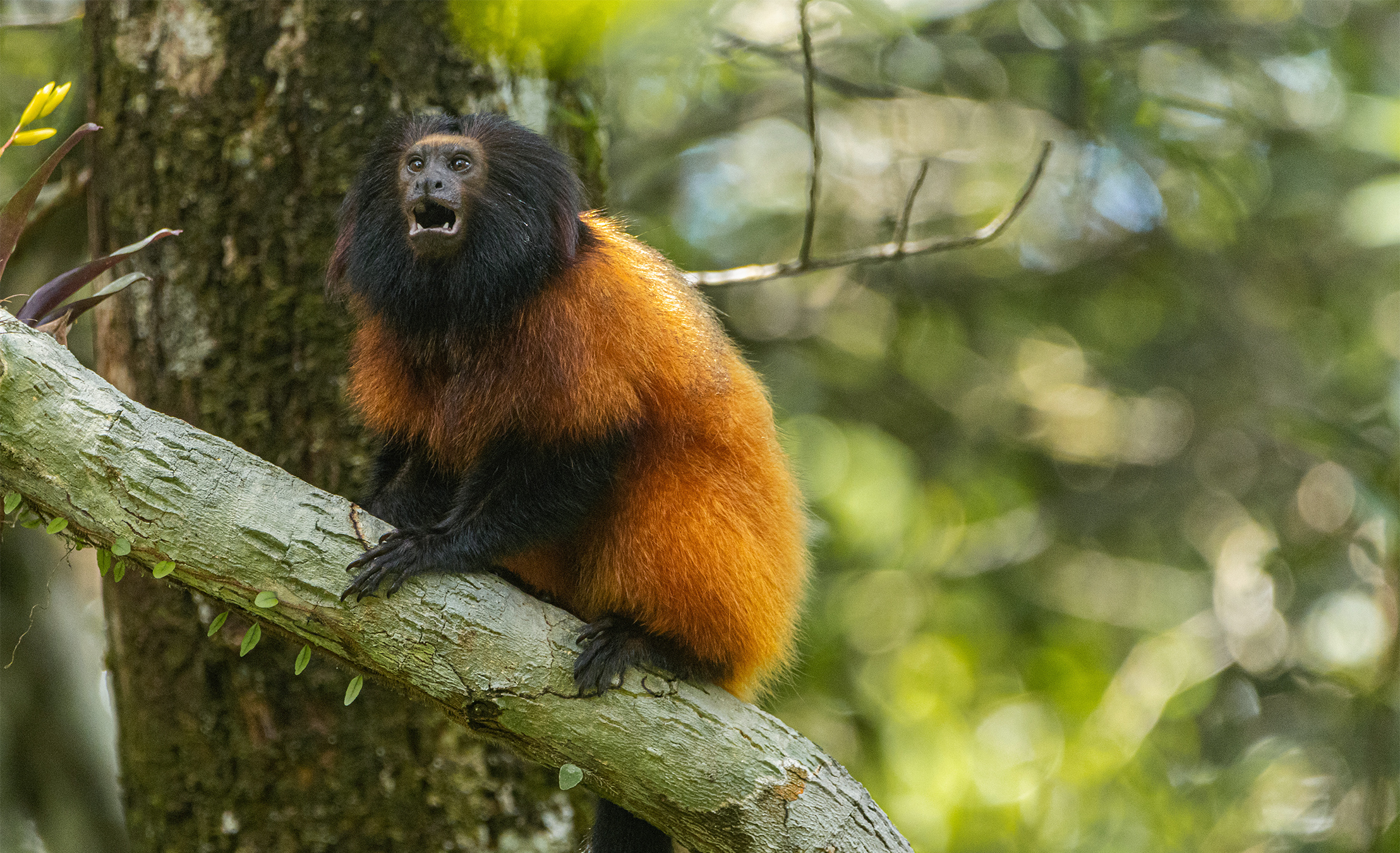
On a Wednesday in July, deep in a coastal restinga area of Brazil’s Paraná state, three black-faced lion tamarins became the first of their species to receive vaccinations. Researchers from the conservation NGO Society for Wildlife Research and Environmental Education (SPVS) safely captured the primates, transported them in covered cages, and administered the treatment in a makeshift tent. This event, reported by Mongabay Asia on October 1, 2026, demonstrates a targeted intervention addressing direct threats to specific species.
Such a precise, evidence-based approach to conservation carries implications for regions facing similar ecological pressures, including the Asia-Pacific. While the immediate focus is a localized species in South America, the method itself — a proactive veterinary intervention for endangered wildlife — represents a standard of care. The capacity to execute such a program, from identifying the need to deploying trained personnel and establishing temporary field hospitals, is not universally distributed.
The broader context of the Pacific Rim, an area encompassing the Paraná state through Brazil's transcontinental railway projects with China, reveals an intricate network of development and environmental impact. Efforts to link the Pacific and Atlantic, as discussed in 2011, have always generated concerns about crime and destruction. The 2025 announcement of a Brazil and China study into a transcontinental railway highlights ongoing infrastructure ambitions that traverse critical ecosystems. While these projects drive economic growth, they also place significant stress on habitats, potentially increasing the risk of disease transmission or habitat fragmentation for species across a vast geographic area. The question arises whether the conservation techniques demonstrated in Paraná can be scaled or replicated in regions where infrastructure development often outpaces ecological mitigation.
For countries like Thailand, which possesses significant biodiversity and is subjected to rapid development, the Brazilian experience offers a point of comparison for resource allocation. The availability of resources and political will to fund such targeted interventions often differentiates outcomes. The ability to deploy field teams to vaccinate individual animals against specific threats, as SPVS did, requires not only scientific expertise but also sustained financial and logistical support. The 'super El Niño' conditions predicted for 2026 by the BBC, alongside record global temperatures, will likely exacerbate environmental stressors, making proactive conservation measures even more critical. The challenge remains for policymakers inland to fully grasp the direct financial and ecological costs borne by coastal and forest ecosystems, and to then prioritize the necessary interventions with the same precision demonstrated for the black-faced lion tamarin.
Sources
Newsletter
Pacific Daily
A curated briefing from Thailand, Asia-Pacific and the world.