US-Argentina Initiative Reveals Energy Transition’s Dual Priorities
The Andes-Atlantic Corridor for critical minerals and fossil fuels underscores geopolitical realignments and the inherent tensions in clean energy strategies.
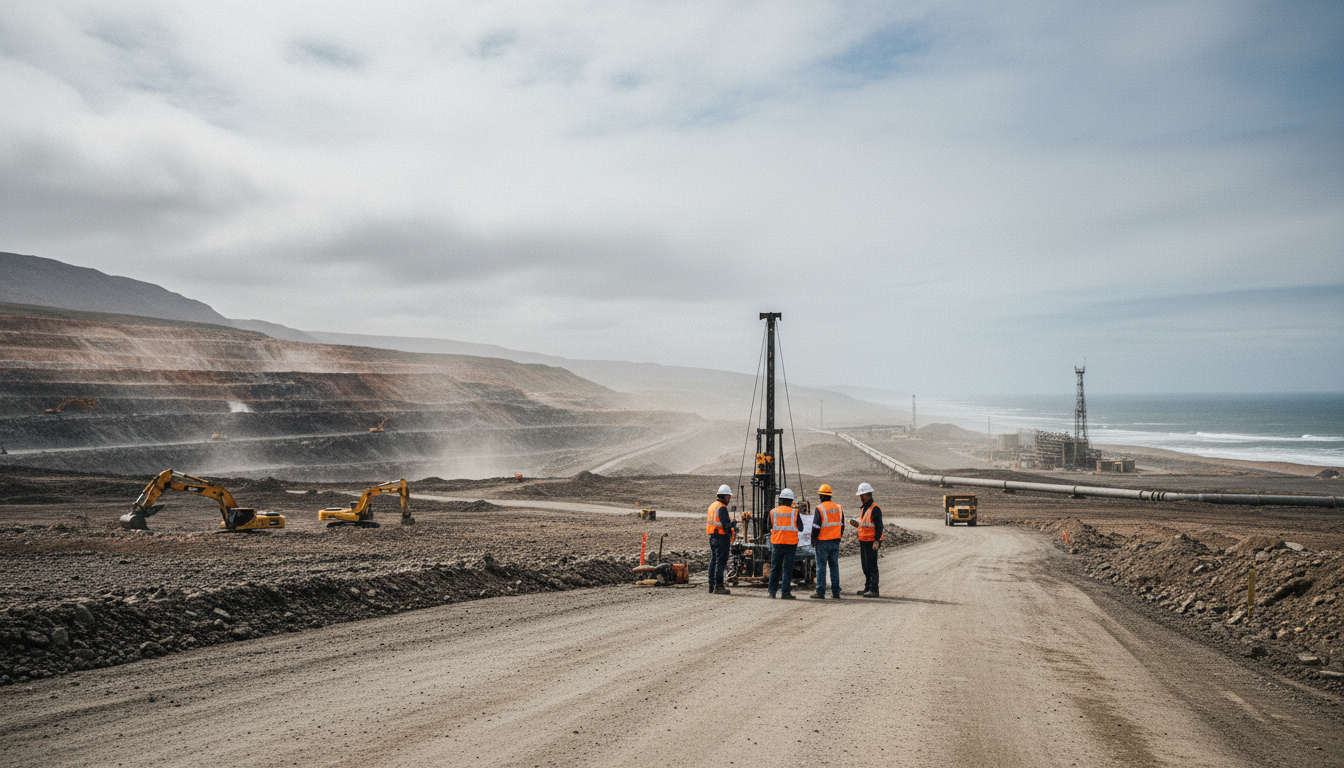
The United States and Argentina have initiated the Andes-Atlantic Corridor, an agreement announced on September 23. This initiative aims to bolster investment and strengthen supply chains for critical minerals such as copper and lithium, as reported by Mongabay Asia on October 1, 2026. It will facilitate U.S. investment into Argentina’s mining sector and the export of these minerals. Concurrently, the agreement supports the continued development of Argentina’s Vaca Muerta region, which holds the nation’s largest oil and gas reserves. This dual focus highlights a complex strategy: securing raw materials for clean energy while simultaneously advancing fossil fuel extraction.
This development occurs within a broader context of global powers seeking to reduce reliance on single-source critical mineral suppliers. Efforts to diversify beyond dominant producers have intensified. The G7, for example, has stepped up efforts to break China's grip on critical minerals, as reported by Japan Wire by Kyodo News. Despite these efforts, the U.S. ‘remains dependent’ on China for rare earths, a point highlighted by the South China Morning Post. A Reuters report noted a China deal that aimed to provide the U.S. time to build its critical minerals supply chain. Argentina signed a critical minerals deal with the U.S., according to Reuters on February 4, 2026, serving as a concrete manifestation of these geopolitical and economic shifts.
The initiative’s dual emphasis on both critical minerals for clean energy transition and the expansion of oil and gas operations in Vaca Muerta presents a significant internal tension. While the stated goal includes supporting the clean energy transition, the simultaneous commitment to fossil fuel development could indicate a pragmatic approach to energy security that prioritizes current demand alongside future objectives. The capital allocation required for such an endeavor raises questions about the pace and commitment to a full transition away from hydrocarbons, even as the global rhetoric emphasizes decarbonization.
For the Asia-Pacific region, this initiative, while geographically distant, holds indirect implications. Increased diversification of critical mineral supply chains outside of current dominant producers could eventually influence global market dynamics for materials essential to electric vehicles and renewable energy infrastructure. However, the direct impact on Asia-Pacific supply chains or investment patterns is not immediately evident from the details of the agreement. The region’s own strategies for securing critical minerals, often involving engagement with existing suppliers or developing domestic resources, proceed largely independently. The U.S. commitment to both mineral and fossil fuel extraction in Argentina suggests that global energy transitions are not linear and involve securing all forms of energy resources deemed strategic. The enduring constraint for many nations remains the challenge of reconciling short-term energy needs with long-term climate targets through capital deployment.
Sources
Newsletter
Pacific Daily
A curated briefing from Thailand, Asia-Pacific and the world.