Bilateral Consultations on Artificial Intelligence Expose Strategic Friction Across the Pacific
Diplomatic meetings between Washington and Beijing offer procedural calm while technological rivalry shifts operational risk to maritime Asia
SINGAPORE
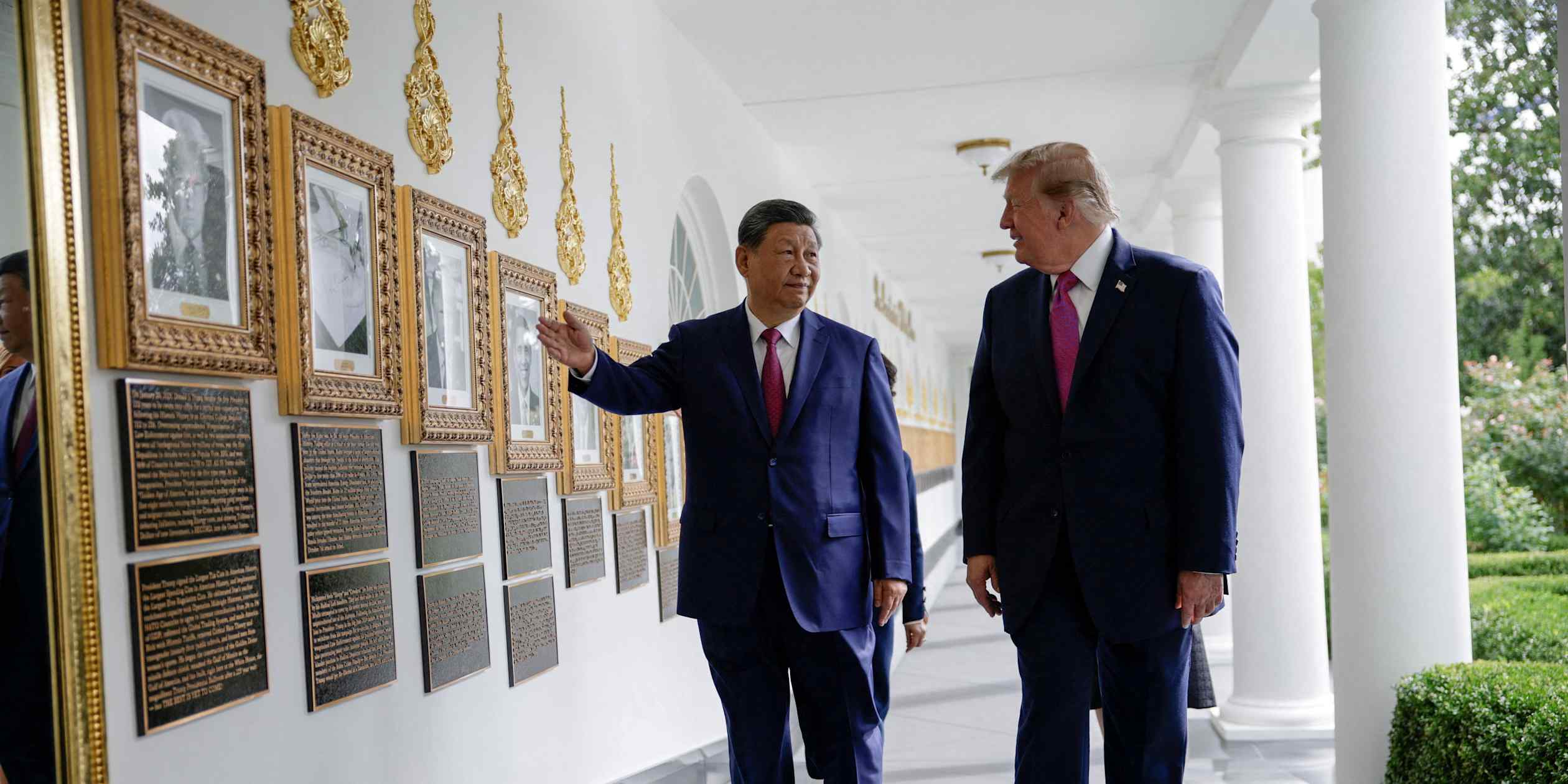
Bilateral consultations between sovereign capitals project diplomatic order precisely when strategic competition diverges most acutely. High-level engagements between the United States and China regarding artificial intelligence demonstrate this institutional friction. Administrative exchanges suggest a mutual interest in procedural guardrails and bilateral communication. Concurrently, computational capabilities, algorithmic governance, and microelectronics remain direct instruments of systemic competition across the wider Asia-Pacific.
Technological governance cannot mature inside an administrative vacuum. Historical precedents in bilateral statecraft demonstrate that technical discussions frequently decline into rhetorical exercises whenever regulatory definitions lack binding inspection protocols. Dialogue maintained purely for performative stabilisation produces very little operational restraint. Without measurable benchmarks, diplomatic talks risk functioning merely as communicative buffers while algorithmic capabilities expand across commercial and military sectors without independent oversight.
Asymmetric Intent and Regional Exposure
The central structural problem facing these negotiations lies in an asymmetry of strategic intent. Administrative representatives from the United States approach machine learning through frameworks that emphasize security risk containment and operational safety. In contrast, policymakers in China frame computational integration within long-term plans for comprehensive national development and domestic technical autonomy. Because the two powers negotiate from fundamentally incompatible priorities, high-level diplomatic meetings typically yield non-binding communiques rather than substantive technical limits.
This unresolved divergence carries immediate consequences beyond the borders of the two principal states. Coastal and island economies throughout East Asia and Southeast Asia depend directly on maritime logistics networks, transpacific data links, and telecommunications corridors maintained across both jurisdictions. If high-level discussions fail to establish practical standards for dual-use artificial intelligence, intermediate regional actors inevitably inherit the systemic volatility generated by competing digital architectures. Competing technical requirements force smaller states into conflicting regulatory alignments, complicating cross-border trade, port logistics, and digital infrastructure governance.
Without measurable benchmarks, diplomatic talks risk functioning merely as communicative buffers while technical capabilities expand without independent oversight.
Advocates of sustained bilateral dialogue note that diplomatic contact remains necessary even when substantive agreements prove elusive. Regular channels of discussion can reduce tactical miscalculation, clarify sovereign boundaries, and provide baseline mechanisms for crisis management during unexpected system malfunctions. Such communicative utility is undeniable, yet establishing nominal meeting schedules does not constrain technological competition or protect neighboring economies from systemic instability.
The Absence of Enforceable Verification
A persistent institutional barrier continues to limit genuine progress: neither government shows any inclination to submit domestic algorithms or high-performance computing assets to reciprocal external auditing. Strategic establishments in Beijing and Washington regard proprietary algorithmic weights, advanced semiconductor architectures, and military software programs as sovereign capabilities exempt from foreign inspection. As a result, bilateral consultations on artificial intelligence encounter the exact verification impasses that historically stalled strategic weapons negotiations, but without the physical infrastructure that once made conventional hardware verifiable.
Regional security across maritime Asia will not materialise through repeated ministerial commitments to abstract cooperation. Surrounding economies require pragmatic, non-aligned regulatory frameworks that mitigate the spillover effects of unmonitored computational deployment across international transit lanes. Although ongoing talks between the United States and China prevent abrupt diplomatic rupture, the lack of verifiable technical agreements ensures that operational uncertainty continues to migrate outward toward regional coastlines.
Sources
Newsletter
Pacific Daily
A curated briefing from Thailand, Asia-Pacific and the world.