Beijing’s Struggle with Myanmar Scam Hubs Underscores Evolving Regional Power Dynamics
The revealed persistence of criminal networks in northern Myanmar, despite Chinese intervention attempts, signals a shift in operational control and a challenge to traditional state authority in border regions.
SINGAPORE
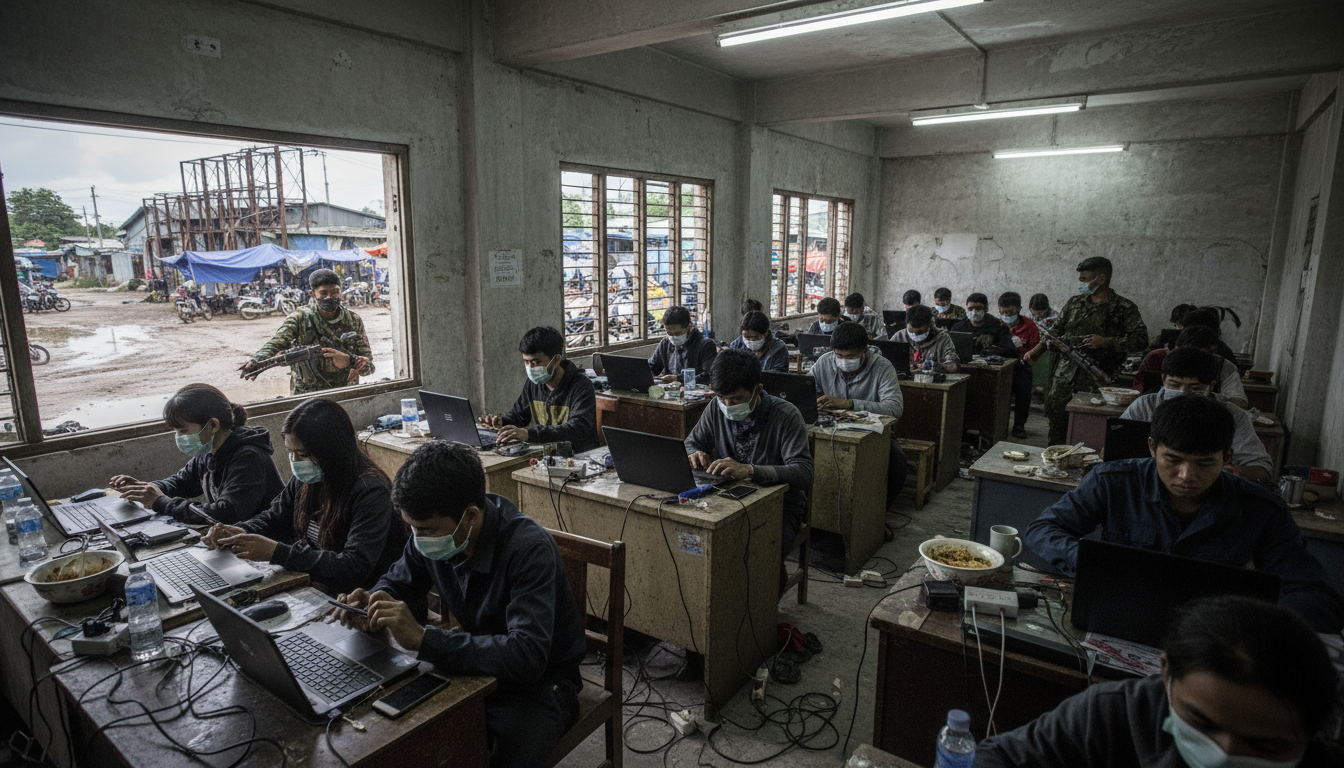
The recent revelation concerning Chinese actor Wang Xing, trafficked and sold multiple times in Myanmar last year, highlights a persistent problem in Southeast Asia’s borderlands. A new Chinese state documentary detailed this ordeal and, more significantly, disclosed Beijing’s three unsuccessful attempts to persuade powerful crime families in northern Myanmar to dismantle their scam operations. This persistence of illicit activity, even after direct intervention efforts from a major regional power, suggests a recalibration of local control and state influence.
For years, scam operations targeting individuals across Asia have thrived in ungoverned or weakly governed zones along Myanmar’s periphery. Beijing’s inability to compel these “powerful crime families” to cease activities, despite official channels, points to a clear capability gap. This is not merely a matter of political will. It also involves operational reach and effective enforcement. These networks, by surviving and expanding despite state pressure, demonstrate an independent operational capacity that challenges established notions of state sovereignty and regional security.
This situation directly affects Thailand. A crackdown operation by the Karen Border Guard Force on illicit activity at the border checkpoint with Thailand in Myawaddy township in February 2025 serves as evidence. Such operations represent localized responses to a problem with broader regional implications. The presence of Chinese citizens like Wang Xing in these scam hubs confirms the transnational nature of these criminal enterprises, impacting populations far beyond Myanmar’s immediate borders. States’ inability to fully suppress these operations suggests a future where non-state actors wield significant, destabilizing influence.
The historical context of border regions in Southeast Asia often involves a complex interplay between state authority, local power structures, and cross-border economies, both legal and illicit. Beijing’s repeated failures to persuade these groups indicate a shift away from a model where such groups might be swayed by diplomatic pressure or implied state power. Instead, it suggests these crime families operate with a degree of autonomy that resists external governmental directives, even from a powerful neighbor. This does not merely reflect a failure of diplomacy. It marks a change in the regional balance of power. The unresolved challenge remains how state actors will adapt their strategies to counter these entrenched, trans-border criminal capabilities.
Sources
Newsletter
Pacific Daily
A curated briefing from Thailand, Asia-Pacific and the world.