Bangkok's PM2.5 Strategy Amidst Regional Disparities
Thailand addresses a recurring environmental challenge, but the regional implications suggest a fragmented approach.
BANGKOK
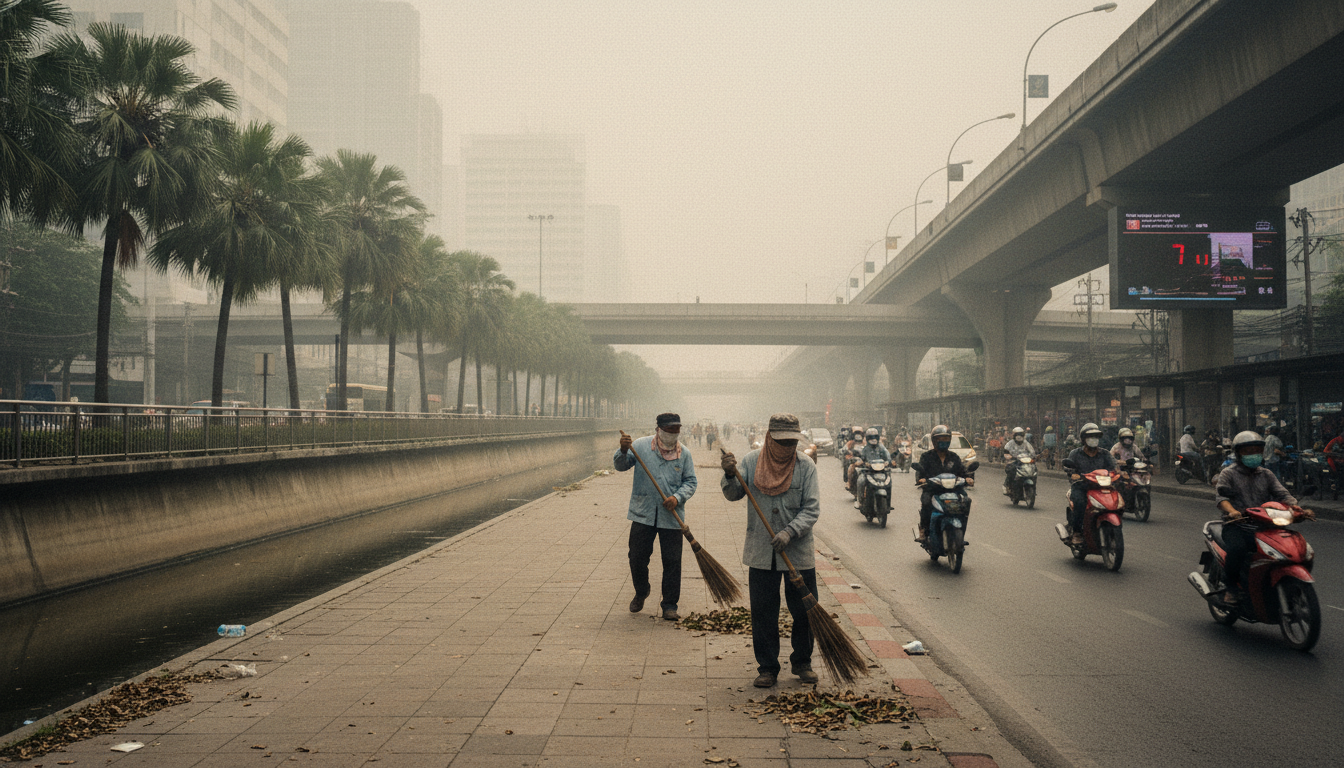
The Bangkok Metropolitan Administration (BMA), coordinating with the Pollution Control Department (PCD) under Thailand's Ministry of Natural Resources and Environment, is reportedly preparing stricter measures for PM2.5 pollution as the year-end approaches. This response to an increased risk of airborne particulate matter pollution marks a recurring pattern in Thai environmental policy. Each year, seasonal shifts bring a heightened focus on the issue, often met with pronouncements of intensified efforts.
Historically, PM2.5 pollution in Thailand, particularly in the Bangkok region, has been linked to agricultural burning practices, industrial emissions, and vehicular exhaust. The cyclical nature of these challenges has meant that while local administrations announce various 'crackdowns,' the underlying structural issues—spanning economic incentives, enforcement capabilities, and transboundary haze—persist. The current initiative is an example of an attempt to manage the immediate visible symptoms rather than address the multifactorial systemic causes across the region.
From a regional perspective, Thailand's efforts, while locally necessary, highlight a fragmentation in Southeast Asian environmental governance. The problem of PM2.5 is not confined by national borders; a significant portion of Thailand’s annual haze often originates from agricultural burning in neighboring countries, for instance. The UNESCO Regional Office in Bangkok, established for broader regional engagement, does not directly address immediate environmental enforcement, focusing instead on areas like cultural heritage and education. Therefore, while Bangkok announces measures, these are largely localized responses to a problem with significant external contributors. This leads to a scenario where one nation's seasonal interventions may offer limited long-term regional impact if coordinated policies across multiple markets are not established.
The current approach reflects a continued emphasis on reactive, rather than proactive, regional environmental policy. The announced 'crackdown' serves as a domestic policy signal, aiming to mitigate local health impacts and public discontent. However, without a broader, more consistently applied regional framework for controlling agricultural burning, industrial pollution standards, and emissions across the Asia-Pacific, individual national efforts risk being perpetually outmaneuvered by the scale of the transboundary issue. The BMA’s stated intent to enforce stricter measures addresses a symptom, leaving the larger regional atmospheric interdependence largely unresolved. While Thailand's internal policy shifts may offer temporary relief, the long-term regional consequence remains constrained by the absence of a unified environmental strategy.
Sources
Newsletter
Pacific Daily
A curated briefing from Thailand, Asia-Pacific and the world.