Arena Hospitality Offloads Operating Risk onto the Glass
Michael McCarron’s direct cash restitution exposes the fragile economics separating arena concession pricing from consumer liability.
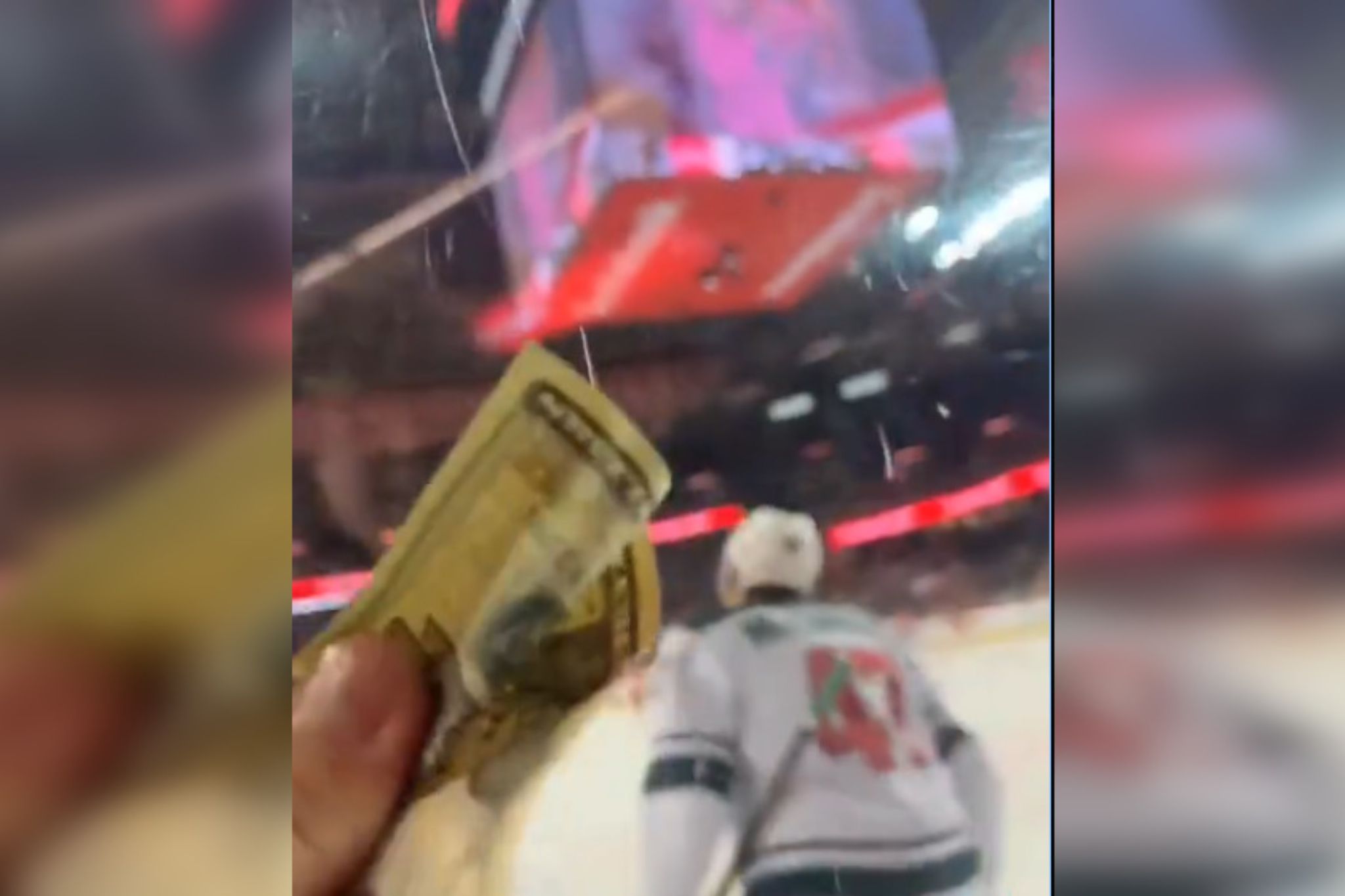
Arena concessions generate extraordinary retail markups, yet the physical liability of the transaction transfers entirely to the ticket holder once draught liquid leaves the tap. When Minnesota Wild player Michael McCarron collided with the rink boards during a Thursday warmup at the Saddledome in October 2026, the kinetic impact tipped a beverage held by a spectator stationed beside the glass. Standard venue management dictates that such an incident remains unfortunate luck for the spectator. The buyer absorbs the financial loss entirely, obliged to fund a replacement pour at steep markups or abandon the beverage altogether. Concessionaires routinely treat this perimeter spill as an isolated customer mishap rather than a foreseeable consequence of stadium architecture.
Instead of relying on that institutional indifference, McCarron responded with direct personal cash. Wild forward Michael McCarron located the spectator and pushed a crisp USD 20 bill through the photography portal in the glass barrier. Popular commentary praised the gesture as individual sportsmanship, framing the forward as an athlete demonstrating personal empathy across the partition. That sentimental perspective overlooks the commercial architecture beneath the rink surface. What occurred along the perimeter was an impromptu financial settlement that bypassed the concession vendor, demonstrating how commercial sports environments capture high-margin hospitality revenue while refusing to warrant the physical zone where goods are consumed.
The Commercial Margin in the Glass
Concession food service relies on captive retail physics. Whether pouring Molson Canadian or Coors Original, arena operators encounter negligible underlying beverage acquisition costs, yet terminal prices reach USD 14.25 or escalate toward USD 28 in premium sectors. Venues do not command those tariffs because the liquid reflects intricate cellar craft or agricultural scarcity. Concessionaires charge those figures because perimeter turnstiles eliminate outside competitive supply, leaving patrons with no alternative source of refreshment. The margin surviving the pour is almost pure venue surplus, protected from market competition by security checks and concrete walls.
The cash handover exposed an unresolved contradiction: arena hospitality sells proximity to force while demanding that consumers absorb every operational collision.
Spectators pay substantial premiums for glass seating precisely to experience physical proximity to elite athletes. That same proximity exposes beverages to persistent mechanical shock waves traveling through the perimeter boards. Concession frameworks are deliberately drawn so that once payment clears, all physical vulnerability belongs to the purchaser. Should a hit against the perimeter wall overturn a beverage, arena personnel do not dispatch a complimentary replacement pour. Venue operators instead require the patron to queue again and purchase another serving, compounding vendor income upon an operational accident. The concession balance sheet extracts double revenue from a single seating location whenever glass vibrations dislodge a full cup.
Restitution and Captive Environments
McCarron’s USD 20 transfer briefly bridged that corporate gap, yet spontaneous cash cannot resolve an entrenched distribution imbalance. An individual professional skater paid out of personal pocket to rectify physical disruption generated by venue mechanics. When an arena sells front-row seating adjacent to high-margin draught taps, facility management recognises that kinetic contact will displace beverages. By declining to introduce formal replacement protocols for collisions, venues protect their balance sheets by making paying patrons absorb the cost. The financial burden of sports turbulence is shifted onto the customer, while the venue retains full concession profit.
Replicating this dynamic across modern spectator hubs reveals a broader commercial pattern. Arena hospitality operations promote premium attendance tiers through immersive proximity, yet customer service guarantees terminate abruptly at the point of sale. Concessionaires capture outsized beverage margins without accepting operational accountability for the turbulent physical environment they monetize. When accidental collisions happen, the spectator shoulders the cost of structural design flaws while catering operators collect effortless replenishment income. Until venue operators incorporate beverage replacement costs into baseline facility overhead, spectators near the glass remain unpaid shock absorbers for the enterprise.
Sources
Newsletter
Pacific Daily
A curated briefing from Thailand, Asia-Pacific and the world.