AI and Artisanal Tourism: A New Calculus for Cultural Experiences
An artist's shift from 'real-world Catrinas' to AI filmmaking in Mexico poses questions for how Asia-Pacific destinations manage cultural authenticity and commercial viability.
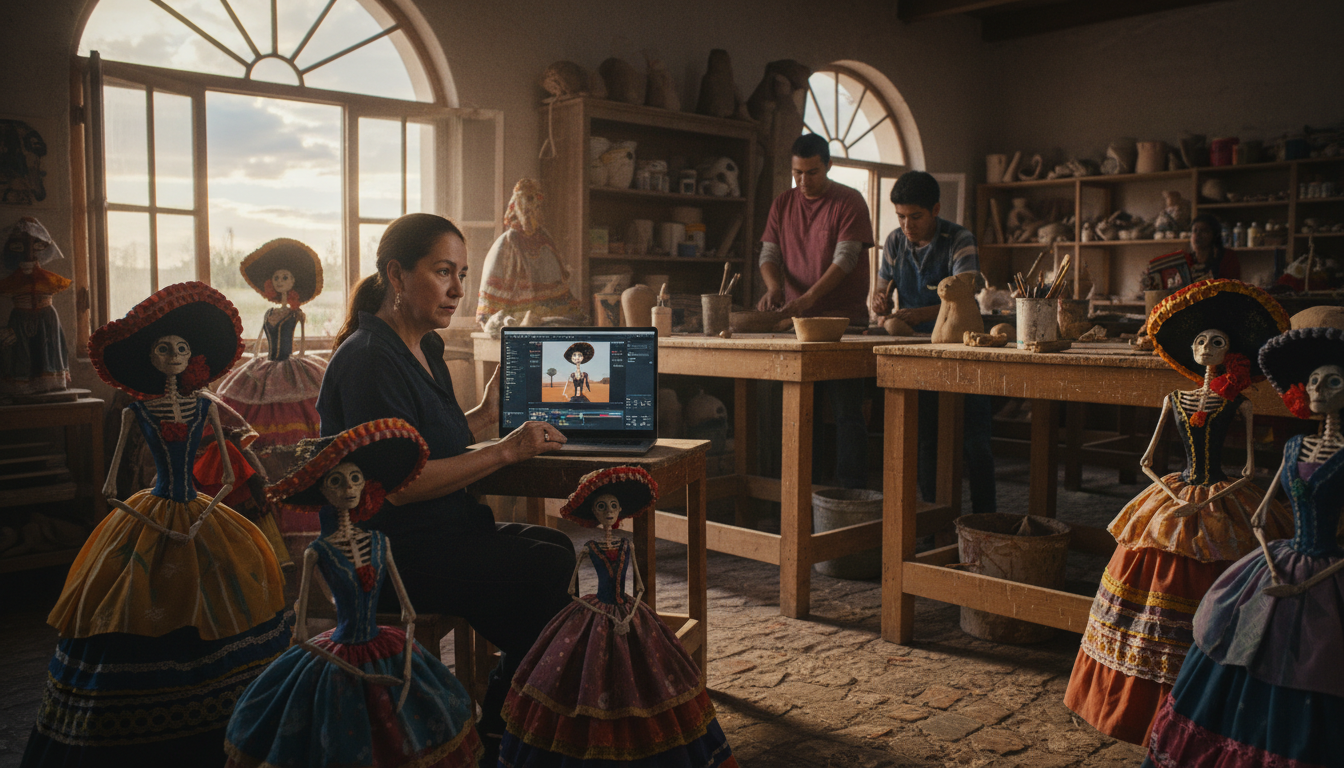
The path of Alejandro Su, an artist who began with “Catrina makeup” for Día de Muertos events in Mexico and now engages in AI filmmaking, illustrates a fundamental tension in cultural tourism. What started in 2019 as friends traveling “through different parts of Mexico, creating Catrina makeup, putting together wardrobe and photographing the results against landscapes we loved” has evolved. The initial pursuit was without an “elaborate business model behind it,” driven by an enjoyment of “creating characters, traveling and showing a little of Mexico through photography.” This organically developed into an “experience” as “people began asking if they could take part in what they were seeing.” Visitors sought “makeup,” but also desired an understanding of the cultural context.
This progression from organic, authentic engagement to a formalized “experience” is familiar across many tourism markets. The transition, however, from tangible, in-person cultural practices like Catrina makeup to artificial intelligence-driven cinema marks a more substantial shift. For destinations in the Asia-Pacific, often rich in distinct cultural traditions, this trajectory presents both opportunities and potential liabilities. The question becomes how to balance the commercial appeal of a cultural celebration with its inherent authenticity and the costs involved in preserving and delivering it.
Historically, the profitability of cultural events like Mexico’s Día de Muertos depended on the direct interaction between visitors and local artisans or cultural practitioners. The economic benefit flowed through direct service provision, such as makeup artists, costume makers, and tour operators. As an “experience” becomes more digitized, especially with technologies like AI filmmaking, the cost structure and the distribution of economic benefit change. Fewer direct, on-the-ground human interactions could mean a reduced flow of income to local communities who are the custodians of these traditions.
Consider the incentives. For an artist like Alejandro Su, AI filmmaking may represent a new frontier for creative expression and broader reach for the story of Día de Muertos. The technical expertise and tools required for this shift are different from those for traditional Catrina makeup. The artistic journey is centered around “one of Mexico's most iconic celebrations.” However, for destination managers in Thailand or across the wider Asia-Pacific, the introduction of AI-generated content into cultural tourism could dilute the unique selling proposition of human-led, immersive experiences. Such a move risks commoditizing culture to a point where its perceived value diminishes, impacting visitor willingness to pay a premium for authenticity.
While AI offers possibilities for scaling cultural narratives, the underlying asset—the culture itself—is often maintained by communities with real costs. Who pays for the preservation of traditions if the commercial returns increasingly shift to digital creators and technology platforms, rather than those sustaining the cultural practices? The challenge for the Asia-Pacific hospitality sector lies in discerning where AI enhances the cultural experience without displacing its human dimension or undermining the economic incentives for its preservation. The outlook for cultural tourism depends on whether this balance can be struck, ensuring that the shift to digital narratives genuinely enriches the experience for visitors while also safeguarding the local economies and traditions they come to witness.
Sources
Newsletter
Pacific Daily
A curated briefing from Thailand, Asia-Pacific and the world.