Why Multilateral Balance Sheets Cannot Easily Break the Mineral Bottleneck
Development lenders pledge capital for refining and processing, but debt financing alone cannot alter the economics of mineral concentration
SINGAPORE
Multilateral development banks have formally shifted their collective lending focus from raw extraction toward processing, refining and domestic manufacturing. An outline of a critical minerals collaboration framework released on Saturday brings together the World Bank, the Asian Development Bank, the African Development Bank, the European Bank for Reconstruction and Development, and the European Investment Bank. The stated mandate is clear. Emerging economies rich in subterranean reserves must move beyond exporting raw ores.
This coordinated posture addresses an old structural failure across developing markets. For decades, resource-rich nations absorbed environmental liabilities while offshore industrial hubs captured downstream margins. By deploying public credit to construct processing plants and domestic manufacturing supply lines, multilateral lenders argue they can alter that dynamic.
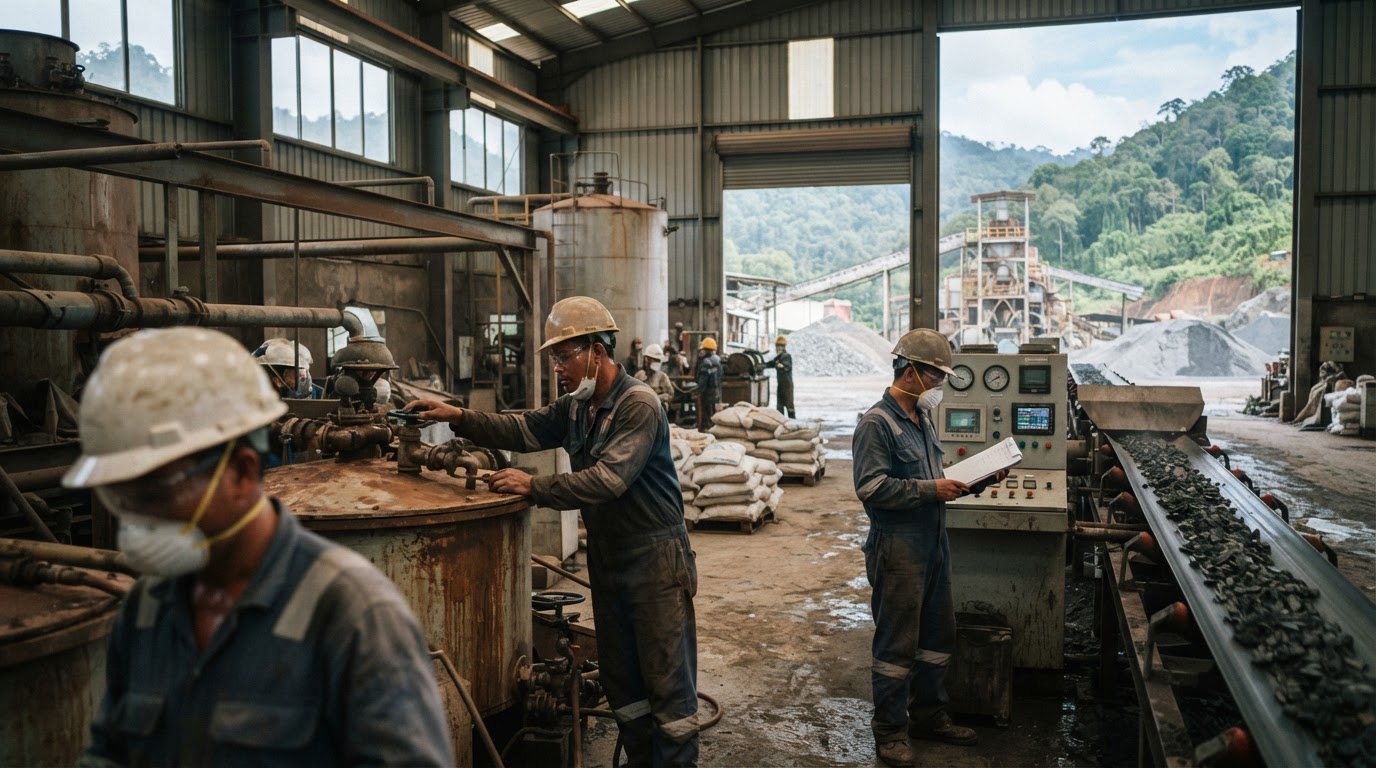
Yet capital allocation faces an immediate structural obstacle. Building processing and refining facilities requires enormous upfront expenditures and long repayment horizons. Commercial banks traditionally avoid these assets in developing jurisdictions due to volatile commodity pricing, regulatory shifts, and technical execution risks. When multilateral development lenders step into that void, they offer concessional loans and technical guarantees. What they cannot provide, however, is an insulated commercial market for the refined output.
The Downstream Cost Hurdle
Diplomatic pressure now accelerates this lending strategy. Industrial economies, including the United States and Japan, have expanded parallel efforts to loosen China's grip on critical mineral supply lines. Meanwhile, officials like Bessent in the United States have called for multilateral financing alongside International Monetary Fund structural updates to back critical supply chains. Multilateral lenders are responding directly to shareholder pressure from advanced industrial states seeking diversified mineral supplies.
Capital pledges can build smelters, but multilateral balance sheets cannot dictate global commodity clearing prices.
Financing extraction has always differed fundamentally from financing industrial processing. Digging ore requires basic infrastructure and logistics. Refining that ore into battery-grade chemical feedstocks demands uninterrupted power grids, specialized industrial inputs, advanced chemical engineering, and severe environmental compliance standards. In developing Asia-Pacific jurisdictions, the domestic energy and logistical base rarely matches the requirements of high-purity chemical processing.
Consequently, multilateral development banks risk financing sovereign debt obligations for facilities that may struggle against subsidized, integrated incumbent processors. If a state-backed refining facility produces material at a premium above prevailing global spot benchmarks, domestic manufacturers cannot absorb the cost without state subsidies. Developing sovereigns could find themselves servicing dollar-denominated loans on underutilised industrial assets.
Credit Limits and Sovereign Exposure
The central contradiction rests between political intent and financial exposure. Western and Asian advanced industrial economies want reliable non-concentrated mineral flows. Multilateral banks exist to absorb early development risk that private syndicates refuse to touch. Yet sovereign balance sheets in developing economies must ultimately guarantee these multilateral loans. Resource-rich nations are being invited to take on commercial execution risks to solve a strategic diversification dilemma for advanced consumer nations.
Supporters of the framework maintain that sovereign involvement provides the only plausible defense against structural underdevelopment. Without multilateral capital, developing nations remain trapped in low-margin raw material extraction. The Asian Development Bank has advanced strategies to link domestic extraction to manufacturing, arguing that local value capture generates employment, tax revenues, and industrial resilience. That counterargument holds weight if domestic demand exists to consume the finished goods. Without domestic manufacturing ecosystems, local refining merely shifts dependency from raw exports to refined intermediate exports.
Multilateral development banks have established the institutional framework to deploy capital. They have unified major institutions across Washington, Manila, and Europe behind a single strategic roadmap. What remains unresolved is whether concessional development credit can overcome structural processing margins when downstream global purchasing decisions still follow the lowest unit production price.
Sources
Newsletter
Pacific Daily
A curated briefing from Thailand, Asia-Pacific and the world.