When Solitary Capital Collides at Sea
Romain Pilliard's collision with Violette Dorange exposes the immediate financial vulnerability of solo offshore racing campaigns
SINGAPORE
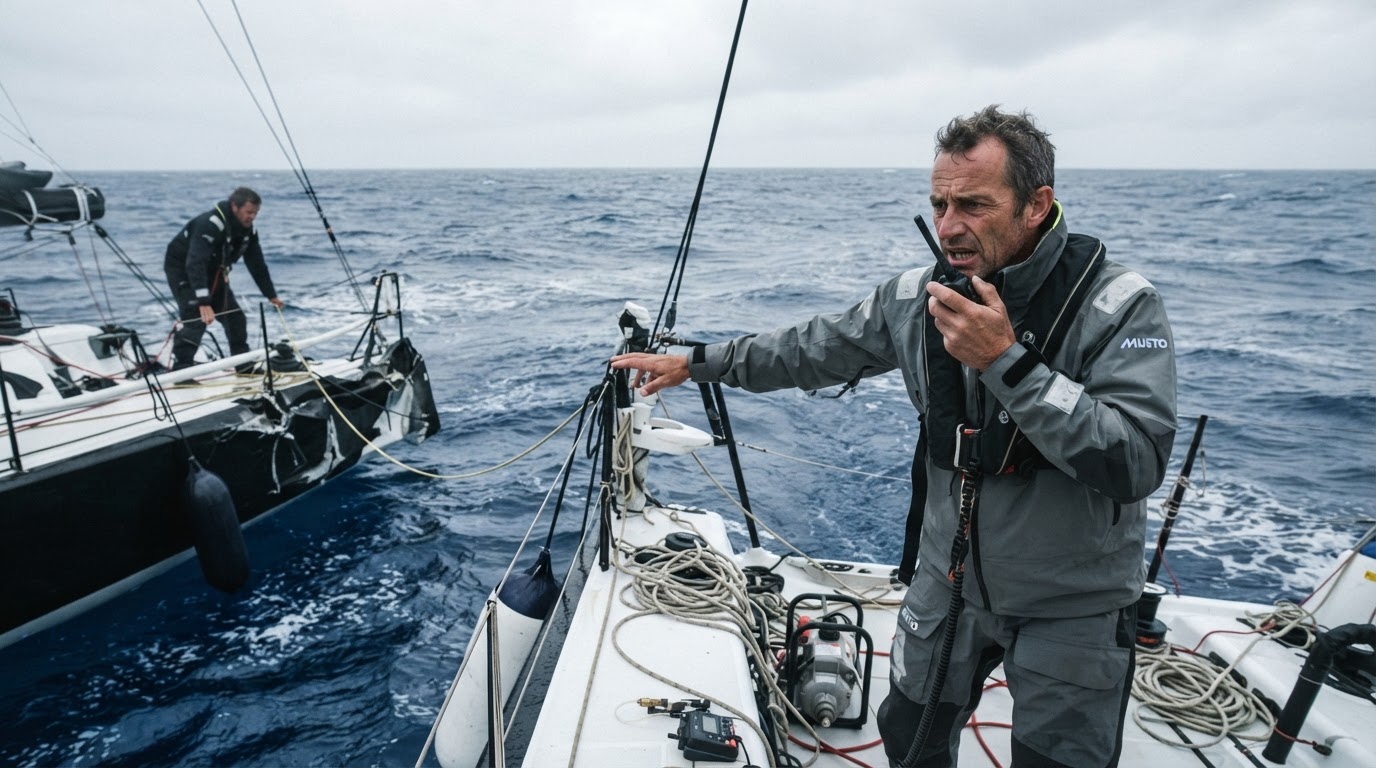
Offshore solo racing presents an austere financial compact between private backers and solitary navigators. Enormous capital expenditure meets unforgiving physical operational reality the second a hull leaves harbor. That equation fractured off northwestern France on Sunday during the opening hours of the 13th Route du Rhum, when a collision between Violette Dorange and Romain Pilliard halted competitive momentum before the transatlantic fleet could clear continental waters.
The accident stripped both programs of operational momentum. Dorange, the twenty-five-year-old sailor who completed the Vendee Globe in 2025 as the youngest competitor in that fleet, was charting a passage toward Pointe-a-Pitre in Guadeloupe from Saint-Malo. Pilliard suffered structural ruin almost immediately upon departure, freezing his race campaign while an official dispute takes shape.
I'm still in the race but it's on standby; there is major damage to my boat, it's broken,
Pilliard stated as his team evaluated the wreckage. He added that administrative steps were already underway: "I’ve informed the race committee that I’m going to lodge a complaint against Initiatives Coeur," confirming that the sporting contest has instantly devolved into an arbitration of fault, liability, and costly equipment write-downs.
The Fragility of Solo Campaigns
Corporate backers underwrite ocean racing to capture endurance, high-performance technology, and solitary human resilience. When an asset worth millions suffers catastrophic mechanical failure within nautical miles of the departure line, the entire commercial rationale unravels. The investor does not receive weeks of oceanic visibility; they receive emergency harbor assessments, repair invoices, and legal friction.
Pilliard faces the brutal reality of an idle hull. Marine sponsorship contracts demand ocean miles and media exposure to generate a commercial return. An immobilized vessel sitting damaged on standby burns operational reserves while delivering zero competitive visibility. Dorange, despite arriving with immense profile after finishing the Vendee Globe in February 2025, now carries the operational distraction and potential regulatory penalty of an impending protest.
Maritime racing operates on margins so narrow that physical contact almost always forces total operational reassessment. Unlike stadium events where damaged equipment is substituted from a bench, offshore ocean racing permits no rapid inventory exchange. A fractured hull terminates operational capability on the spot.
Administrative Friction Replaces Ocean Miles
Racing committees must adjudicate right-of-way rules under international maritime navigation codes. These determinations decide not merely race standings, but legal accountability for the physical destruction of high-value racing assets. When Pilliard files against Initiatives Coeur, the proceedings shift the race from the water to an administrative hearing room.
Sponsors evaluate these incidents through cold balance sheets. Capital deployed into offshore campaigns is high-risk marketing expenditure. When a program stalls before open-ocean transit begins, questions inevitably turn to operational governance, safety perimeters at mass starts, and the insurance mechanisms that cover catastrophic hull loss.
Dorange and Pilliard now occupy the most precarious position in professional sailing. One navigator waits in port to determine if structural repairs are even viable, while the other navigates under the cloud of an active formal protest. The commercial enterprise of modern offshore sailing depends entirely on keeping hulls intact across thousands of miles of empty water, yet its greatest financial exposure remains the congestion of the starting line.
Sources
Newsletter
Pacific Daily
A curated briefing from Thailand, Asia-Pacific and the world.